

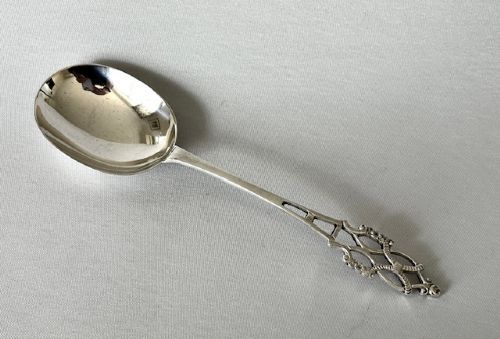


Ornate Silver Flatware
These ornate silver flatware pieces bring elaborate Victorian and Edwardian scrollwork and floral motifs directly to the dining table.
Ornate Silver Flatware
When you search for ornate silver flatware, you encounter specialised dining implements designed for serving rather than everyday dining. The selections span Victorian, Edwardian, and early twentieth-century periods, showcasing distinct historicist and revivalist aesthetics.
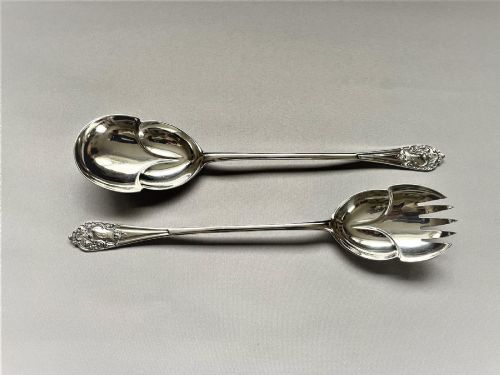
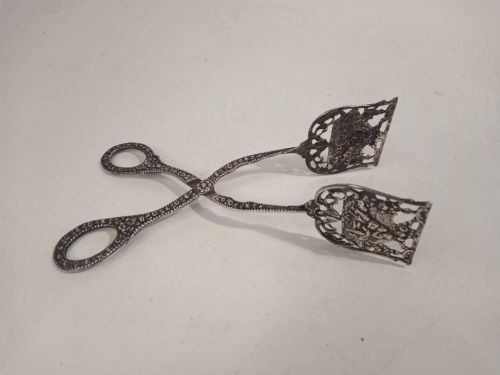
You are most likely to meet serving pieces on this page, including large serving spoons, salad servers, fish servers, cake tongs, and gravy spoons. These items often feature pierced ends, scrollwork, and recognised patterns such as Queens, Old Orange Blossom, and King Edward.
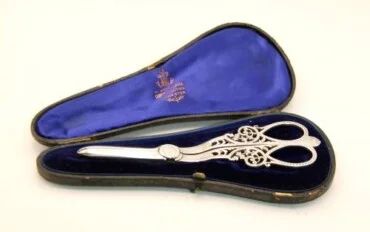
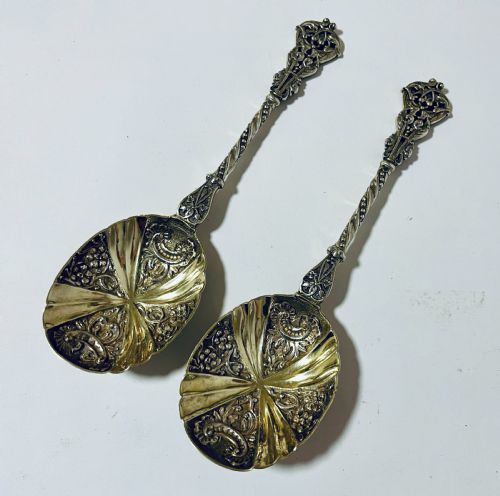
The objects originate from British, American, and Continental workshops, utilising both solid sterling silver and silver-plated bases. Their forms range from simple grape scissors to elaborate berry spoons with scallop shell bowls.
How they were made
The makers of these items relied heavily on sterling silver and silver plate, sometimes pairing the metal with stainless steel for functional cutting edges. Certain presentation pieces also incorporate supplementary materials like velvet and leatherette within their fitted housings.
Craftsmen utilised techniques such as piercing, engraving, and casting to achieve heavy scrollwork and sculptural details. Gilding was occasionally applied, producing silver-gilt surfaces that added a rich two-tone contrast to specific serving implements.
Ornate Silver Flatware Retail Price Guide 2026
Typical asking prices for ornate silver flatware among the pieces listed under this phrase on Sellingantiques today, from the lower quarter to the upper quarter. They describe what is for sale here now, not the wider market.
What varies in quality
Quality in ornate silver flatware rests upon the crispness of the chased and pierced detail rather than mere weight alone. Pieces featuring deep, sharply defined scrollwork and fully articulated patterns stand apart from softer, worn examples.
The distinction also lies in the integrity of the maker's design, where specific named patterns exhibit a higher degree of proportional balance and hand-finishing across the bowl and handle.
International Silver Co·Alvin·Whiting Co.
The Ornate Silver Flatware Glossary
- Sterling silver
- A silver alloy containing 92.5 percent pure silver by mass, with the remainder consisting of other metals like copper. This standard ensures the structural strength necessary for detailed handles and bowls.
- Silver plate
- A base metal coated with a thin layer of silver through electroplating or older techniques. It provides the visual appeal of silver at a different cost.
- Silver-gilt
- Silver that has been coated with a thin layer of gold on its surface. This technique produces a warm, dual-tone effect on decorative serving implements.
- Pierced
- A decorative technique involving the cutting or piercing of shapes through the metal. It creates intricate openwork patterns on items like tongs and fish servers.
- Queens pattern
- A traditional decorative flatware design featuring shell and scroll motifs along the borders. It gained significant popularity during the nineteenth century.
Ornate Silver Flatware: Frequently Asked Questions
What is ornate silver flatware used for?
These items serve specialised culinary functions at the dining table, such as serving salads, fish, berries, gravy, and cake. They were designed for formal hospitality rather than daily family meals.
Their decorative forms allow hosts to present specific dishes with ceremony, utilising implements shaped precisely for the food they handle.
How do I date Victorian silver items?
Dating Victorian pieces involves examining halllid marks, style markers, and registration numbers stamped directly into the metal. These stamps reveal the assay office, the year of production, and the maker.
Stylistic cues such as heavy rococo revival scrollwork or specific named patterns also point toward the nineteenth-century origins of the object.
Is silver plate less valuable than sterling?
Silver plate consists of a base metal covered in a thin layer of silver, whereas sterling silver is solid precious metal throughout. Both materials were utilised for high-quality serving items in the nineteenth and early twentieth centuries.
Collectors often distinguish between the two by checking for specific hallmarks indicating solid sterling standards.
How should I care for antique silver?
Proper care involves storing pieces in dry conditions and cleaning them gently with specialised silver cloths to preserve the underlying metal. Avoiding harsh abrasive cleaners protects the delicate pierced details and engraved scrollwork.
Some items benefit from velvet-lined storage boxes to prevent surface scratches when not displayed on the table.