


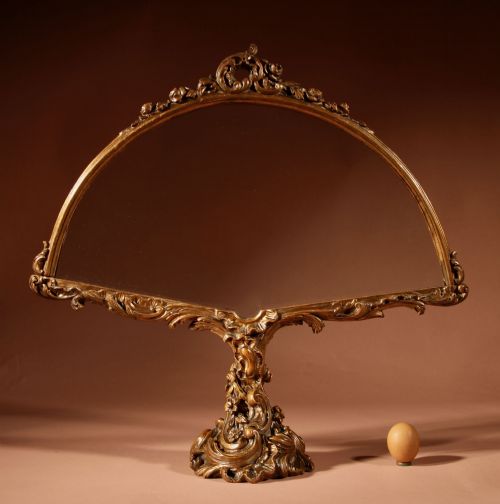


Ornate Glass Case
An ornate glass case brings together refined timber frames, gilt mounts, and clear glazing to display prized possessions with Victorian and French flourish.
Ornate Glass Case
An ornate glass case combines structural timber or metal framing with generous glazed panels to showcase objects, taking forms such as pier cabinets, vitrines, and bijouterie tables. These pieces originated primarily in the nineteenth century, spanning Victorian workshops and French revivalist studios.
The version most commonly met on this page is the nineteenth century French or Victorian cabinet, often featuring glazed doors, marble tops, or inlaid timbers. Such pieces range from tall pier cabinets to table top display stands and crystal regulators.
Makers and designers of these cabinets drew heavily upon Louis XV and Louis XVI styles, incorporating rococo curves and classical symmetry. The resulting objects served both as functional storage for treasured curiosities and as decorative centrepieces for nineteenth century drawing rooms.
How they were made
Cabinet makers utilised dense foundation timbers including walnut, mahogany, kingwood, rosewood, and burr walnut, frequently applying intricate tulipwood banding or boulle inlay. These carcasses were then fitted with heavy plate glass panels to protect the interior contents from dust.
Metalwork played a defining structural and decorative role, with ormolu, gilt bronze, and brass cast into mounts, mouldings, and hinges. Enamel and painted panels occasionally augmented the timber and metal framework, particularly on pieces produced in French workshops.
Ornate Glass Case Retail Price Guide 2026
Typical asking prices for ornate glass case among the pieces listed under this phrase on Sellingantiques today, from the lower quarter to the upper quarter. They describe what is for sale here now, not the wider market.
Listings feature nineteenth century pieces constructed from walnut, mahogany, rosewood, and kingwood, augmented by ormolu and brass.
What varies in quality
The calibre of an ornate glass case rests upon the precision of the timber joinery and the crispness of the cast bronze mounts. Superior examples exhibit hand chased ormolu details that fit tightly to the wood contours without gaps.
Materials dictate distinction, with exhibition grade cabinets employing select burr walnut, finely figured satinwood, or heavy marble tops. Lesser pieces rely on simpler veneers and cast brass hardware lacking the depth and definition of top tier nineteenth century production.
François Linke
The Ornate Glass Case Glossary
- Ormolu
- Gilded bronze used for decorative mounts and feet. The technique involves applying a mercury and gold amalgam to cast bronze before firing.
- Vitrine
- A glass fronted cabinet designed specifically for displaying porcelain, curiosities, or small objects. These pieces often feature glass sides to maximise light exposure.
- Pier Cabinet
- A narrow display cabinet built to stand against the wall space between windows. Nineteenth century versions frequently incorporated glazed doors and velvet lined interiors.
- Boulle
- A form of marquetry employing brass and tortoiseshell inlaid into a dark timber ground. This decorative method was revived extensively during the nineteenth century.
- Bijouterie Table
- A glass topped table designed for displaying jewellery and small valuables at eye level. They typically feature hinged lids and silk lined wells.
Ornate Glass Case: Frequently Asked Questions
What is an ornate glass case?
An ornate glass case is a nineteenth century display piece, such as a vitrine, pier cabinet, or bijouterie table, built to showcase precious objects.
These cabinets combine fine timbers like walnut and mahogany with extensive glass panels and metal mounts.
How do I date an ornate glass case?
Dating relies on identifying period characteristics, such as Victorian proportions or French revival styles, alongside construction methods and timber choices.
Nineteenth century pieces often utilise specific veneer combinations, hand cut dovetails, and cast ormolu mounts typical of the era.
Where were ornate glass cases placed?
These pieces were designed for nineteenth century drawing rooms, parlours, and reception spaces where guests gathered.
Pier cabinets stood in wall spaces between windows, while vitrines and bijouterie tables occupied central positions to display collections.
How do I care for an ornate glass case?
Maintenance involves dusting timber surfaces with a dry cloth and cleaning glass panels with a mild solution.
Ormolu and brass mounts should be left unpolished to preserve their patination, and the cabinet kept away from direct sunlight.