




Ornate Gilt Urn Lamps
These ornate gilt urn lamps bring classical drama and gleaming presence to a room, cast in heavy bronze, brass and ormolu.
Ornate Gilt Urn Lamps
Ornate gilt urn lamps take their cue from classical antiquity, shaped as ewers, amphorae and traditional urns. They turn ancient vessel forms into domestic lighting, using slender necks and sturdy bases designed to command attention on a side table or mantelpiece.
The versions you meet on this page span the Victorian and Edwardian eras up to the nineteen-twenties, drawing on French Neoclassical, Rococo Revival and Classical Revival styles. Makers look to antique vases and oil lamps for their silhouettes, mounting them with electrical fittings while keeping their decorative classical integrity.
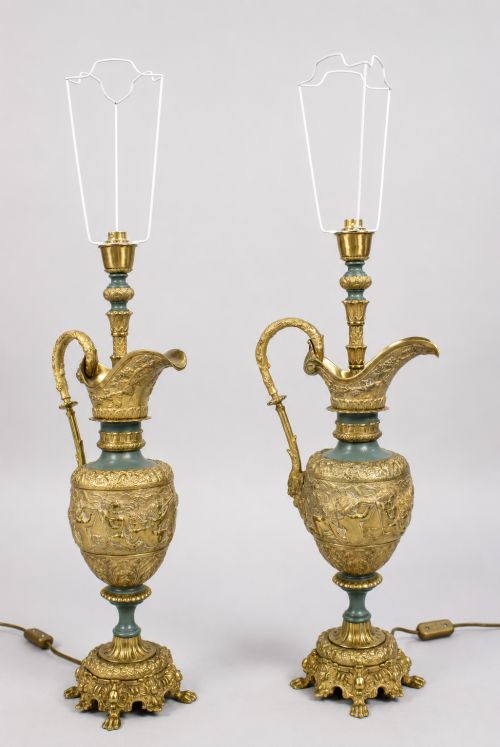
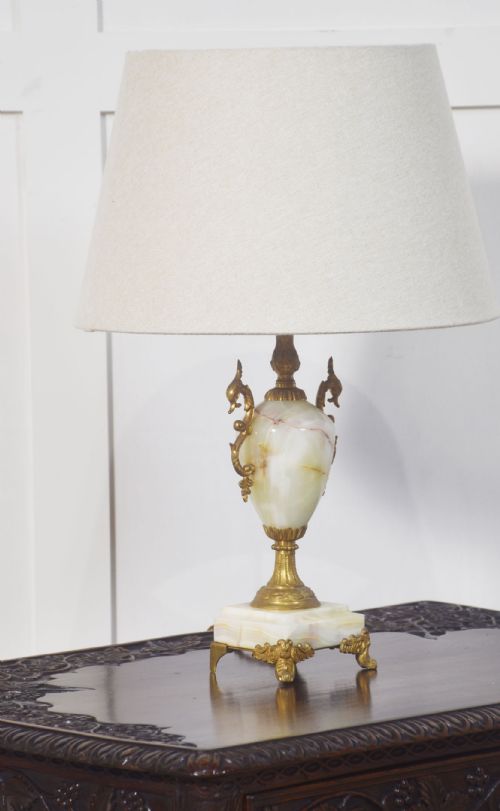
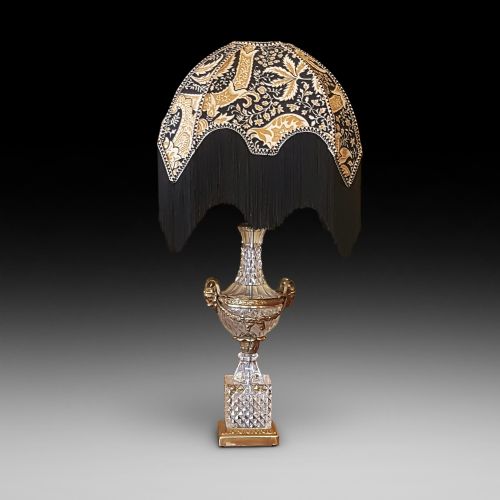
You find pieces cast in gilt bronze, brass, ormolu and gilt metal, often combined with hand-painted porcelain, rich enamel, warm onyx or cut glass. Some arrive as balanced pairs of ewer-form table lamps, while others stand alone as singular classical urns or converted oil lamps.
How they were made
Foundries shaped these bodies through metal casting, using brass, bronze and ormolu to create crisp classical details like paw feet, foliate mounts and handles. Gilding brought a rich golden finish to the metal surfaces, catching the lamplight.
Craftsmen paired these metal mounts with turned onyx plinths, cut glass bodies or porcelain panels painted by hand. Fabric shades often top the assembly, diffusing the light across the gleaming metalwork below.
Listings feature pieces spanning the Victorian and Edwardian periods, alongside items from eighteen-ninety up to nineteen-twenty.
What varies in quality
The distinction in quality rests in the crispness of the metal cast and the weight of the materials. Heavy gilt bronze and chased ormolu display sharper relief in their floral and classical motifs than lighter stamped brass.
Finishing details separate standard production from superior pieces, such as hand-painted enamel work on porcelain, precise turning on onyx bases, and substantial paw feet that ground the composition properly.
The Ornate Gilt Urn Lamps Glossary
- Ormolu
- Gilded bronze, where a mercury-gilding technique or gold leaf creates a rich, matte yellow-gold finish on cast bronze mounts. It defines the decorative highlights of French Neoclassical lighting.
- Ewer
- A large jug with a wide spout and handle, used here as the primary silhouette for tall table lamps. This vessel shape derives from ancient Greek and Roman water jugs.
- Amphora
- A two-handled ancient jar with a narrow neck, adapted in the early twentieth century as a grand lamp body. These pieces often rest on decorative metal bases with paw feet.
- Onyx
- A banded chalcedony variety utilised for stone plinths and lamp columns. Its natural strata provide a cool, solid counterpoint to the warm gilt metal mounts.
Ornate Gilt Urn Lamps: Frequently Asked Questions
What is an urn lamp?
An urn lamp is a decorative table light built around the body of a classical vessel, such as an amphora or ewer. These pieces use historical shapes to bring architectural presence into domestic interiors.
Most examples combine cast metal mounts with materials like porcelain, onyx or glass, wired for modern illumination while retaining their antique proportions.
How do I clean gilt metal?
Gilt metal requires gentle care to preserve the thin layer of gold leaf or ormolu finish. Dusting with a soft, dry cloth is usually sufficient for regular maintenance.
Avoid chemical polishes and abrasive cloths, as these will strip away the gilding and expose the base brass or bronze underneath.
Are these lamps converted oil lamps?
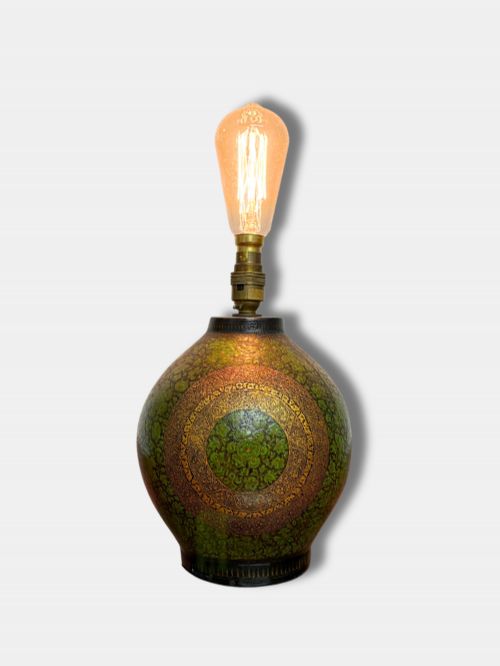
Several pieces on this page began life as Victorian oil lamps before receiving electrical wiring later in their history. You can often identify them by their heavy brass or ormolu fonts and traditional burner assemblies.
Other lamps were manufactured specifically for electricity during the Edwardian period or the nineteen-twenties, omitting the old oil reservoirs entirely.
How do I style an urn lamp?
These lamps work best on heavy wooden sideboards, console tables or large desks where their classical proportions can anchor the room. Their gleaming surfaces reflect natural daylight and evening lamplight alike.
Pair them with simple fabric shades that do not compete with the ornate casting on the bronze, brass or porcelain body below.