


Ornate Garden Table
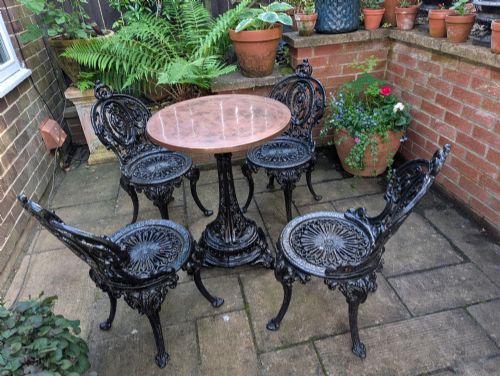
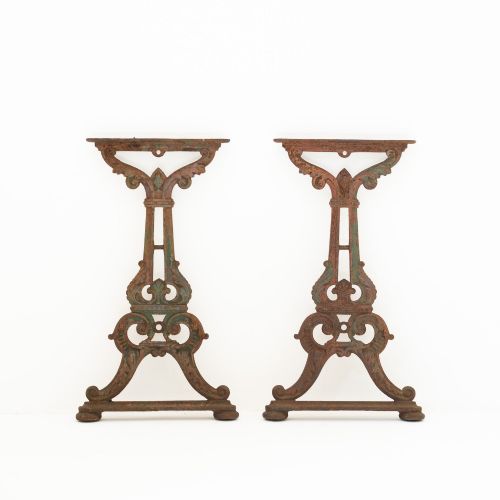
An ornate garden table brings enduring Victorian character to a terrace, patio or conservatory through intricate scroll work and robust metal construction.
Ornate Garden Table
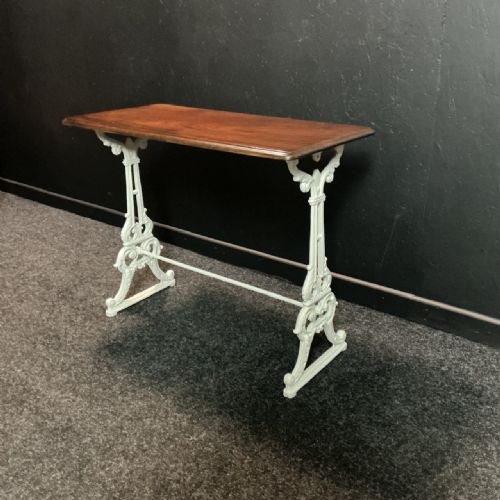
An ornate garden table primarily appears in nineteenth century and early twentieth century guises, spanning Victorian designs and French bistro styles. These pieces range from compact occasional tables and bistro sets to larger garden dining sets and console tables.
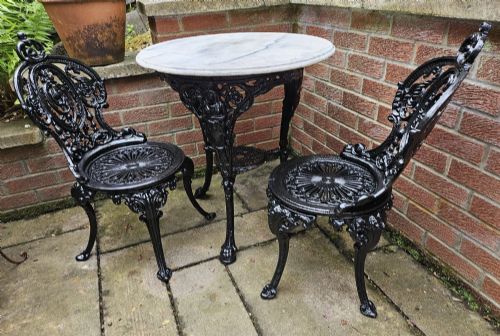
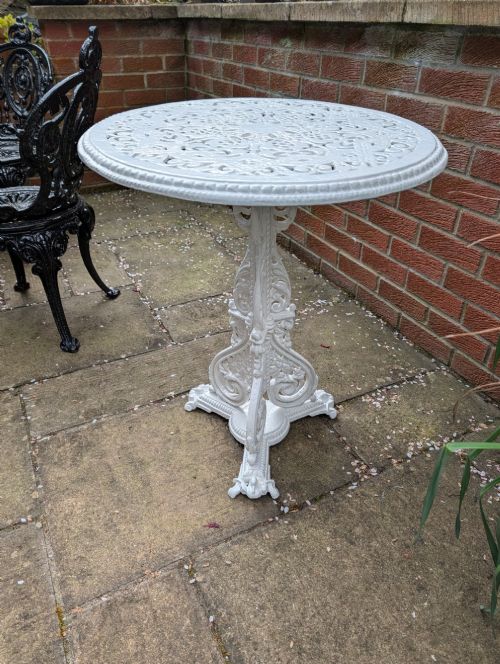
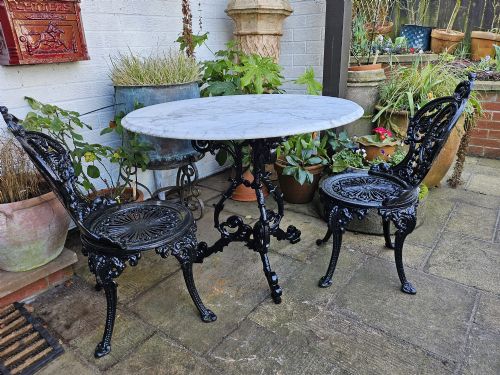
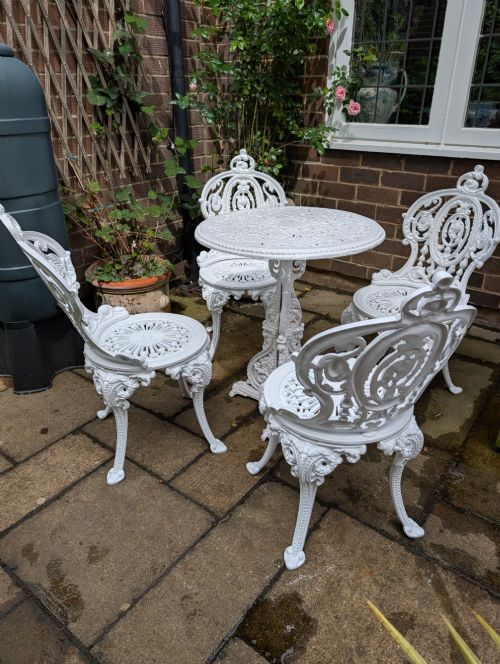
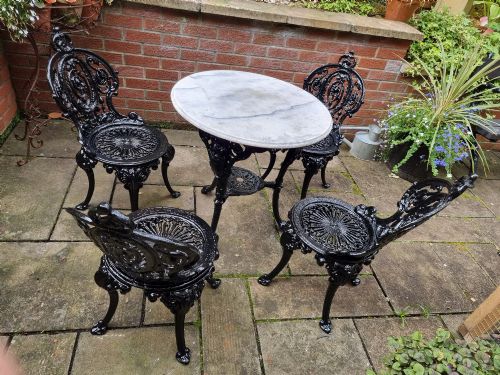
The standard version met on this page is the cast iron garden table, often featuring open scroll work and occasionally retaining its original paint or paired with a marble top. Such tables serve practical purposes outdoors while functioning as decorative focal points.
Beyond traditional garden tables, related forms include conservatory tables, drinks tables and table bases. Each shares the heavy metal construction and decorative casting that define the category.
Materials and construction
Cast iron forms the structural core of these pieces, shaped through traditional foundry techniques to create detailed scroll work and sturdy frames. This heavy metal provides the weather resistance and weight required for garden furniture.
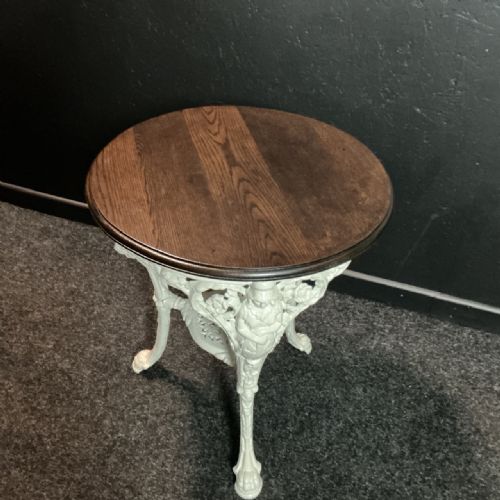
Marble and wood, including oak and mahogany, provide contrasting surfaces for table tops, while copper and brass appear in select early twentieth century examples. Painted finishes often protect the iron while adding a distinct aesthetic layer.
Makers utilised industrial manufacturing methods combined with artistic design to produce decorative bases and frames. The integration of stone tops with metal bases required precise fitting to ensure stability.
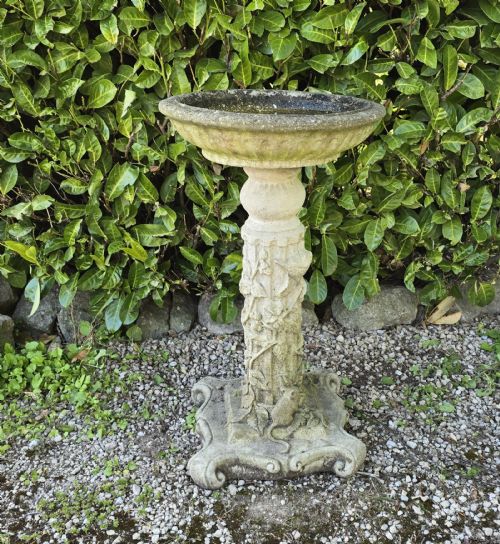
Some tables double as botanical stages, where weathering turns the iron green and birds claim the nearby stone basins.
Understanding quality differences
The refinement of the casting work separates standard production from exceptional examples, with crisp detail in the scroll work indicating superior foundry craftsmanship. Pieces associated with specific designers or distinctive aesthetic movements display greater artistic ambition.
Material combination also elevates a piece, particularly when smooth marble tops meet heavily detailed iron bases. The integrity of the original construction and the survival of early painted surfaces contribute significantly to the standing of an individual table.
Christopher Dresser
The Ornate Garden Table Glossary
- Cast iron
- A strong, rigid alloy poured into moulds to create complex decorative shapes. It forms the primary structure for nineteenth century garden furniture.
- Scroll work
- Ornamental spiral or curved design motifs executed in metal. This technique defines the visual style of Victorian garden tables.
- Bistro set
- A small table accompanied by matching chairs, designed for compact outdoor spaces. These sets often combine iron frames with marble tops.
- Conservatory table
- An indoor garden table placed within a glass-roofed extension. These pieces typically feature lighter or more decorative metalwork than purely exterior furniture.
- Occasional table
- A small, portable table used for specific, limited purposes such as holding drinks. They appear frequently in nineteenth century cast iron designs.
Ornate Garden Table: Frequently Asked Questions
Can I leave cast iron outside all year?
Cast iron withstands outdoor conditions well due to its heavy mass and durable nature. Regular maintenance helps protect the metal from weathering.
Storing pieces during severe winter weather or providing protective covers preserves the original finish and structural integrity over decades.
How do I clean a marble top?
Marble requires gentle cleaning with warm water and a soft cloth to avoid scratching the polished surface. Harsh chemical cleaners damage the stone.
Dry the surface thoroughly after washing to prevent water spotting and maintain the natural sheen of the marble.
Are these tables heavy to move?
Cast iron construction gives these tables substantial weight, ensuring they remain stable in windy garden settings. This heavy build makes relocation a two-person task.
Careful handling prevents chipping on associated marble tops or damaging delicate iron scroll work during movement.
How do I identify a Victorian piece?
Nineteenth century examples display distinct casting characteristics, heavier metal gauges and specific decorative motifs like scroll work. Stylistic cues align with Victorian design periods.
Examining the construction joints and the weathering patterns on the iron provides further confirmation of age and origin.