

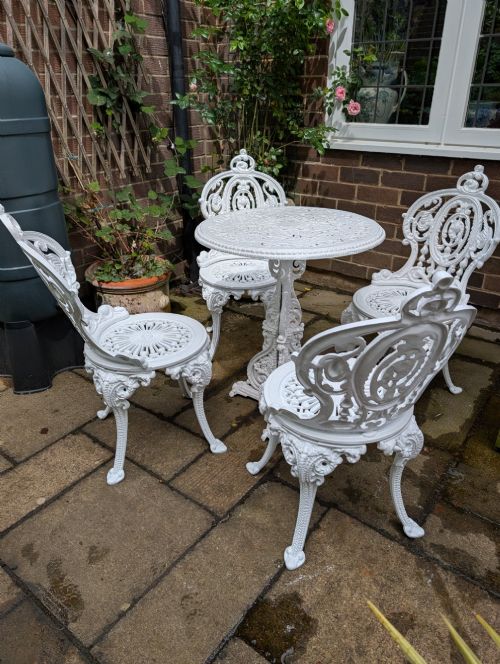
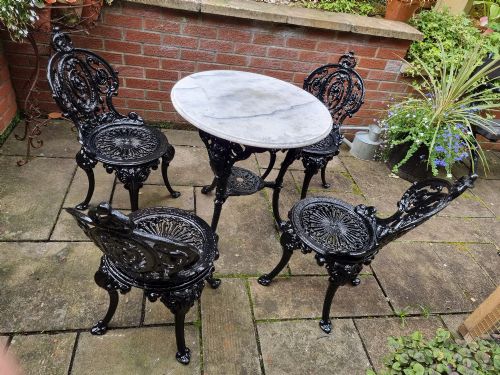
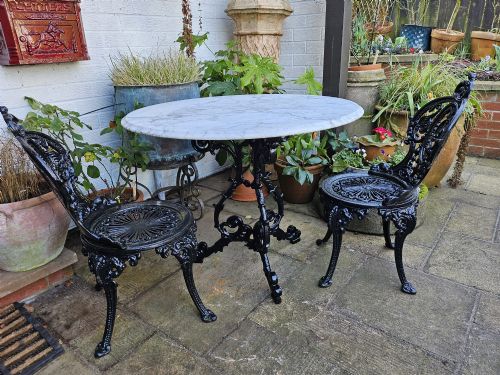
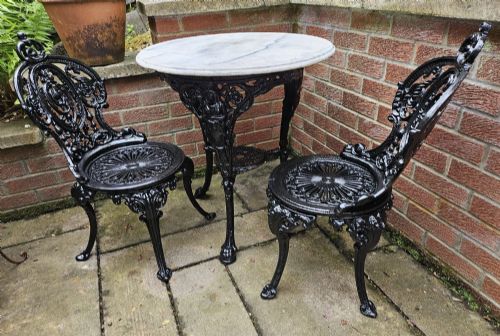


Ornate Garden Chairs
Ornate garden chairs bring architectural character and robust metalwork to outdoor spaces, offering enduring places to sit among the planting.
Ornate Garden Chairs
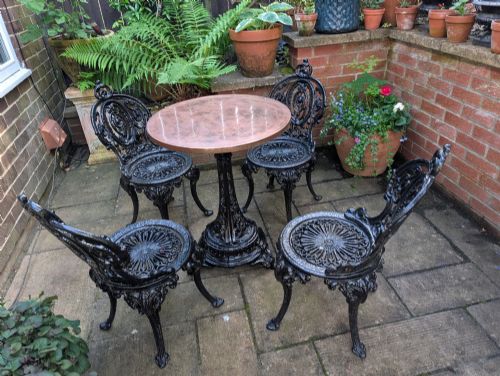
Ornate garden chairs encompass metal seating designed for outdoor use, emerging primarily across the Victorian era up through the nineteen-thirties. You meet cast iron examples most frequently, often formed as pairs or complete dining sets with matching tables.
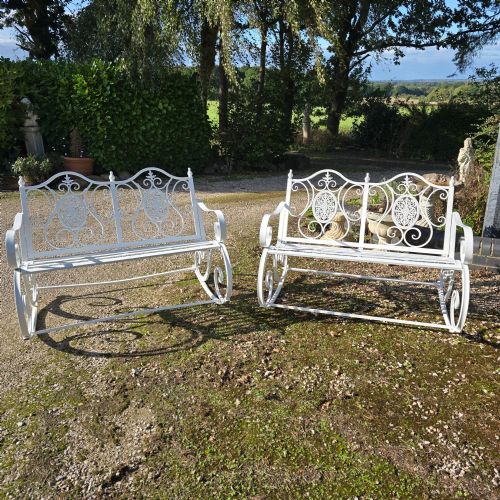
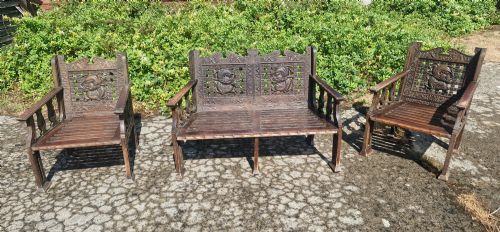
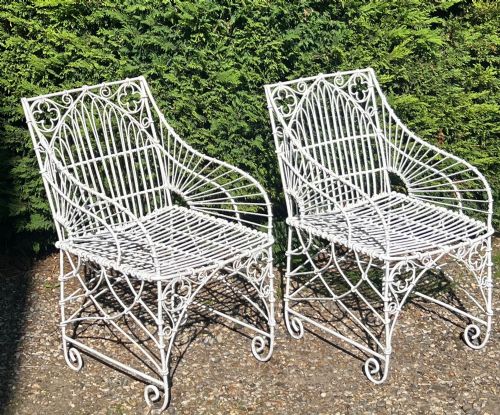
The forms range from gothic revival armchairs to french riviera armchairs and heavy rocking benches. These pieces often arrive alongside related conservatory suites and bistro tables with marble tops.
Makers incorporated elaborate pierced patterns, scrolling supports and architectural motifs into the metal frames. Such seating provided both structural permanence and decorative focal points for lawns, patios and conservatory spaces.
How they were made
Foundries utilised cast iron and wrought iron to construct the structural frames and decorative panels of these garden chairs. Molten metal poured into moulds created intricate openwork patterns and heavy, solid legs that withstood outdoor conditions.
Makers combined the metalwork with complementary materials, setting marble tops onto bistro tables and incorporating wood like teak alongside the iron frames. Protective layers of paint finished the metal surfaces to guard against weathering.
Ornate Garden Chairs Retail Price Guide 2026
Typical asking prices for ornate garden chairs among the pieces listed under this phrase on Sellingantiques today, from the lower quarter to the upper quarter. They describe what is for sale here now, not the wider market.
Listings span the nineteenth century, the Victorian period, and the decades from nineteen hundred to nineteen thirty, utilising cast iron, wrought iron, and marble.
What varies in quality
The sophistication of the iron casting defines the upper tier of these pieces, showing crisp relief in the ornamental details rather than softened edges. Heavier gauge metalwork and well-proportioned frames distinguish finer sets from simpler utilitarian seating.
Design attribution elevates certain examples, particularly where specific stylistic influences like gothic revival or documented designer work are evident in the iron pattern. The survival of matching sets in complete condition also marks out superior examples.
Christopher Dresser
The Ornate Garden Chairs Glossary
- Cast iron
- Iron melted and poured into a mould to create rigid forms. This material defines the heavy frames and decorative backs of nineteenth-century garden seating.
- Wrought iron
- Iron beaten and shaped by hand rather than cast. This technique produces the flexible, curved lines seen in french riviera armchairs.
- Gothic revival
- A decorative style imitating medieval architectural forms. Pieces in this style feature pointed arches and vertical tracery within the ironwork.
- Bistro set
- A small table paired with two matching chairs. These compact groups suit smaller patios and conservatory spaces.
- Conservatory suite
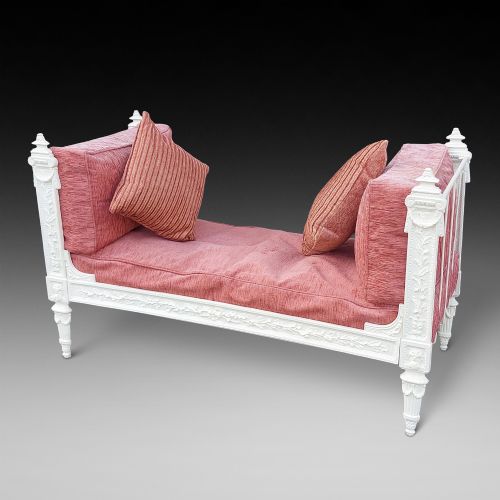
- A matched grouping of seating designed for indoor-outdoor garden rooms. These suites often combine carved wood or metal elements with upholstered components.
Ornate Garden Chairs: Frequently Asked Questions
Where should I place ornate garden chairs?
Position these heavy iron chairs on firm, level surfaces like stone patios, gravel paths or paved terrace areas. Their substantial weight keeps them stable outdoors without requiring permanent fixing.
Keep them slightly sheltered during harsh winter months or place them beneath conservatory glass to preserve the painted metal finishes and any integrated marble surfaces.
How do I clean cast iron garden chairs?
Wash the metal surfaces gently using warm water and a mild detergent to remove accumulated dirt and outdoor debris. Avoid harsh abrasive pads that might damage the protective paint layer beneath.
Dry the metal thoroughly after washing to prevent surface oxidation, and touch up any exposed iron areas with suitable exterior paint when necessary.
Are these garden chairs heavy to move?
Traditional cast iron furniture possesses considerable weight due to the solid metal construction used in the nineteenth and early twentieth centuries. This heft prevents the chairs from blowing about in strong winds.
Enlist a second person when repositioning larger garden dining sets, rocking benches or heavy tables across uneven lawn surfaces.
How do I identify Victorian garden chairs?
Look for dense cast iron frames featuring classical ornamentation, fern patterns, or gothic architectural motifs typical of nineteenth-century foundry production. These pieces often display substantial weight and robust construction methods.
Compare the scrollwork and bolt fixings against established period examples to understand whether a set originates from the Victorian era or later revival periods.