




Ornate French Mantel Clock
An ornate french mantel clock brings heavy gilt metal, porcelain dials and dramatic nineteenth-century revivals straight to the fireplace.
Ornate French Mantel Clock
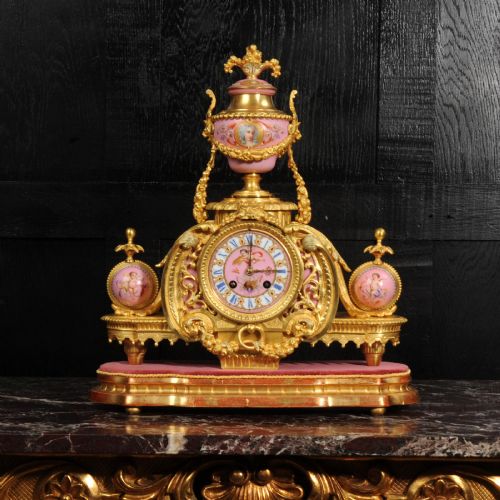
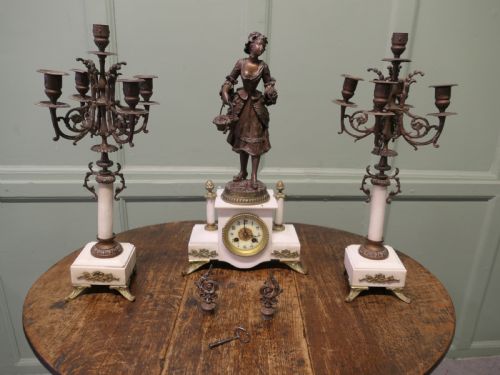
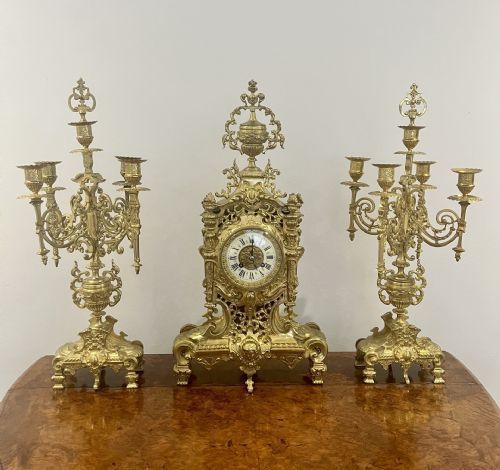
When you search for an ornate french mantel clock, you are looking at substantial domestic timepieces produced across the nineteenth century, most frequently appearing from the decades between eighteen-fifty and nineteen-hundred. These pieces combine elaborate sculptural housings with mechanical movements designed to sit on a shelf or mantelpiece, often arriving as part of a matching garniture set with flanking ornaments.
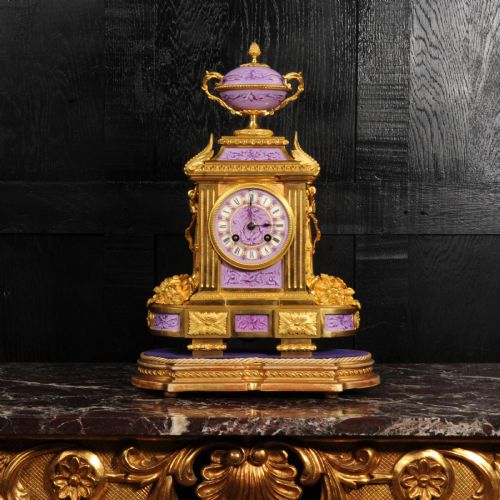
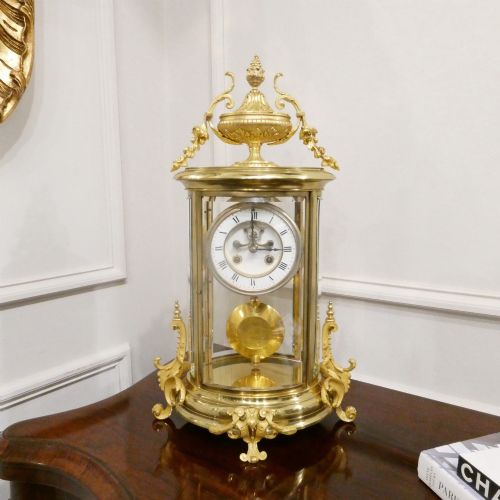
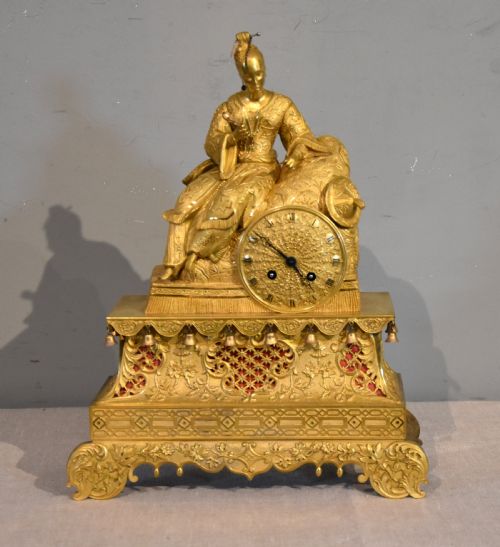
The versions you are most likely to meet on this page span styles such as French Rococo Revival, Napoleon III, and Second Empire aesthetics. They take the form of heavy architectural brass or marble cases, glass-panelled four-glass models, and intimate carriage clocks housed in engraved metal.
Makers and workshops of the period, including documented names such as Achille Brocot, Samuel Marti, and Japy Freres, supplied movements and decorative bronzes that define the core of what is available. The variety runs from figurative ormolu centrepieces to disciplined portico timepieces and intricate champleve enamelled designs.
How they were made
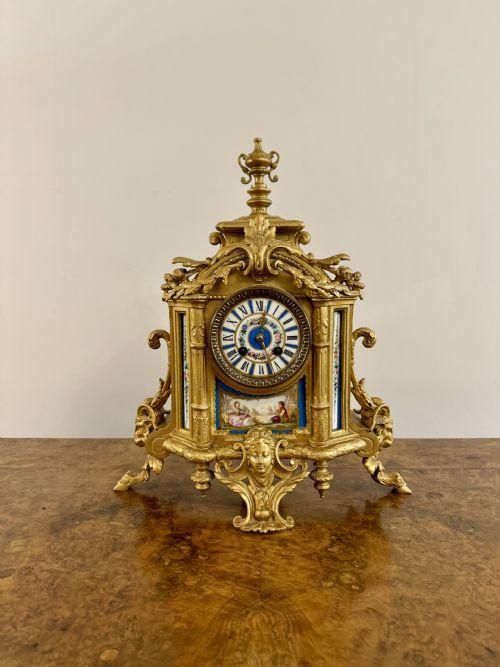
The construction relies on a foundation of cast brass or bronze, heavily gilded with ormolu or left with a natural warm metallic finish. Frames often incorporate inset panels of Sèvres porcelain or decorative champleve enamel work.
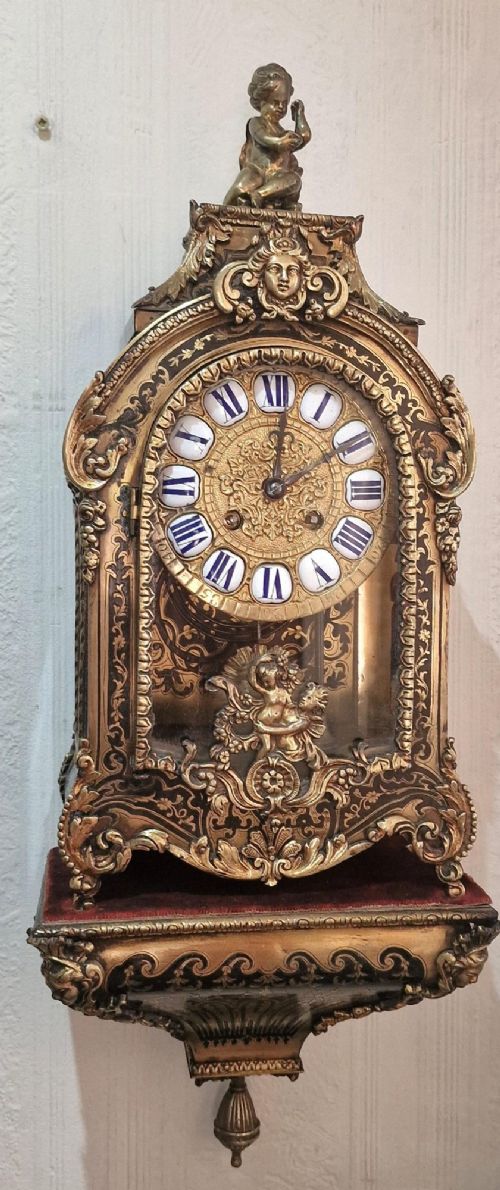
Housing structures frequently utilise heavy coloured marble, slate, or transparent glass panels held in four-glass brass cases. Intricate details like Boulle tortoise shell work and cast figural elements demonstrate skilled nineteenth-century metalworking and cabinet-making techniques.
Listings span the nineteenth century, centring heavily on the eighteen-eighties with brass, ormolu, marble, and porcelain.
What varies in quality
The distinction between standard production and the top of the range rests on the crispness of the bronze casting and the depth of the gilding. Heavier, deeper relief work on figural ormolu mounts and finely painted porcelain dial panels separate ambitious architectural pieces from simpler brass timepieces.
Completeness alters the character of a piece profoundly, distinguishing solitary mantel clocks from full garniture sets that retain their matching side pieces. The presence of signed movements by established makers adds an administrative layer of distinction to the mechanical merit of the gear train.
Achille Brocot·Samuel Marti·Japy Freres
The Ornate French Mantel Clock Glossary
- Ormolu
- Gilded bronze, produced by applying a mercury-gilding amalgam to cast bronze. This technique creates a rich, durable golden surface seen across nineteenth-century French clock cases.
- Garniture
- A set of matching decorative objects designed to be displayed together on a mantelpiece. It typically comprises a central clock flanked by two matching vases, urns, or candelabra.
- Champleve
- An enamelling technique where troughs or cells are hollowed out in the metal surface and filled with vitreous enamel paste before firing. It creates vibrant coloured patterns across brass and bronze clock frames.
- Grand Sonnerie
- A complex striking mechanism in a clock that chimes both the hours and the quarters automatically as they pass. This complication indicates a higher grade of movement construction.
- Four Glass Clock
- A mantel clock housed within a brass frame holding four bevelled glass panels that expose the swinging pendulum and movement. These designs emerged strongly in the latter half of the nineteenth century.
Ornate French Mantel Clock: Frequently Asked Questions
What is an ornate french mantel clock?
These are nineteenth-century mechanical timepieces produced in France, featuring decorative housings made from gilt bronze, brass, marble, or porcelain. They served as functional household timekeepers and prominent decorative items for formal rooms.
Most examples date from the Victorian era and the Second Empire, reflecting revival styles like French Rococo. They range from large figural centrepieces to glass-enclosed table clocks.
How do I wind and set an antique clock?
Winding typically involves inserting a key into designated arbors on the porcelain or enamelled dial to tension the mainsprings. Care must be taken not to overwind the springs, which can cause damage to the internal mechanism.
Setting the time usually requires moving the minute hand gently in a clockwise direction. One should avoid turning the hands backwards unless the specific movement design explicitly permits it.
What does a clock garniture include?
A clock garniture set consists of a central mantel clock accompanied by two matching ornamental pieces, such as side urns or candelabra. These matched items were designed to create a balanced symmetrical display across a fireplace mantel.
Finding a complete, matching set increases the visual impact of the arrangement. The individual pieces share identical materials, cast motifs, and period styling.
How do I identify nineteenth-century French clock styles?
Identification relies on observing the combination of materials, cast ornament styles, and maker signatures stamped on the back plates. Rococo Revival pieces feature asymmetric scrolling foliage, shell motifs, and heavy ormolu casting.
Later Victorian and Napoleon III items often incorporate marble bases, champleve enamel, or architectural portico frames. Examining the pendulum suspension and escapement type also helps narrow down the period of manufacture.