

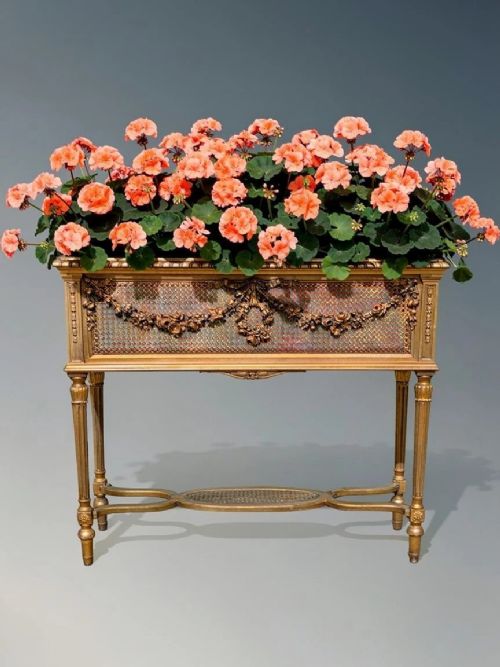
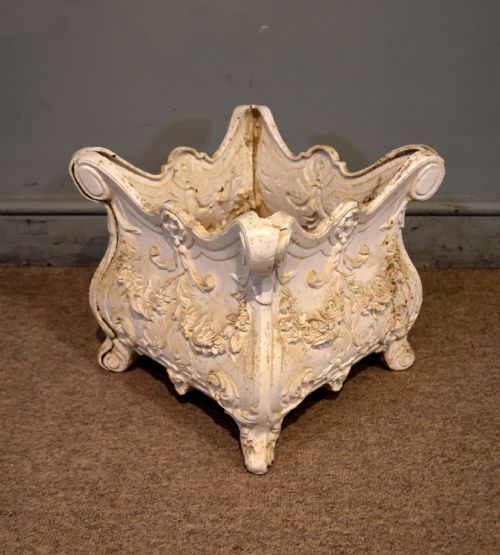


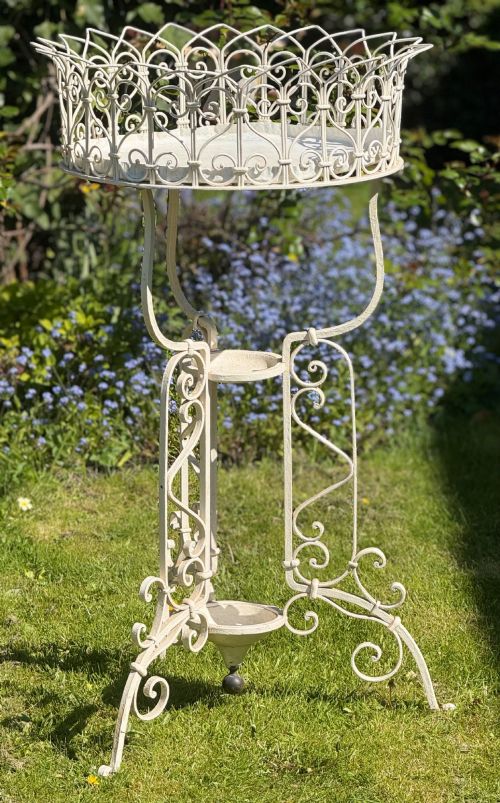


Ornate Flower Planter
An ornate flower planter brings serious presence to a room, and these pieces give you robust ironwork, carved wood, and intricate enamel made to hold your plants in style.
Ornate Flower Planter
When you search for an ornate flower planter, you are looking at substantial vessels designed to display greenery indoors and out. The pieces gathered here span centuries and styles, ranging from heavy garden ironwork to gilded indoor stands.
You are most likely to meet Victorian and nineteenth-century examples in cast iron or carved wood. These range from simple three tier plant stands to grand French jardinieres and Chinese export hardwood tables.
The selection includes specialised forms such as plant stands, jardinieres, and garden planters. Each version reflects the decorative tastes of its period, whether that is French Empire, Louis XVI, or Chinoiserie.
How they were made
Makers utilised heavy metals like cast iron and wrought iron for durability, often finishing the surfaces with paint or black coatings. These metal pieces were cast in moulds or hammered by hand to create intricate structural details.
Woodworkers employed giltwood, walnut, and inlaid wood, sometimes combining cane or carving solid hardwood for table forms. Decorative arts like cloisonne enamel were also applied to metal vessels to add rich colour and pattern.
Ornate Flower Planter Retail Price Guide 2026
Typical asking prices for ornate flower planter among the pieces listed under this phrase on Sellingantiques today, from the lower quarter to the upper quarter. They describe what is for sale here now, not the wider market.
One cheerful Victorian piece on offer is specifically designed around a swan motif, proving that nineteenth century botanists took their bird decor very seriously.
What varies in quality
The distinction between standard items and superior examples lies in the crispness of the casting and the depth of the hand carving. Finer pieces show sharp relief in ironwork and precise joinery in wood rather than soft edges or thick, obscuring paint layers.
Materials dictate the upper tier of the range, where genuine giltwood, fine hardwoods, and detailed enamel work elevate a utilitarian pot holder into a piece of fine furniture. Secondary pieces rely on simpler iron casting without the extra decorative flourishes.
The Ornate Flower Planter Glossary
- Jardiniere
- An ornamental pot or stand for holding flowers or plants, typically made of ceramic, metal, or wood. These vessels often feature decorative handles or feet.
- Giltwood
- Wood that has been coated with gold leaf or gold paint to give a rich, metallic finish. This technique was favoured in eighteenth and nineteenth century decorative furniture.
- Cloisonne
- An ancient technique for decorating metal object surfaces with enamel compartments separated by strips of metal. It produces a colourful, patterned mosaic effect.
- Chinoiserie
- European artistic style reflecting Chinese artistic influences, popular in furniture and decorative objects. It uses whimsical motifs and oriental scenes.
- Plant Stand
- A piece of furniture designed specifically to elevate potted plants off the ground, often featuring multiple tiers for tiered displays.
Ornate Flower Planter: Frequently Asked Questions
What is an ornate flower planter?
An ornate flower planter is a decorative vessel or stand designed to hold potted plants while adding artistic flair to a space. They range from heavy cast iron garden troughs to gilded indoor stands.
These pieces combine utility with strong decorative design, serving as focal points in rooms, hallways, or gardens.
How were these planters used?
Historically, these pieces housed live flowering plants and ferns to bring greenery inside grand homes or sheltered gardens. They protected surfaces from water and elevated plants for better viewing.
Wealthy households used them in reception rooms and conservatories to display exotic species during the Victorian era and earlier periods.
Can I use cast iron planters outside?
Cast iron and wrought iron pieces are robust enough for garden environments and outdoor display. Their heavy metal construction handles natural elements well over long periods.
However, you should check for painted or treated surfaces that might require maintenance when exposed to continuous moisture.
How do I identify a Victorian planter?
Victorian pieces often feature heavy cast iron construction, dark painted finishes, and elaborate floral or scroll motifs. Look for multi-tier structures and robust proportions typical of the nineteenth century.
Makers of this era frequently produced plant stands and jardinieres with distinct industrial weight and ornate detailing.