

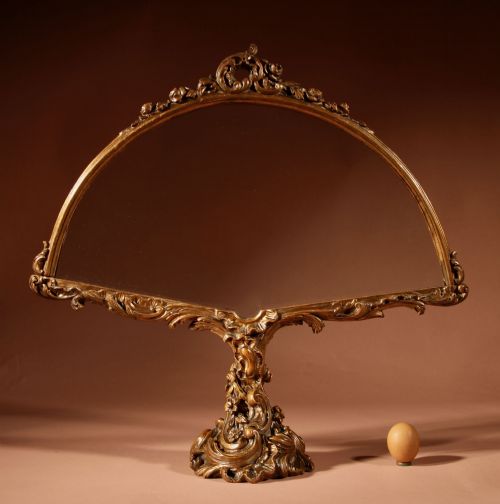


Ornate Display Case
An ornate display case brings together glass and gilt bronze to hold cherished objects in the room.
Ornate Display Case
When you search for an ornate display case, you are looking at glazed cabinets, pier cabinets, vitrines, and bijouterie tables designed to show off collections. The examples on this page span the nineteenth century, including Victorian pieces alongside French Rococo Revival and Louis XV style works. Most of these pieces are tall pier cabinets or freestanding vitrines with glass panels to let light reach the interior.
The forms range from compact walnut pier cabinets with ormolu mounts to large exhibition quality burr walnut cabinets and marble-topped kingwood vitrines with painted panels. You will also encounter specialised items like fan display stands and rosewood bijouterie tables intended for tabletop viewing. These items date primarily from the mid to late nineteenth century, stretching into early twentieth century French style interpretations.
Materials and construction
Cabinet makers utilised a rich palette of timbers, pairing mahogany, walnut, burr walnut, rosewood, kingwood, satinwood, and tulipwood with intricate marquetry and Boulle inlay. Frames were built to support large glass panes while accommodating detailed metalwork.
Gilt bronze and ormolu mounts were cast and chased to adorn the corners, friezes, and feet of the cabinets, often complemented by marble tops. Interior panels frequently featured painted decoration or fine wood banding to enhance the visual depth of the display area.
Ornate Display Case Retail Price Guide 2026
Typical asking prices for ornate display case among the pieces listed under this phrase on Sellingantiques today, from the lower quarter to the upper quarter. They describe what is for sale here now, not the wider market.
Judging the work
The distinction between standard production and exhibition quality lies in the crispness of the ormolu mounts and the precision of the timber inlay. Superior pieces display deeply chased gilt bronze and seamless marquetry that integrate harmoniously with the primary wood.
Construction details such as figured timber veneers, finely banded borders, and substantial marble tops elevate a piece from a simple utility to a statement of fine nineteenth century craftsmanship.
François Linke
The Ornate Display Case Glossary
- Ormolu
- Gilded bronze applied as decorative mounts to furniture. It adds metallic contrast to the timber surfaces.
- Vitrine
- A glass-fronted cabinet designed for displaying porcelain, silver, or curiosities. The sides are also glazed to maximise visibility.
- Pier Cabinet
- A low cabinet designed to fit against the wall space between windows. These often feature a single glazed door and ormolu framing.
- Boulle
- A form of marquetry using brass and tortoiseshell inlay developed in France. It creates a striking pattern of polished metal against a dark ground.
- Bijouterie Table
- A glazed display table with legs, used for showcasing small valuables at tabletop height. These often feature velvet-lined interiors.
Ornate Display Case: Frequently Asked Questions
What is an ornate display case used for?
These cabinets were built to house and protect delicate collections of porcelain, silver, and curiosities in nineteenth-century drawing rooms. The glass panels allowed owners to display their prized possessions while keeping dust away.
Today, they serve the exact same purpose in modern interiors. They create a focal point in a room while keeping fragile items safe behind glass.
How do I date an ornate display case?
Dating relies on identifying the timber choices, mount styles, and construction methods recorded in the period evidence. Pieces from the mid to late nineteenth century often feature specific revivals like Louis XV or Victorian Rococo.
Examining the secondary timbers inside the cabinet and the style of the ormolu casting helps narrow down the decade. Nineteenth-century pieces frequently show hand-cut dovetails and distinct patination on the wood.
Where should I place a pier cabinet?
Pier cabinets were originally designed to sit in the narrow wall space between two large windows. This placement made the most of available natural light to illuminate the objects inside.
In a modern home, they work well against any flat wall where floor space is limited. Their shallow depth allows them to fit comfortably in hallways, drawing rooms, or dining areas.
What is the difference between a vitrine and a pier cabinet?
A vitrine is typically a freestanding glass cabinet designed to let light in from multiple angles. Many examples feature glass on all sides and sophisticated ormolu mounts.
A pier cabinet is generally designed to stand flat against a single wall with a solid back and a glazed front door. These often incorporate elaborate marquetry and timber banding like tulipwood and satinwood.