




Ornate Crystal Fixture
An ornate crystal fixture brings brilliant illumination and dramatic historical presence to any interior through glittering glass drops and elaborate metal framing.
Ornate Crystal Fixture
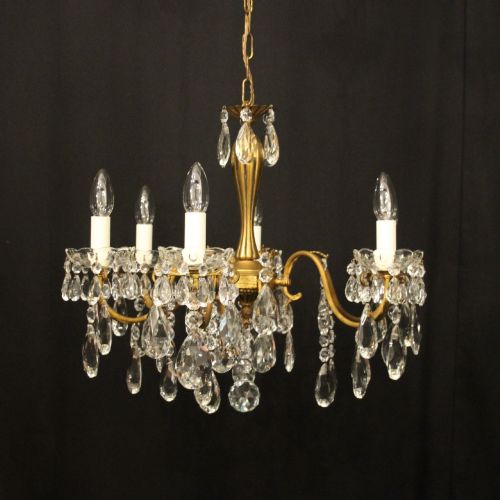
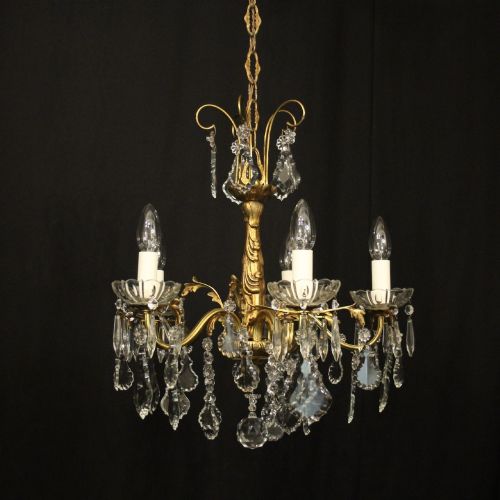
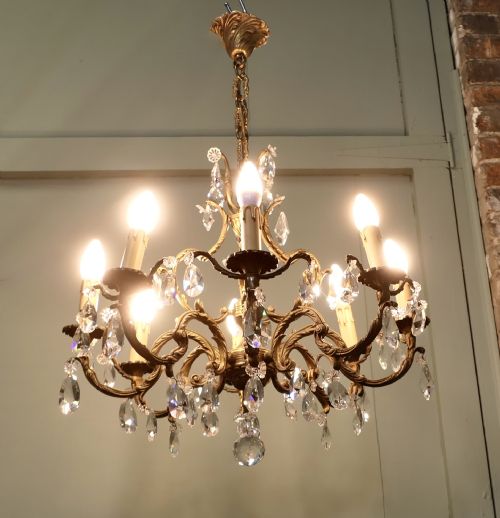
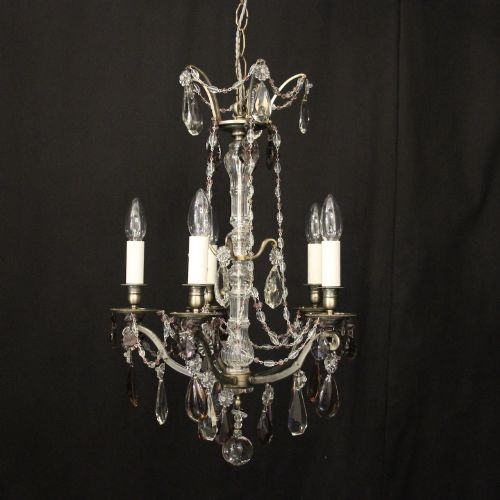
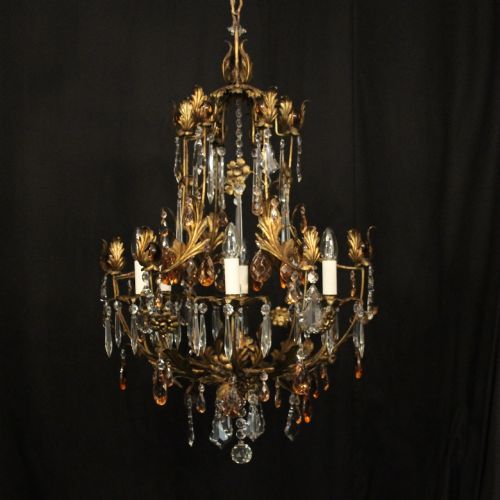
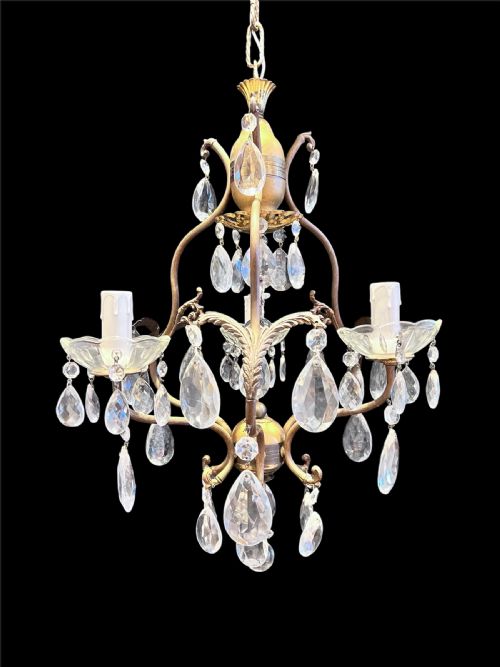
An ornate crystal fixture encompasses elaborate chandeliers, pendant lights, table lamps, and ceiling lights designed to catch and refract light. These pieces emerge from periods spanning the late nineteenth century through the early twentieth century, including Edwardian and 1920s examples.
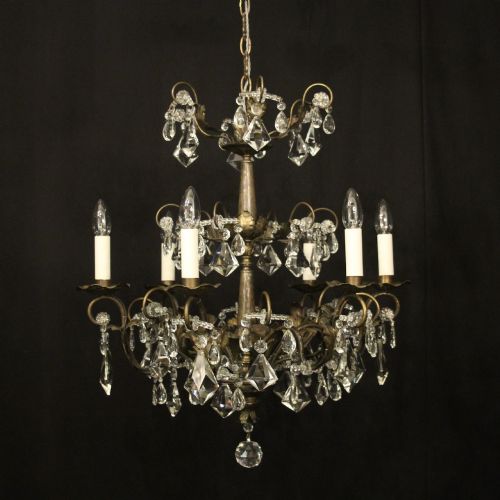
The most common forms on this page are grand chandeliers originating from French and Italian workshops. Buyers encounter multi-branch lighting structures rendered in styles such as French Rococo, Italian Florentine, and French Chateau.
Materials and construction methods
Makers constructed the structural frames of these pieces using cast metals like brass, bronze, or gilt metal, often finishing surfaces with silver or gold gilding. These robust skeletons support the significant weight of numerous glass and crystal components.
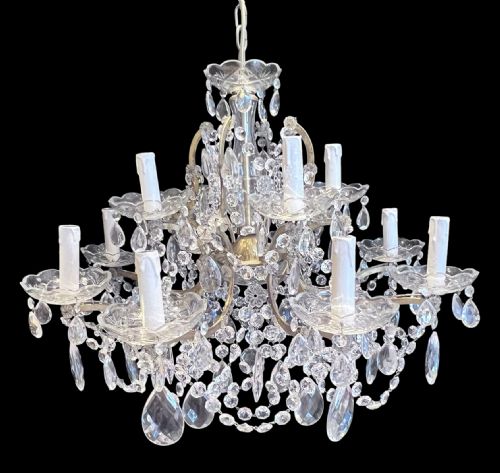
Cut glass and crystal elements hang from the metal armatures as lustres, drops, and swags, secured by fine wire or pins. Specialised glassworking techniques produced both clear and coloured crystal drops designed to maximise light dispersion.
Ornate Crystal Fixture Retail Price Guide 2026
Typical asking prices for ornate crystal fixture among the pieces listed under this phrase on Sellingantiques today, from the lower quarter to the upper quarter. They describe what is for sale here now, not the wider market.
Materials documented across the inventory include cut glass, bronze, gilt brass, and coloured crystal.
Judging quality and craftsmanship
The distinction between tiers rests upon the precision of the metal casting and the clarity of the glass. Superior examples feature deeply chased bronze or brass work alongside hand-cut crystal drops that display sharp facets rather than soft moulded edges.
Scale and structural ambition also define the higher end of the range, evidenced by complex multi-tier frames holding twelve or sixteen lights. The integration of decorative swags and bespoke glass components separates standard production from exceptional pieces.
The Ornate Crystal Fixture Glossary
- Crystal
- High-grade glass containing metallic oxide to increase refractive index and weight. This material allows for sharp, brilliant cutting that disperses light into spectral colours.
- Lustre
- A cut glass pendant suspended from a chandelier to enhance light reflection. These pieces hang in various shapes from the arms and crown of the fixture.
- Girandole
- An ornamental branched candlestick or candelabrum adapted for lighting. These items often feature integrated crystal drops and elaborate metal backplates or stands.
- Ormolu
- Finely ground high-carat gold mercury-gilded to a bronze object. This technique imparts a rich, enduring metallic lustre to the metal framing.
- Swag
- A draped garland of cut glass beads or crystal drops suspended between points on a fixture. They add textural movement and visual complexity to the silhouette.
Ornate Crystal Fixture: Frequently Asked Questions
How do I clean an antique crystal fixture?
Maintenance requires washing individual crystal drops by hand using lukewarm water and a mild soap solution while they remain attached or after careful removal.
Dry each piece with a lint-free cloth before reattachment to ensure maximum sparkle without leaving water spots on the metal frame.
Can these fixtures be wired for modern ceilings?
Most antique pieces accommodate standard electrical wiring after a professional rewiring process updates internal components to meet current safety standards.
Qualified electricians should inspect the vintage metal framing and hanging loops to ensure they safely support the total weight of the fixture.
What is the difference between glass and crystal?
True crystal contains lead oxide which increases its density, weight, and light-refracting properties compared to standard soda-lime glass.
This material composition allows artisans to cut sharper facets that create intense prismatic sparkle when illuminated from within.
How do I determine the correct size for a room?
Scale depends primarily on ceiling height and room dimensions rather than the table or furniture placed directly beneath the light source.
Larger multi-tier arrangements require substantial clearance to maintain visual balance and prevent the metal and glass from dominating the space.