





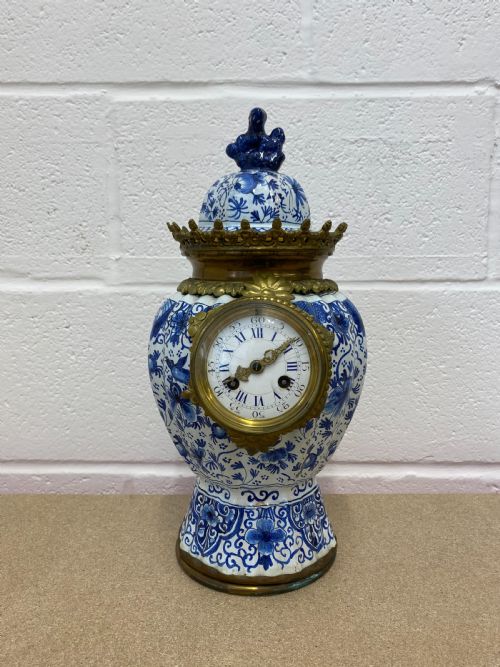
Ornate Ceramic Vases
Ornate ceramic vases bring sculptural presence and rich surface detail into a room, spanning Victorian and continental production.
Ornate Ceramic Vases
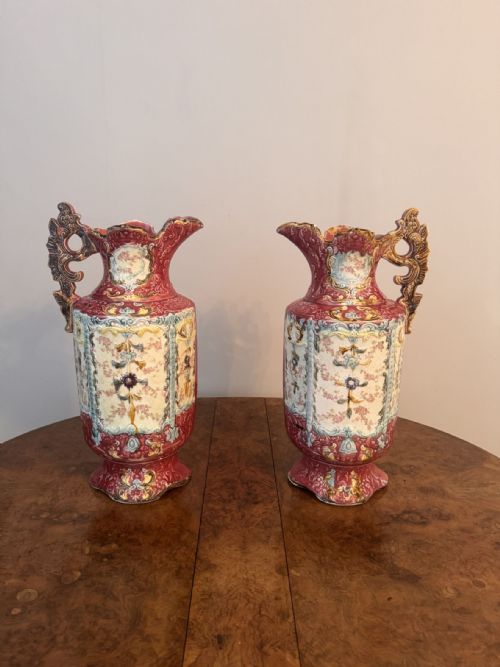
When you search for ornate ceramic vases, you encounter a diverse range of vessels designed primarily for display rather than simple utility. These pieces include decorative ewers, jardinieres, lidded urns, and flower holders produced during the nineteenth and early twentieth centuries.
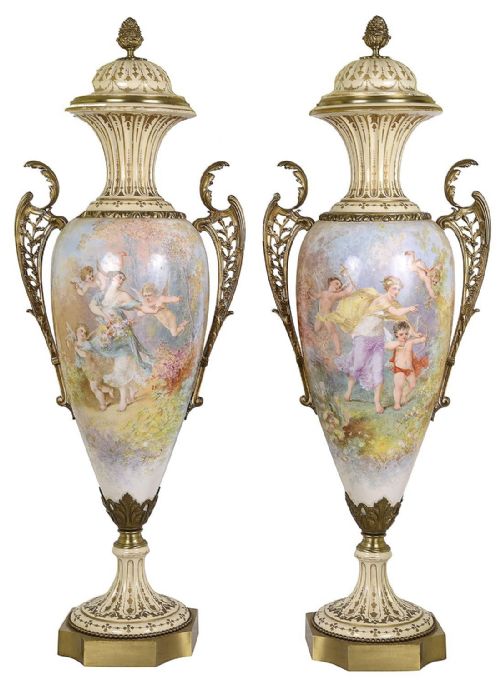
The selections available here lean heavily toward Victorian and continental pieces, featuring notable English works from makers like Royal Worcester alongside French and Italian examples. Forms range from modest table vessels to impressively tall lidded vases standing over a metre in height.
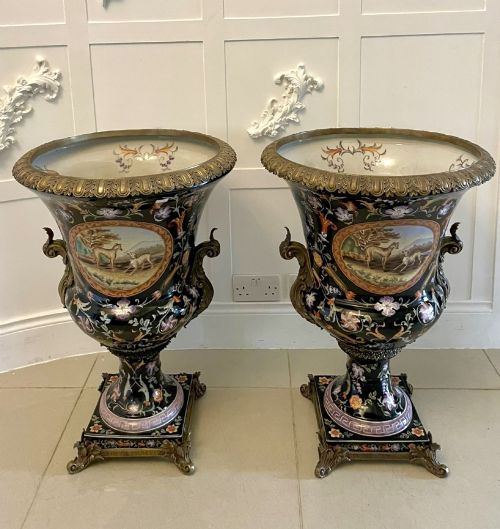
Makers drew on established historical styles, combining Victorian, Rococo Revival, and Renaissance Revival motifs into elaborate decorative schemes. Buyers will find that these vessels frequently incorporate sculptural elements such as handles shaped as natural forms or pedestals supporting large bodies.
How they were made
The manufacture of these vessels relies on high-grade ceramic bodies, principally porcelain and earthenware, shaped by moulding or throwing before being finished by hand. Potters applied detailed surface work including hand painting, enamel decoration, and reticulated piercing.
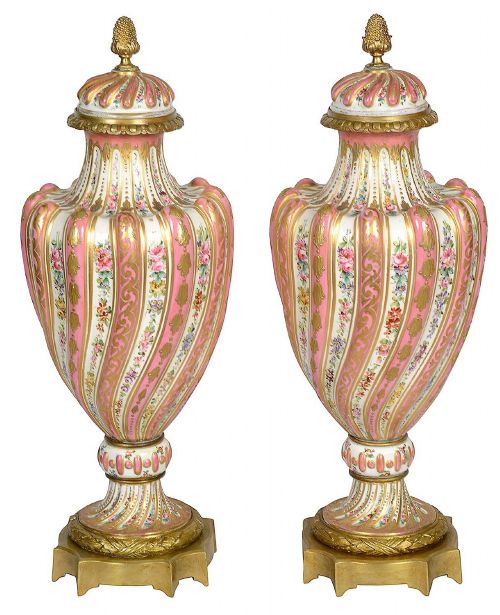
Many pieces feature metallic mounts in brass, gilt bronze, or ormolu, which frame the ceramic body and provide structural support for handles and bases. Gilding, including gold leaf, highlights relief details and frames painted panels.
The selection spans the nineteenth century, including specific Victorian and Edwardian production dates.
What varies in quality
Quality in these vessels rests on the crispness of the ceramic moulding and the fineness of the hand painting. Superior pieces display precise brushwork, controlled enamel application, and intricate reticulation rather than mechanical transfer printing.
The integration of metal mounts also dictates standard; heavier cast brass or ormolu mounts fitted precisely to the ceramic body indicate superior workmanship compared to lighter, ill-fitting mounts.
Grainger Worcester·Royal Worcester·Royal Crown Derby
The Ornate Ceramic Vases Glossary
- Ewer
- A large jug with a wide spout and elaborate handle, originally designed for water but often produced purely for display.
- Jardiniere
- A decorative ceramic pot or urn intended to hold growing plants or floral arrangements.
- Reticulated
- Describes ceramic work featuring an openwork lattice pattern created by cutting away sections of the clay before firing.
- Ormolu
- Gilded bronze mounts applied to furniture and decorative ceramics to enrich the overall design.
- Majolica
- Tin-glazed earthenware known for bright, opaque coloured glazes.
Ornate Ceramic Vases: Frequently Asked Questions
What distinguishes an ewer from a standard vase?
An ewer incorporates a distinct spout and a prominent curved handle, echoing the form of historical water jugs. In decorative ceramics, this shape was favoured for displaying elaborate sculptural handles and figural scenes.
While standard vases focus on symmetrical profiles for floral display, ewers draw the eye along a dynamic, asymmetrical silhouette that emphasises craftsmanship.
How should I care for a piece with gilt mounts?
Dust these vessels gently with a dry, soft brush to prevent accumulation in recessed areas of the gilding and mounts. Avoid liquid cleaners, as moisture can damage delicate enamel work and discolour historic brass or ormolu.
Keep pieces out of direct sunlight to preserve the vibrancy of hand-painted porcelain panels and prevent the drying out of older ceramic bodies.
Are these vessels suitable for holding water?
Most of these decorative items are intended for display and may not be watertight due to age, hairline fractures, or unglazed interior surfaces. Using them for fresh flowers risks moisture damage to both the ceramic body and any internal adhesives.
If you wish to use them for floral displays, place a discreet glass or plastic liner inside the vessel to contain the water safely.
How do I identify a Rococo Revival style piece?
Rococo Revival ceramics feature asymmetrical scrolls, C-scrolls, shell motifs, and naturalistic floral garlands inspired by eighteenth-century French design. The forms avoid straight lines in favour of flowing, organic curves.
On this page, you will find this aesthetic combined with Victorian manufacturing techniques, often enhanced by rich gilding and pastel porcelain grounds.