


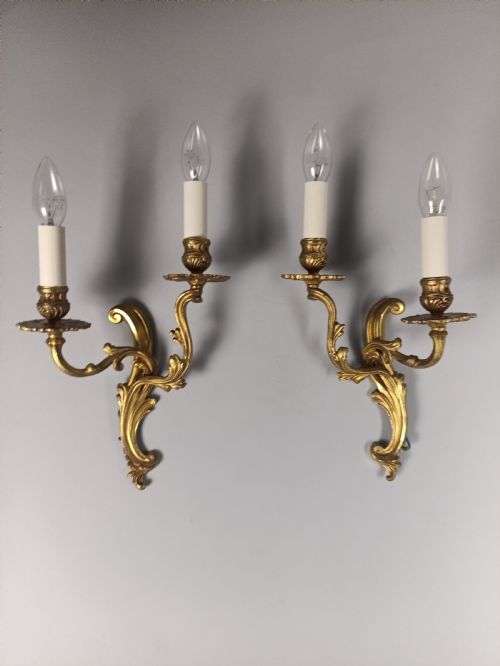
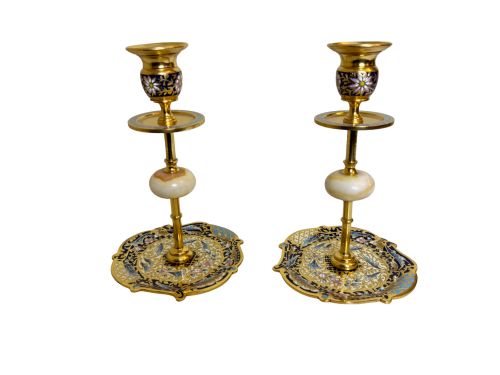
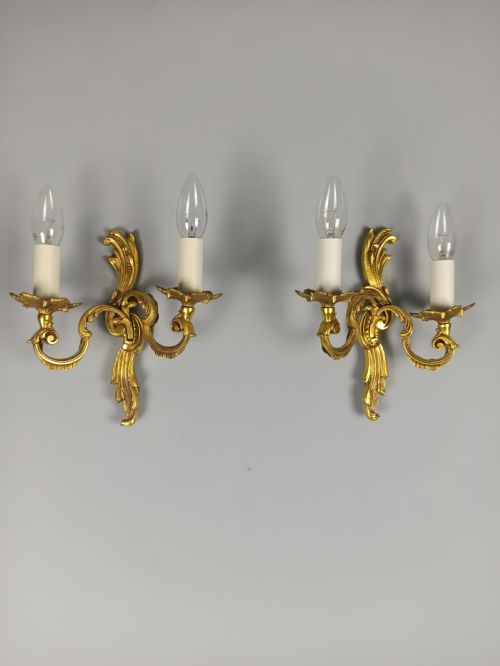
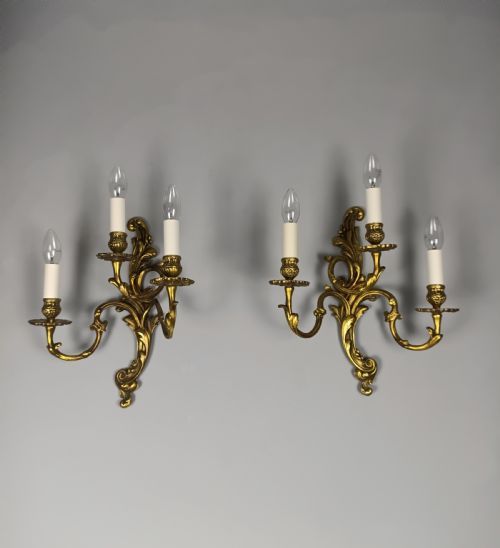
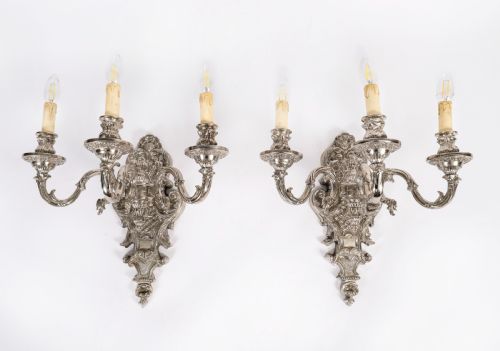
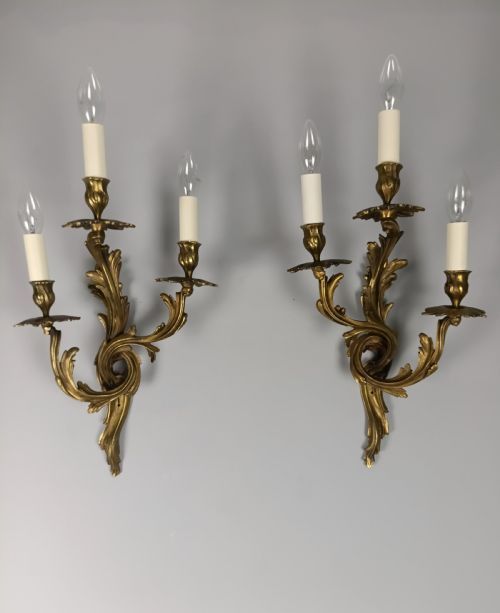


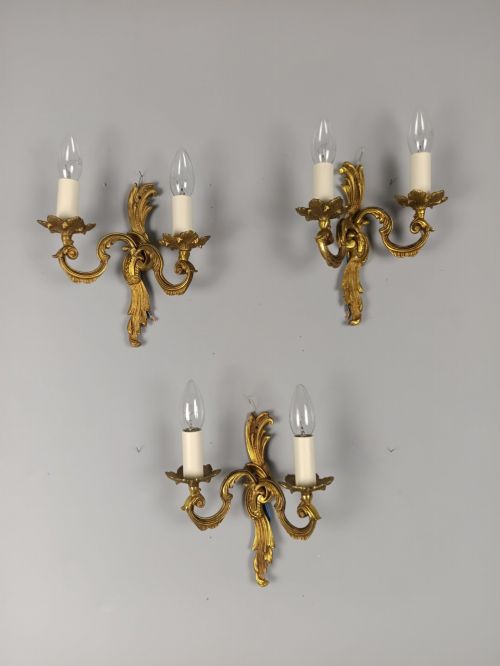
Ornate Bronze Sconces
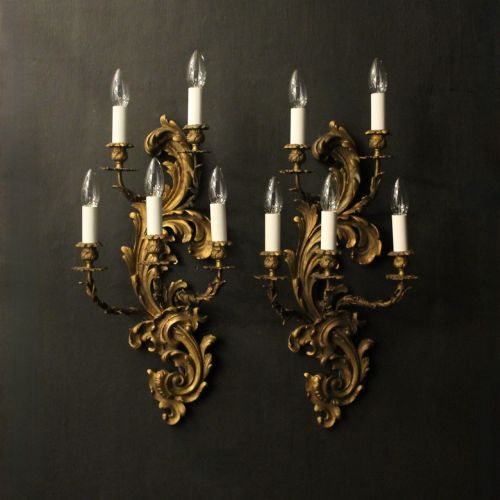
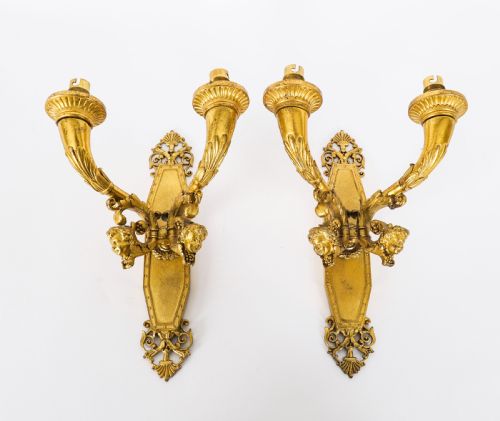
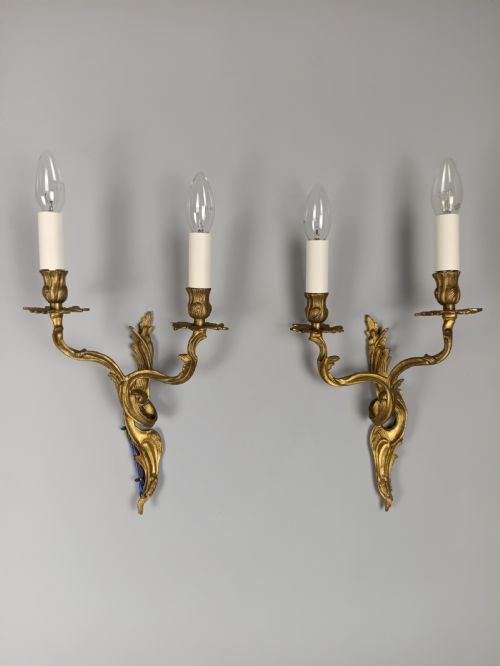
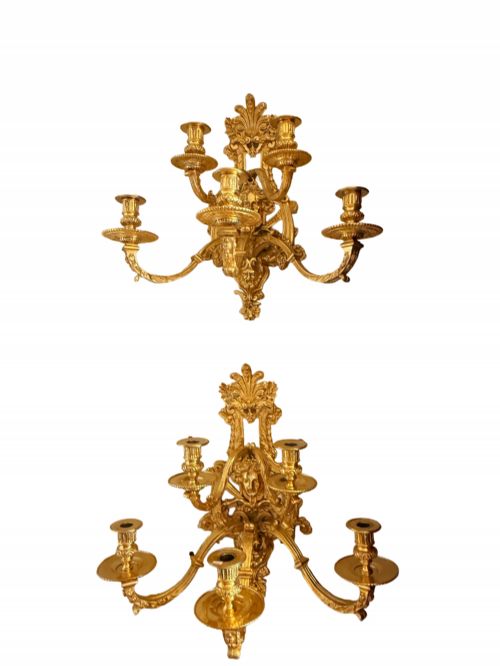
Ornate bronze sconces bring heavy French lighting to a room, casting direct warmth from the wall.
Ornate Bronze Sconces
These ornate bronze sconces arrive primarily as pairs of wall lights, carrying twin or triple branch arms designed to hold candles or electric bulbs. The search phrase covers heavy metal wall lighting built across the nineteenth and early twentieth centuries, drawing heavily upon French stylistic revivals.
Most examples originate from French workshops, showing the enduring influence of Rococo, Louis XIV, and Louis XVI designs upon domestic interiors. Alongside standard wall sconces, the selection includes related girandoles, mirrored wall fittings, and occasional larger chandeliers.
The periods span from the early eighteen-hundreds through to nineteen-thirty, with nineteenth-century gilt pieces and later gilded brass alternatives sitting side by side. Buyers encounter everything from simple single sconces to large sets of four matching arms.
Materials and casting
Foundry work relies upon cast bronze, brass, and ormolu, often treated with surface gilding or silver plating to catch the candlelight. Heavier pieces utilise chased bronze mounts, while certain variations introduce champlevé enamel, onyx elements, or inset crystal drops.
Construction techniques combine rigid metal backplates with articulated or fixed candle arms, secured by threaded bolts or pins. Many period pieces incorporate mirrored glass panels behind the sconce body to multiply the ambient light in a room.
Ornate Bronze Sconces Retail Price Guide 2026
Typical asking prices for ornate bronze sconces among the pieces listed under this phrase on Sellingantiques today, from the lower quarter to the upper quarter. They describe what is for sale here now, not the wider market.
The listings span the eighteenth century to nineteen-thirty, dominated by French Rococo revival pieces formed in bronze and gilded brass.
Execution and finish
Quality rests upon the crispness of the metal chasing and the depth of the original gilding rather than sheer weight alone. Finer examples display sharp scrollwork, distinct leaf motifs, and balanced casting symmetry across matching pairs.
The graduation from standard commercial production to superior workshop execution appears in the hand-finished details of the surface. Better items retain integrated backplates and substantial arm mountings that prevent sagging under the weight of multiple branches.
The Ornate Bronze Sconces Glossary
- Ormolu
- Finely ground high-carat gold applied to a bronze base using a mercury amalgam technique before firing. This creates a durable, warm metallic lustre characteristic of better French lighting.
- Champlevé
- An enamelling technique where troughs are dug into the metal surface and filled with vitreous paste before firing. It appears on select nineteenth-century decorative items.
- Girandole
- An ornamental branched wall light featuring a mirrored backplate to reflect and amplify the illumination. These items combine the functions of a mirror and a sconce.
- Louis XIV Revival
- A decorative style reproducing the heavy, symmetrical grandeur of the seventeenth-century French court. Pieces display bold foliage and formal architectural proportions.
- Rococo Revival
- A nineteenth-century return to asymmetrical scrollwork, C-curves, and naturalistic plant motifs. It dominates the ornamentation found on these wall lights.
Ornate Bronze Sconces: Frequently Asked Questions
How do I wire old sconces?
Many surviving wall lights arrive rewired or ready for modern installation by a qualified electrician. Older frames often require internal channelling or discreet cable routing behind the backplate to maintain historical appearance.
Buyers should inspect the internal lamp holders and mounting brackets to ensure compatibility with current domestic safety standards before fitting them to a wall.
Are these sconces French?
A significant proportion of these metal wall lights originate from France, reflecting the popularity of continental designs imported during the nineteenth and early twentieth centuries. French pieces typically display distinct regional foundry marks or stylistic cues tied to Parisian workshops.
English alternatives also appear within the selection, usually following similar classical decorative schemes scaled for domestic spaces.
What is the difference between ormolu and brass?
Ormolu consists of cast bronze treated with a layer of gold, producing a deep, rich metallic finish that resists tarnishing over decades. Brass is an alloy of copper and zinc used either in its natural golden-yellow state or surface-gilded to mimic richer metals.
Unlacquered brass develops a dark natural patina with age, whereas genuine fire-gilded ormolu maintains a brighter, warmer tone.
How were wall sconces used?
Historically, wall sconces held wax candles positioned strategically around a room to supplement natural daylight and chandelier illumination. The reflective backplates helped bounce flickering light into dark corners before the advent of gas and electric lighting.
Today, they function as ambient wall lighting in hallways, living rooms, and dining spaces, often wired for low-output electric bulbs.