




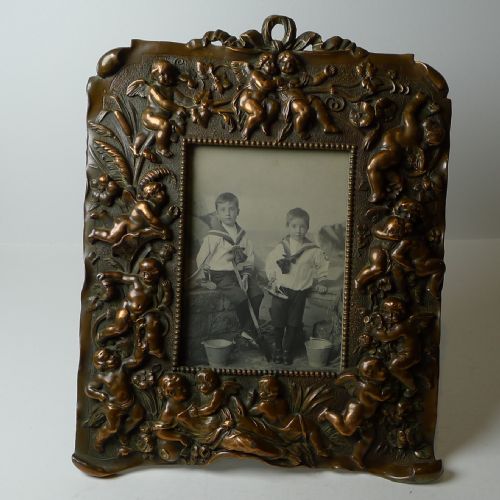


Ornate Bronze Frames
These ornate bronze frames bring heavy cast metal and rich gilding to interiors, offering a tactile way to display cherished photographs and mirrors.
Ornate Bronze Frames
When buyers search for ornate bronze frames, they encounter heavy decorative surrounds cast in solid bronze, often treated with gilt finishes or patinated surfaces. These pieces emerge from the nineteenth and early twentieth centuries, spanning Victorian, Edwardian, and French Revival periods.
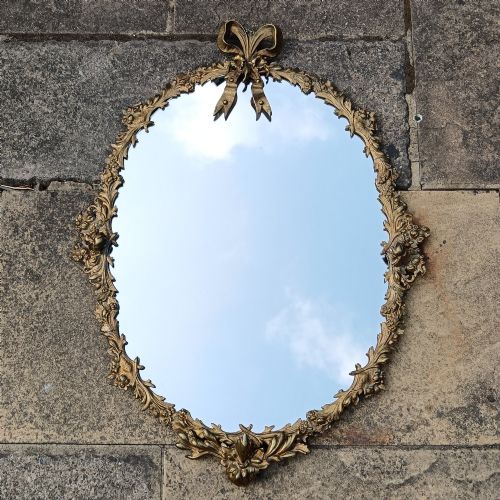
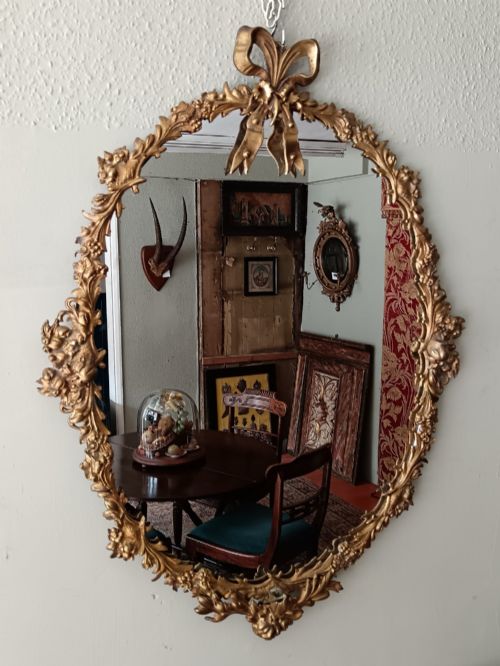
The selection here includes wall mirrors and picture frames, alongside related items like hand mirrors and vanity accessories. Most examples draw upon French design vocabularies such as Louis XVI, Rococo, and Empire styles, featuring detailed cast ornamentation.
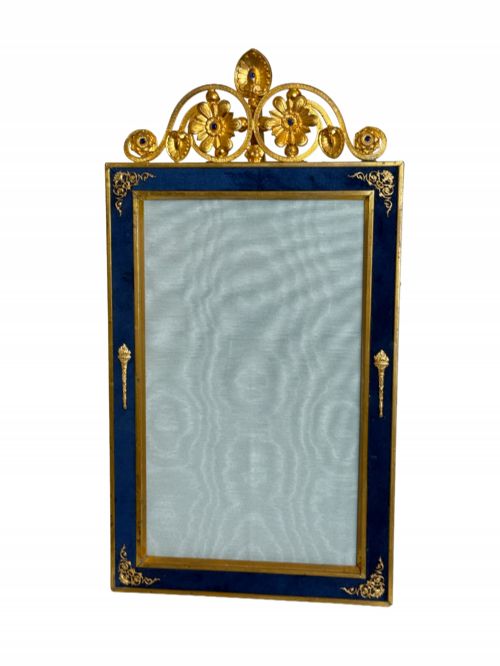
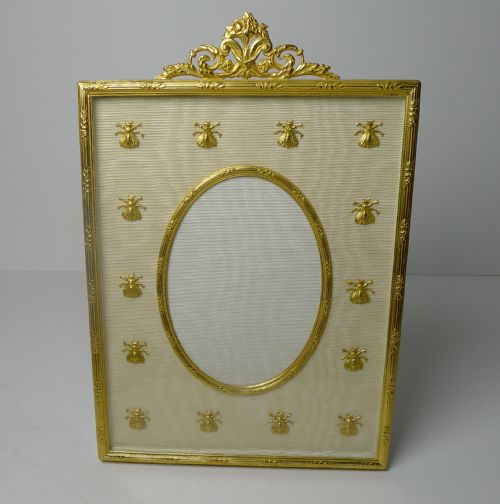
Buyers are most likely to meet rectangular and oval picture frames embellished with motifs like cherubs, Napoleonic bees, and blue enamel trims. These objects were manufactured to sit upon dressing tables or hang in formal reception rooms.
Materials and construction
These items rely upon metal casting techniques, utilising bronze or brass that is frequently gilded to create a bright, reflective surface. Artisans often combined the cast metal framework with secondary materials such as wood backings, glass panes, and plush velvet linings.
Surface decoration frequently incorporates champleve enamel work, where coloured glass pastes are fused into recessed metal channels before firing and polishing. Detail is achieved through intricate hand-chasing of the metal after casting to sharpen the contours of cherubs, foliage, and geometric borders.
Ornate Bronze Frames Retail Price Guide 2026
Typical asking prices for ornate bronze frames among the pieces listed under this phrase on Sellingantiques today, from the lower quarter to the upper quarter. They describe what is for sale here now, not the wider market.
Judging quality in metalwork
The integrity of the gilt surface and the weight of the bronze structure dictate the standing of a piece. Finer items retain their original fire gilding or heavy gold leaf without patchy wear, and use robust easel backs and structural elements rather than flimsy substitutes.
The Ornate Bronze Frames Glossary
- Gilt bronze
- Metal cast in bronze and coated with a layer of gold, providing a bright, durable finish. This treatment protects the base metal from tarnishing while offering a luxurious appearance.
- Champleve enamel
- An enamelling technique where troughs are dug into the metal surface and filled with vitreous enamel before firing. The piece is then ground smooth and polished flush with the metal dividers.
- Louis XVI Revival
- A nineteenth-century design style drawing upon classical symmetry, straight lines, and refined neoclassical motifs. It often incorporates ribbons, urns, and delicate floral garlands.
- French Rococo
- A decorative style characterised by asymmetrical scrollwork, C-scrolls, and exuberant naturalistic motifs such as shells and foliage. This aesthetic dominated much nineteenth-century French decorative metalwork.
- Fire gilding
- A historic process where an amalgam of gold and mercury is applied to bronze and heated until the mercury vaporises, leaving a permanent gold bond. It produces a rich, deep lustre unlike modern electroplating.
Ornate Bronze Frames: Frequently Asked Questions
Are these frames heavy to hang?
Solid bronze and cast metal frames possess considerable weight relative to their physical dimensions. Wall mirrors and large picture frames require secure wall fixings anchored directly into studs or masonry rather than relying on standard picture hooks.
Tabletop frames utilise sturdy rear easel struts designed to support the heavy metal mass safely. Check that the hinge mechanism on the back is firm and stable before setting the frame on a desk or chest.
What periods do these frames come from?
The pieces seen here predominantly date from the nineteenth and early twentieth centuries. Victorian and Edwardian examples sit alongside French pieces from the 1890s through to the 1920s.
Stylistic markers often point towards specific decades, such as the revival styles popular during the late Victorian era and the turn of the twentieth century. Design elements like Napoleonic bees or Louis XVI ribbons help narrow down the era of manufacture.
Can I replace the glass easily?
Many antique frames feature original bevelled mirror plates or glass covers secured by pinned bezels or folded metal tabs on the reverse. Opening these backs requires patience to avoid snapping aged metal retainers or damaging delicate cast borders.
When replacement is necessary, consult a professional glazier to cut modern glass to the exact historic dimensions. Preserving the original backing boards and fixings helps maintain the integrity of the piece.