

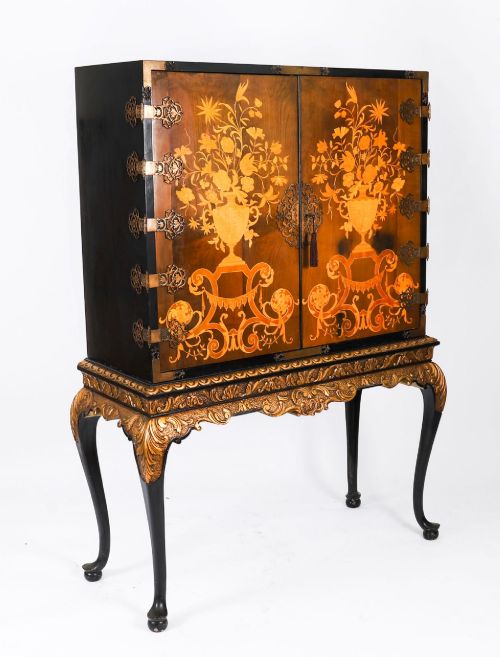
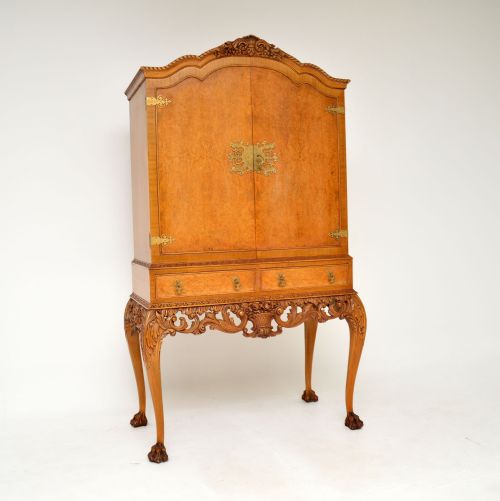


Ornate Brass Mount Cabinet
An ornate brass mount cabinet brings distinct metalwork and rich timbers together, offering both storage and a striking focal point for the room.
Ornate Brass Mount Cabinet
An ornate brass mount cabinet combines functional storage with elaborate metal fittings, spanning periods from the eighteenth century through to the twentieth. These pieces encompass varied forms including display cabinets, cocktail cabinets, bookcases, and sideboards, reflecting diverse stylistic revivals.
The selections encountered here show an international range of origins, including French Boulle inlay, Spanish tortoiseshell, and English walnut pieces. Makers such as Paul Sormani contribute to the higher end of these works, while simpler table cabinets and side cabinets represent more modest domestic forms.
Victorian examples and pieces from the nineteen-twenties and thirties dominate the selection, showing how cabinetmakers adapted classical proportions to later tastes. Burr walnut, kingwood, ebonised wood, and mahogany serve as the primary timber carcases for these decorative mounts.
Materials and construction
Makers constructed these carcases using dense hardwoods like mahogany, oak, and walnut, frequently applying fine veneers such as burr walnut, kingwood, and tulipwood across the surfaces. Marquetry, tortoiseshell inlay, and black lacquer further decorated the primary wood structures before the metal hardware was applied.
Cast brass and ormolu mounts were meticulously secured to the corners, doors, and aprons of the furniture to accentuate the cabinet design. Glass panels were integrated into doors for display pieces, while marble tops provided durable and decorative surfaces for commodes and side cabinets.
Ornate Brass Mount Cabinet Retail Price Guide 2026
Typical asking prices for ornate brass mount cabinet among the pieces listed under this phrase on Sellingantiques today, from the lower quarter to the upper quarter. They describe what is for sale here now, not the wider market.
Listings feature pieces spanning the eighteenth, nineteenth, and twentieth centuries, utilising brass, glass, marble, and tortoiseshell.
Assessing quality and execution
The sophistication of the brass and ormolu mounts dictates much of the visual success of each piece, distinguishing finely chased hardware from simpler stamped metal. Crisp casting detail in the metalwork aligns with careful timber selection and complex veneer patterns like burr walnut or Boulle inlay.
The reputation of the maker, such as Paul Sormani, often signals superior interior fitting, joinery, and material thickness. Cohesion between the cabinet carcase and its decorative mounts separates standard commercial production from exceptional studio output.
Paul Sormani
The Ornate Brass Mount Cabinet Glossary
- Ormolu
- Gilded bronze or brass applied as a decorative mount to furniture carcases. This technique was widely utilised in French nineteenth-century cabinetmaking.
- Boulle inlay
- A delicate marquetry technique combining tortoiseshell and brass, named after the famed French cabinetmaker André-Charles Boulle. It creates a striking contrast of dark shell and polished metal.
- Kingwood
- A dense, richly figured Brazilian timber with dark violet-brown streaks, frequently used for veneering fine eighteenth and nineteenth-century cabinets.
- Pier cabinet
- A low cabinet designed specifically to fit the wall space between windows. These pieces often feature glass doors and elaborate brass mounts.
Ornate Brass Mount Cabinet: Frequently Asked Questions
What is an ornate brass mount cabinet?
An ornate brass mount cabinet is a storage piece embellished with decorative metalwork, encompassing styles from eighteenth-century table cabinets to twentieth-century cocktail units.
These items range from French vitrines to English walnut bookcases, all united by their distinctive metal hardware.
How do I date a cabinet?
Dating relies on identifying the underlying timber, the construction techniques of the carcase, and the prevailing style of the period, such as Victorian or Art Deco.
Comparing the specific brass mounts and veneer types against known historical periods helps narrow down the decade of manufacture.
Where should I place a cabinet?
These cabinets work well as focal points in reception rooms, studies, or dining spaces where their decorative mounts and timber veneers can be fully appreciated.
Pieces with glass doors or fitted interiors also function effectively to display glassware, books, or collections.
How are different wood types identified?
Identifying woods involves examining the grain pattern, colour, and weight of the visible timber and veneer surfaces.
Materials like burr walnut exhibit distinct swirling knots, whilst kingwood shows characteristic dark streaks against a violet-brown background.