






Ornate Brass Lamp Stand
An ornate brass lamp stand brings height and warm metallic reflection to a room, bridging utility with decorative presence.
Ornate Brass Lamp Stand
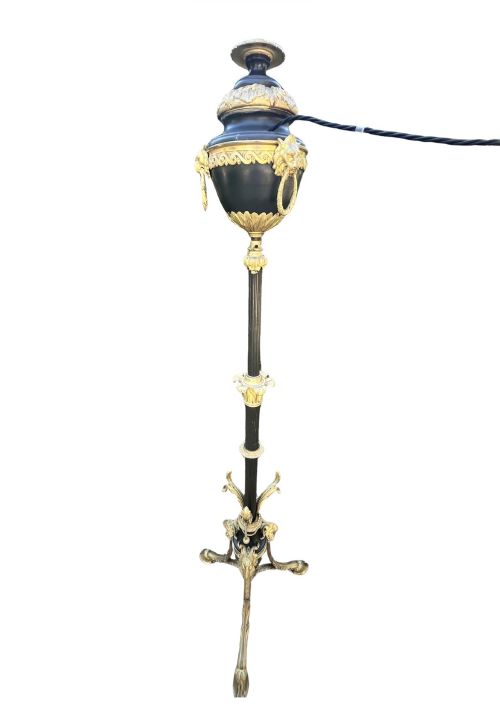
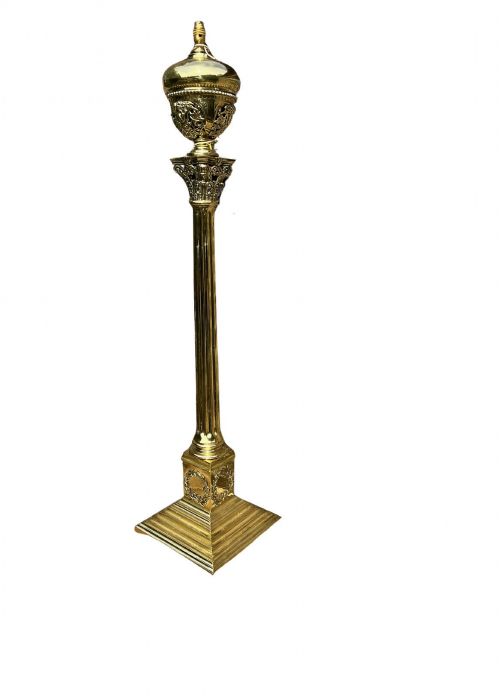
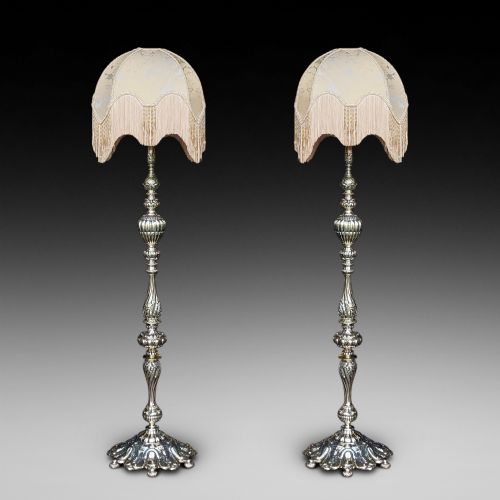
When searching for an ornate brass lamp stand, you are looking at substantial upright lighting fixtures designed to illuminate a room from floor or table height. The examples seen here span the Victorian era, the Edwardian period, and the early twentieth century, showing substantial variety in height and proportion.
The most common forms on this page are standard lamps and floor lamps designed to stand beside seating or in corners. These pieces frequently incorporate tall shafts paired with decorative bases, sometimes featuring telescopic mechanisms for height adjustment or original oil lamp fittings.
Origin and stylistic influence play a large part in these objects, with many pieces drawing on French design, Italianate baroque, and classical revival motifs. Alongside the standard floor models, you will encounter smaller table lights and combined lamp tables featuring marble tops and mahogany.
Assessing quality in brass lighting
Quality in an ornate brass lamp stand rests upon the crispness of the casting and the depth of the chased or floral openwork on the base. Heavy gauge brass and substantial metal thickness distinguish the finer standards from lighter production pieces.
Engineering mechanisms such as telescopic adjustment stems and rise and fall pulleys demonstrate superior workshop execution when they operate smoothly and hold their position securely. The integration of secondary materials, such as fitted marble columns or mahogany tiers, further indicates the ambition of the original piece.
Ornate Brass Lamp Stand Retail Price Guide 2026
Typical asking prices for ornate brass lamp stand among the pieces listed under this phrase on Sellingantiques today, from the lower quarter to the upper quarter. They describe what is for sale here now, not the wider market.
A charming little French boudoir floor lamp proves that even the grandest Victorian rooms had space for miniature elegance.
Messenger
The Ornate Brass Lamp Stand Glossary
- Standard lamp
- A tall floor-standing lamp designed to support a shade and illuminate a room from an elevated position. They became popular in the nineteenth century as interior gas and electric lighting evolved.
- Telescopic
- A shaft construction allowing the height of the lamp to be adjusted up and down via an internal sliding tube. This mechanical feature enabled users to direct light according to their seating arrangements.
- Rise and fall
- A counterweighted pulley system that permits the height of the light source to be raised or lowered smoothly. It is frequently encountered on late nineteenth century Victorian models.
- Cast brass
- Brass poured into a mould to create three-dimensional decorative elements, floral openwork, and heavy bases. It allows for intricate surface relief that stamped sheet metal cannot achieve.
- Ormolu
- Finely chased and gilt bronze or brass mounted onto furniture or used for decorative light fittings. The technique creates a rich golden finish characteristic of French-inspired luxury goods.
Ornate Brass Lamp Stand: Frequently Asked Questions
What is a standard lamp?
A standard lamp is a tall floor-standing lighting fixture designed to hold a shade at upper room height. These pieces typically stand beside armchairs or sofas to provide ambient or reading light.
In period interiors, they served as a movable alternative to ceiling fixtures, allowing homeowners to place illumination precisely where it was needed.
How do telescopic lamps work?
Telescopic lamp stands use an inner and outer metal tube that slides vertically to alter the overall height of the standard. A thumb screw or collar typically secures the stem at the desired level.
This adjustment mechanism allowed Victorian and Edwardian households to adapt the lighting height for different tasks or seating arrangements.
Were these lamps originally electric?
Many nineteenth and early twentieth century standards began their lives configured for oil or gas before being converted to electricity later in their history. Extending oil lamps, for example, utilised burners that were subsequently adapted for modern wiring.
When examining older examples, evidence of past fuel reservoirs or burner fittings often remains visible beneath the current electrical components.