





Ornate Brass Hooks
Ornate brass hooks are decorative fixtures that secure garments and window dressings with period character.
Ornate Brass Hooks
When you search for ornate brass hooks, you find heavy metal fixtures designed for walls, panels, and ceilings. The selection spans the Victorian era through the Edwardian period, alongside French styles like Rococo Revival and Baroque.
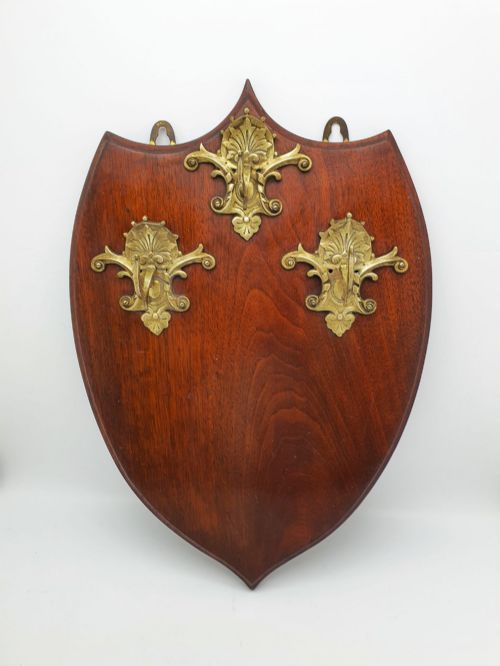
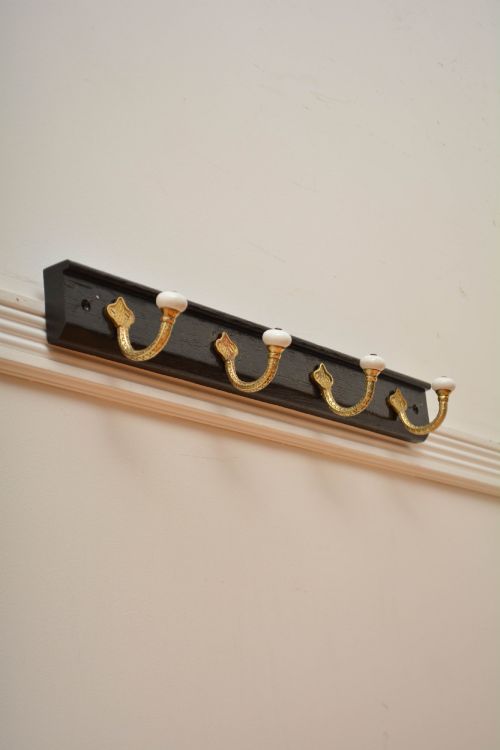
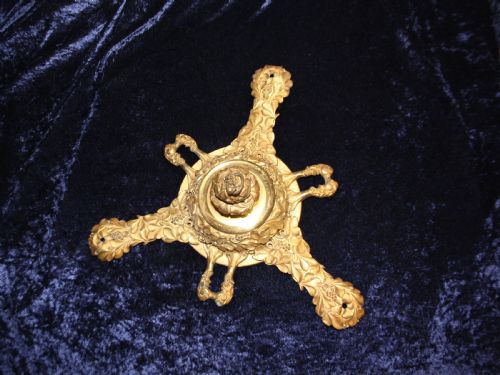
Coat hooks and wall hooks appear mounted on mahogany plaques or ebonised solid oak boards, often paired with ceramic or porcelain knobs. Curtain tie backs and ceiling roses provide alternative forms in cast and gilt brass.
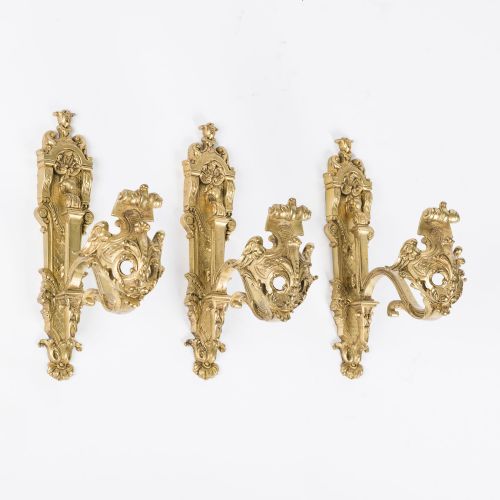
Most examples originate from the nineteenth century, ranging from simple chased designs to elaborate French bronze and ormolu pieces. Buyers frequently encounter single items or pairs suited for hallway and bedroom use.
How they were made
Makers utilised cast and chased brass alongside gilt finishes to create relief work and decorative depth. Bronze and ormolu were also shaped into French provincial and baroque motifs for tie backs and wall mounts.
Backplates combine solid oak and mahogany timbers with metal hooks, sometimes integrating porcelain or ceramic components. Construction methods rely on traditional joining for wooden plaques and solid casting for metal elements.
Ornate Brass Hooks Retail Price Guide 2026
Typical asking prices for ornate brass hooks among the pieces listed under this phrase on Sellingantiques today, from the lower quarter to the upper quarter. They describe what is for sale here now, not the wider market.
Periods represented span from mid-eighteenth-century French Baroque designs through Victorian and Edwardian domestic hardware.
What varies in quality
The distinction between standard items and superior examples lies in the crispness of the casting and the depth of the chased detail. Heavier gauge metal and refined finishing on French ormolu or gilt surfaces elevate a piece.
The integration of materials also affects the overall standard, particularly where ceramic knobs or mounted wooden plaques are preserved intact. Finer items exhibit balanced proportions and substantial weight in the brass structure.
The Ornate Brass Hooks Glossary
- Ormolu
- Gilt bronze applied to decorative hardware and furniture mounts. This technique creates a rich golden finish on French pieces from the eighteenth and nineteenth centuries.
- Chased
- Metalworked by hammering or punching from the front to create raised surface patterns. This adds intricate detail to plain brass hooks.
- Ceiling Rose
- A decorative circular moulding fixed to the ceiling from which chandeliers or hooks are suspended. Cast brass examples often feature floral or scroll motifs.
- Ebonised
- Wood stained or painted black to resemble ebony. Victorian makers frequently used ebonised oak as a contrasting dark backing for brass fixtures.
- Tie Back
- A fixture attached to the wall beside a window to hold curtains open. Pairs in gilt brass or bronze frequently match the style of interior hardware.
Ornate Brass Hooks: Frequently Asked Questions
How do I mount wooden coat hook plaques?
Wall plaques usually feature pre-drilled screw holes through the mahogany or oak backing boards. Use appropriate wall anchors to support the weight of heavy garments.
Ensure the fixings match the vintage of the piece where possible to maintain the original appearance.
Can curtain tie backs hold heavy fabrics?
Cast brass and bronze tie backs are sturdy enough for substantial drapery when securely anchored into wall studs. Solid metal construction prevents bending under daily tension.
Position them at the correct height to gather the fabric evenly without straining the fixture.
How do I clean antique brass hooks?
Dust the surface gently with a soft dry cloth to remove everyday particles. Avoid harsh chemical polishes that strip historical patination.
Preserving the aged surface maintains the character developed over the nineteenth century.
What is the difference between wall hooks and ceiling roses?
Wall hooks project outward to hold hats, coats, or curtains, while ceiling roses mount flat against overhead surfaces. Roses act as decorative bosses around suspension points.
Both utilise similar cast brass and gilt techniques across Victorian and Edwardian examples.