
Ormolu Cabinet
An ormolu cabinet brings architectural presence and gilded warmth into a room, combining rich woods with cast bronze mounts.
Ormolu Cabinet
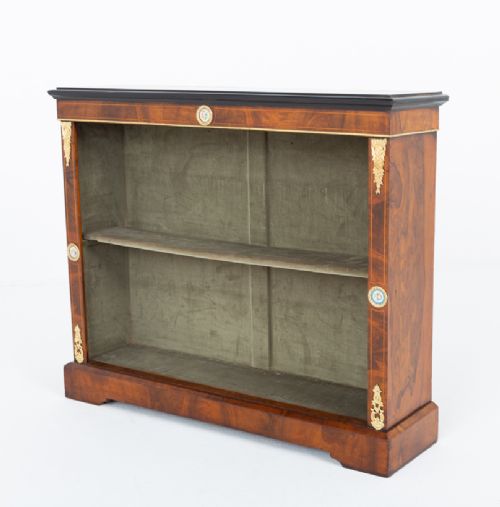
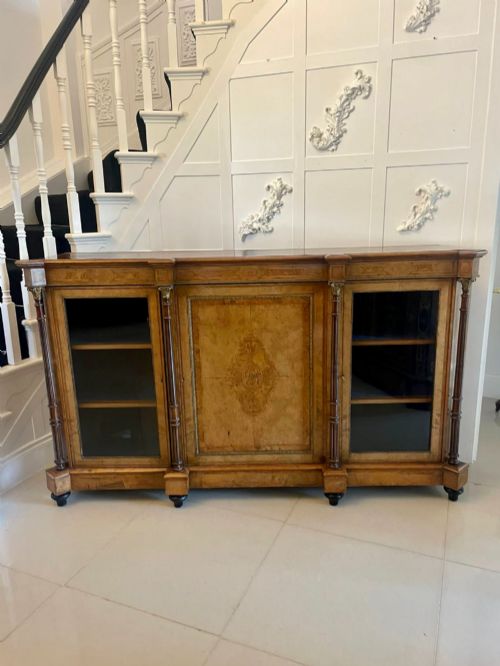
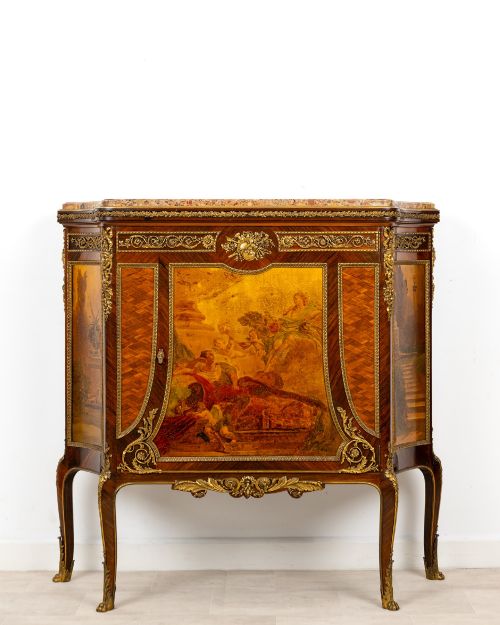
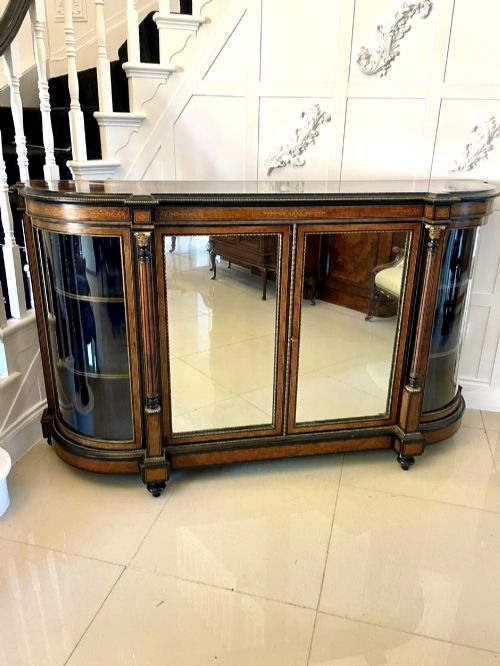
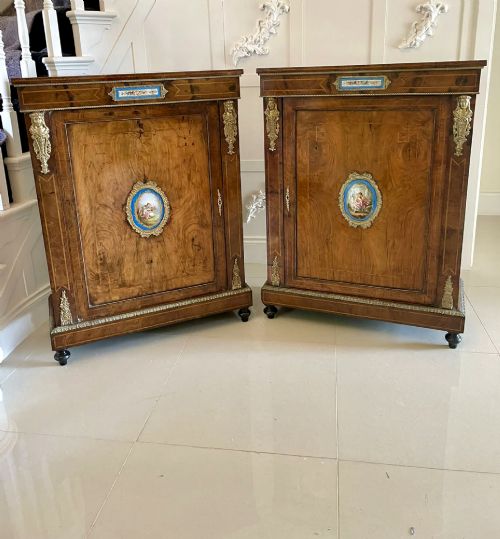
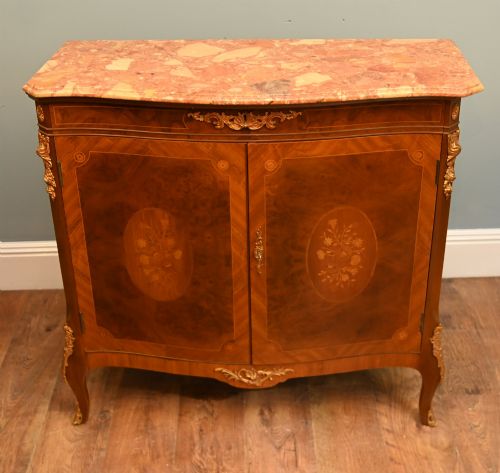
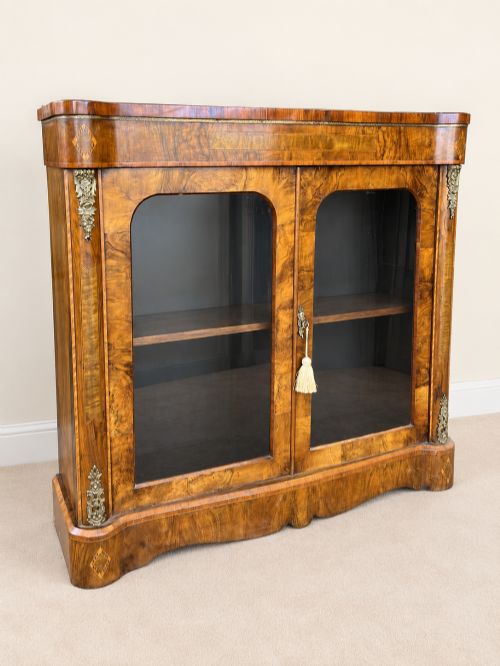
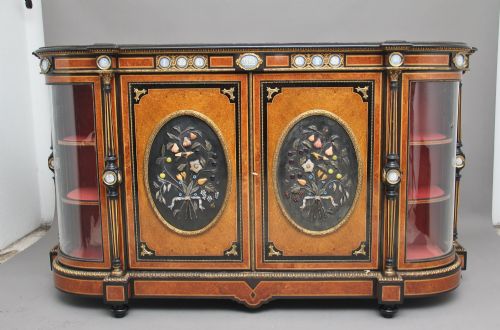
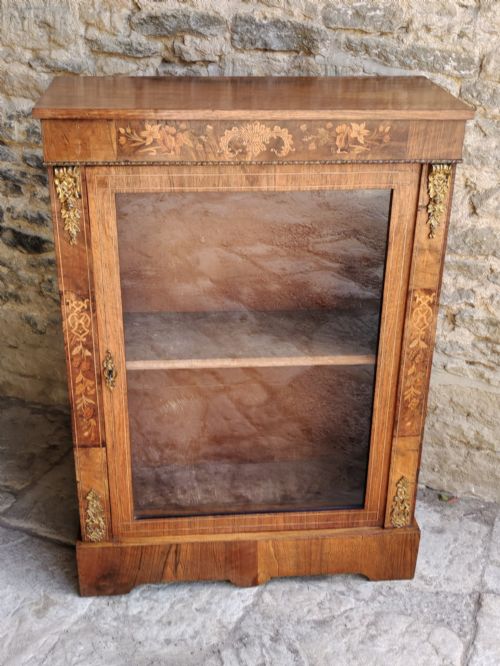
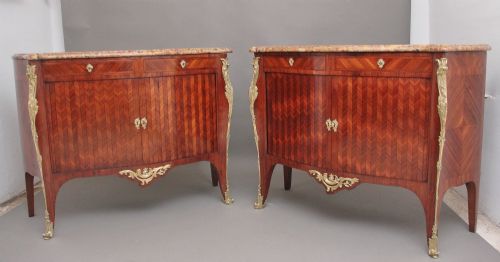
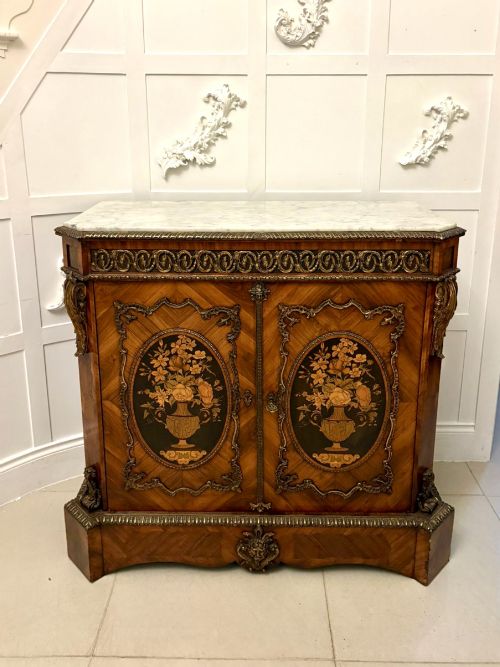
When searching for an ormolu cabinet, buyers encounter substantial nineteenth-century pieces, including Victorian credenzas, sideboards, pier cabinets, and French vitrines. These forms range from serpentine display cabinets to multi-door side cabinets intended for formal reception rooms.
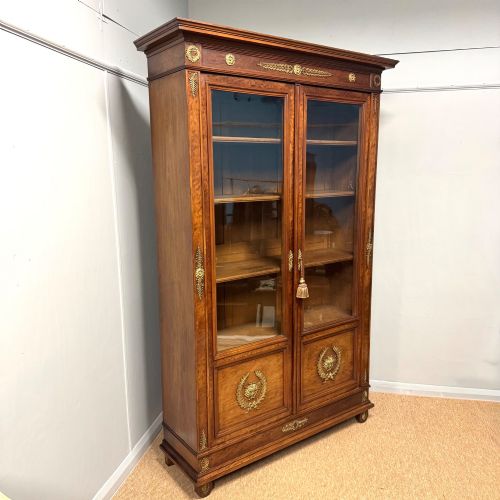
The aesthetic draws heavily on continental revival movements, particularly Louis XV and Louis XVI styles, alongside French Empire and Napoleon III designs. Victorian iterations frequently utilise burr walnut and porcelain plaques to complement the gilt metal mounts.
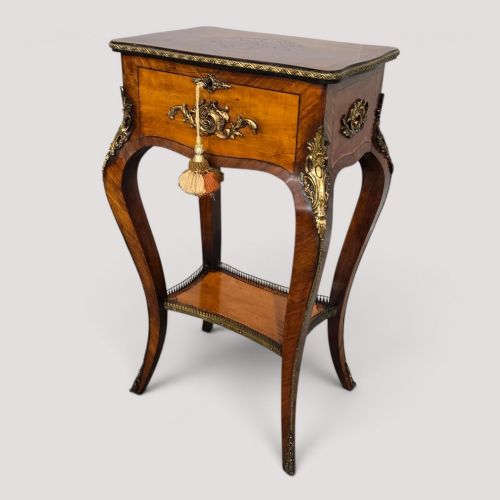
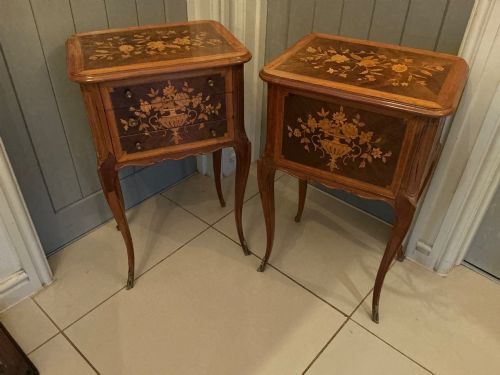
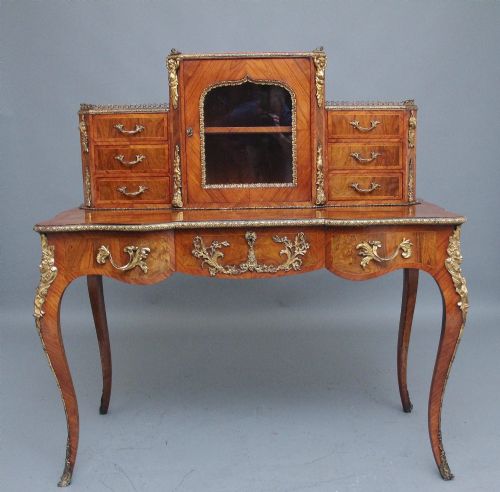
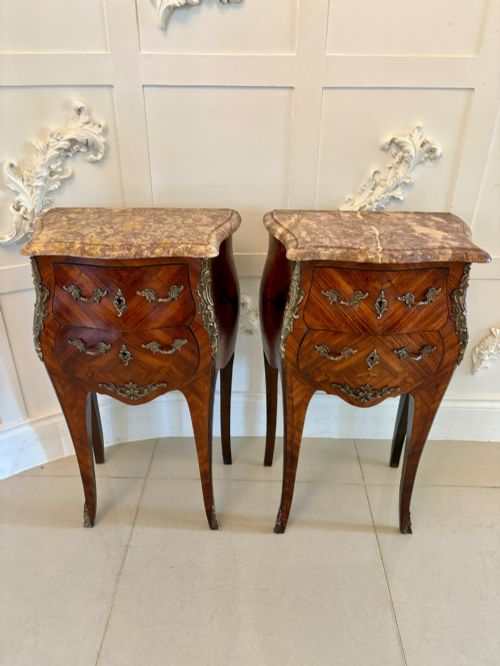
Many examples originate from English workshops or French makers active during the nineteenth and early twentieth centuries. Surviving pieces demonstrate considerable variety in scale, from low bedside tables to large glazed bookcases.
Materials and construction methods
Makers built these pieces using dense structural timbers like walnut, kingwood, amboyna, and mahogany, often applying decorative veneers in burr walnut or marquetry patterns. Marble tops feature on select French side cabinets and commodes, adding weight and a cool tactile contrast to the timber.
Ormolu mounts, cast in bronze and heavily gilded, are pinned or screwed to the corners, friezes, and feet of the cabinet carcase. Ebonised details, porcelain plaques, and glass panels are integrated into the doors and sides to elevate the visual richness of the display furniture.
Some nineteenth-century French bedside tables double as miniature showcases for midnight reading lamps.
Assessing craftsmanship and finish
The standard of the ormolu casting largely distinguishes finer pieces from standard production, with superior mounts displaying crisp chiselling and deep, warm gilding. Cabinetwork quality shows in the matching of veneer grains, the precision of inlaid marquetry, and the structural integrity of curved serpentine fronts.
Internal fitting and secondary woods also reveal the maker's hand, where solid drawer linings and original glass panes indicate careful construction. Pieces bearing known maker signatures or attribution to prominent workshops generally represent the apex of nineteenth-century cabinet-making.
François Linke·Gillows·Epstein
The Ormolu Cabinet Glossary
- Ormolu
- Gilded bronze mounts used as decorative enrichment on furniture, derived from the French term for ground gold. It provides bright metallic highlights against dark woods.
- Credenza
- A sideboard or display cabinet originating in the nineteenth century, frequently fitted with glazed central doors and curved side cupboards. These pieces often incorporate porcelain plaques and extensive marquetry.
- Marquetry
- The art of applying decorative pieces of veneer to a structure to form geometric or floral designs. Cabinet makers used contrasting timbers such as walnut and kingwood to create pictorial depth.
- Vitrine
- A glass-fronted display cabinet designed for the presentation of porcelain, glass, or small objets d'art. They frequently feature gilt-bronze mounts and mirrored backs.
- Pier cabinet
- A narrow cabinet designed to fit the wall space between windows. They typically stand on low plinths and feature single glazed doors.
Ormolu Cabinet: Frequently Asked Questions
How do I date an ormolu cabinet?
Dating relies on stylistic clues, construction methods, and material choices associated with periods like the Victorian era, Edwardian period, and French Empire. Victorians favoured burr walnut with porcelain mounts, while French Louis XV revival pieces often feature complex marquetry and serpentine marble tops.
Examining internal carcase timbers, backboards, and the sharpness of the bronze casting helps narrow the decade of manufacture.
Where were these cabinets placed?
Original placement depended on the specific form, with pier cabinets positioned in the wall spaces between large windows and credenzas set against principal drawing room walls. Vitrines and display cabinets stood where natural light could illuminate the porcelain and glass housed inside.
Today, they function as focal points in living spaces, holding books, collections, or serving as sideboards.
What woods were used?
Cabinet makers utilised a range of dense hardwoods and decorative veneers, most notably walnut, burr walnut, amboyna, kingwood, mahogany, and rosewood. These timbers provided stable foundations for intricate marquetry and contrasting ebonised borders.
Marble was frequently employed for the top surfaces of French commodes and side cabinets to provide a durable and elegant finish.