

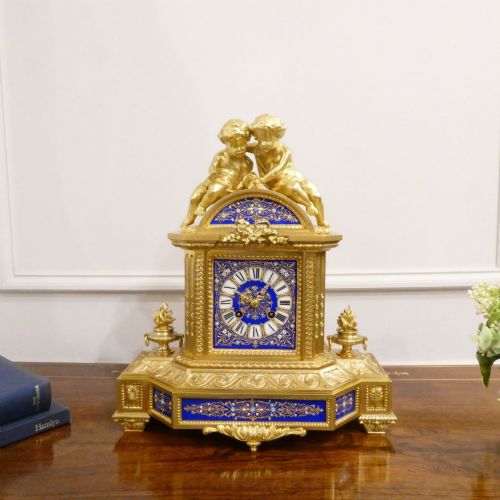
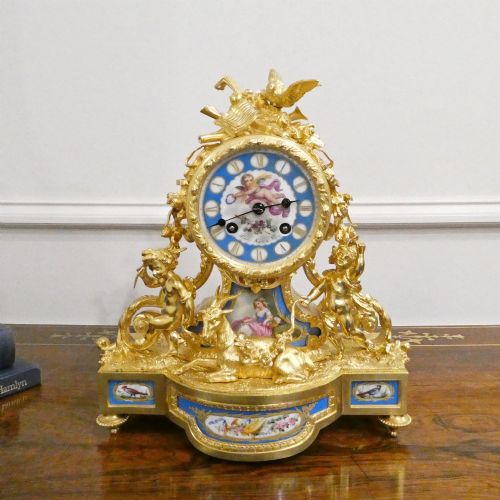
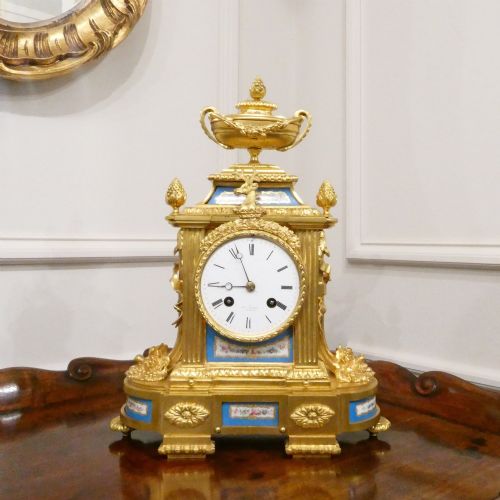
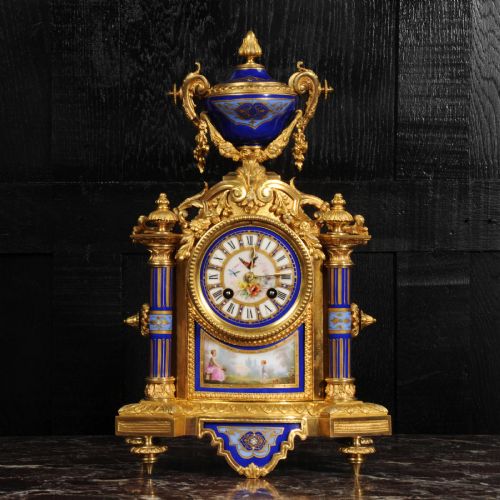



Ormolu and Sevres Clock
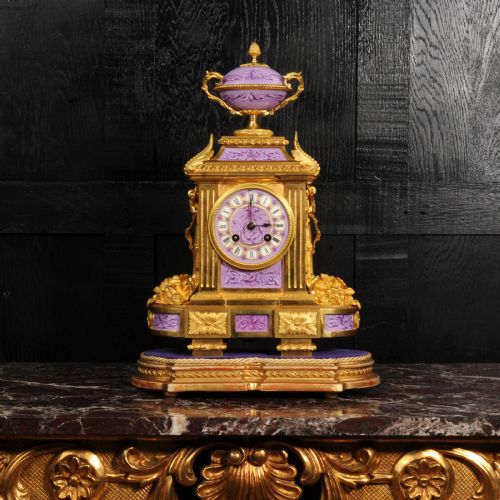
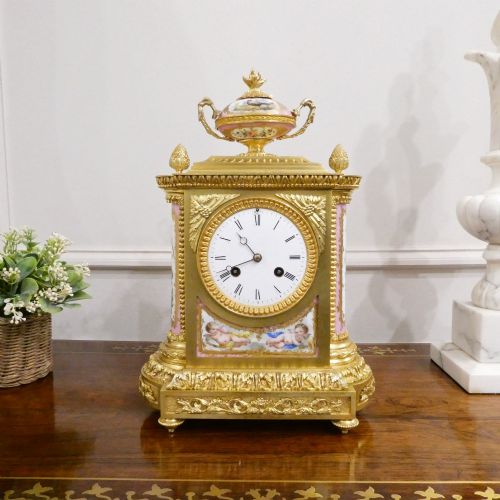
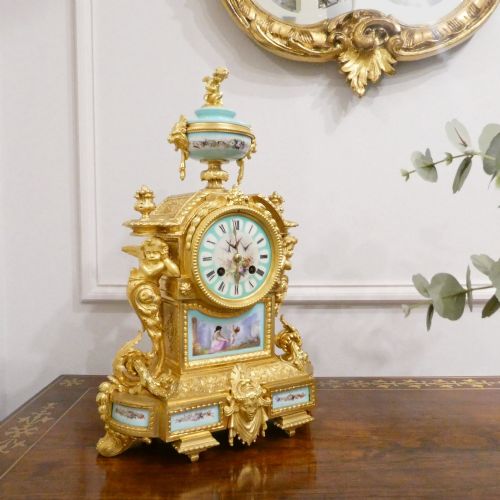
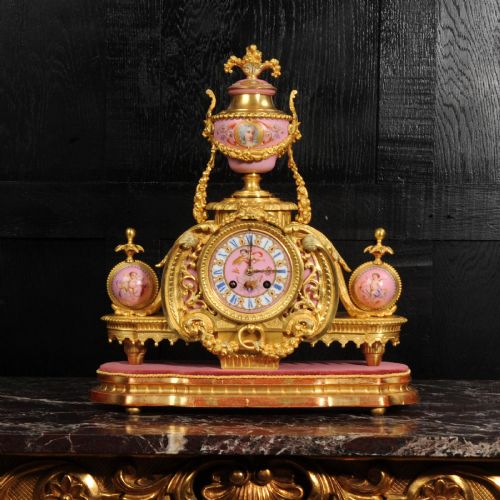
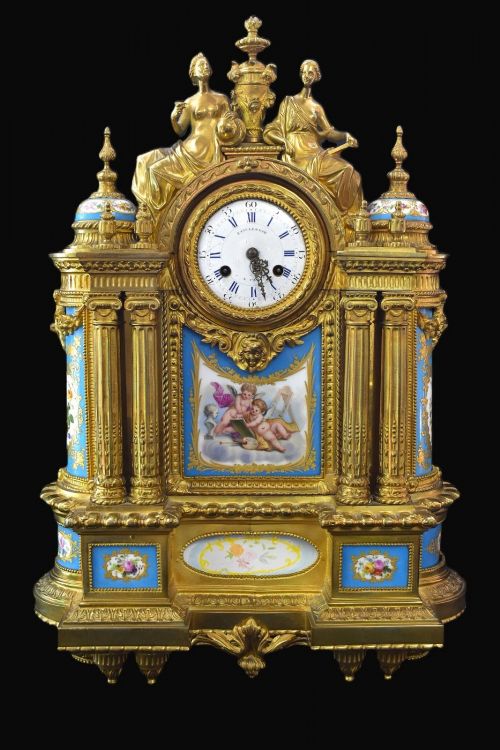
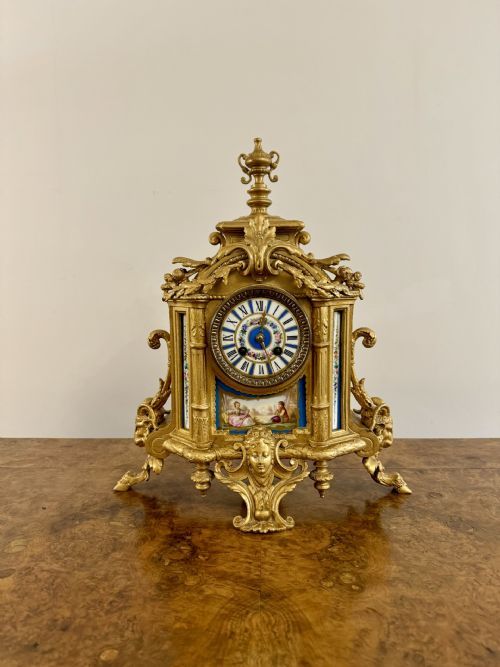
An ormolu and sevres clock combines gilded metalwork and hand-painted ceramic panels to anchor a traditional mantelpiece.
Ormolu and Sevres Clock
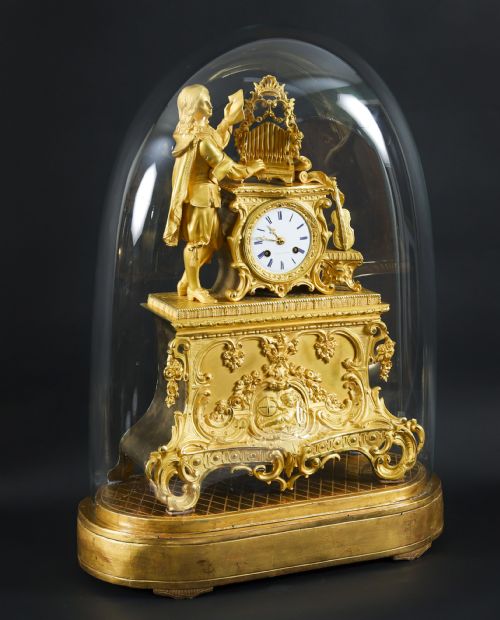
An ormolu and sevres clock is a nineteenth-century French timepiece that pairs cast and gilded metal mounts with hand-painted porcelain panels and dials. These objects appear primarily as mantel clocks, alongside related clock garnitures and sets under glass domes.
The prevailing examples on this page date from the Victorian era and the mid-to-late nineteenth century, spanning periods such as 1850, 1860, 1870, 1880, and 1890. Stylistic influences lean heavily toward French Rococo Revival, Louis XVI Revival, and Napoleon III designs.
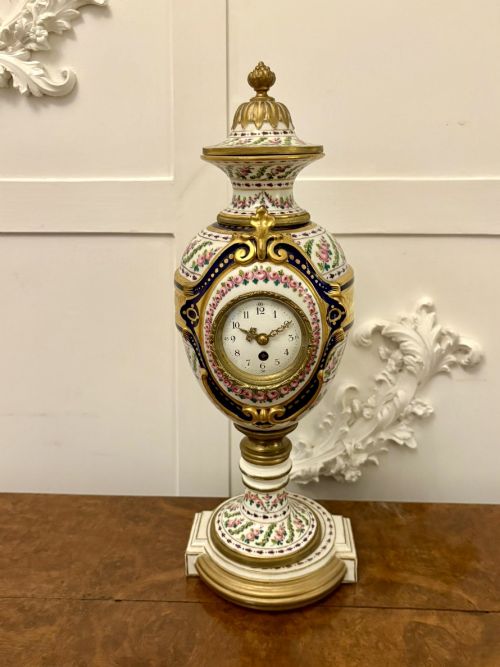
Forms range from standard drum head clocks and urn shapes to more elaborate lyre clocks and crystal regulators. Makers and retailers such as Japy Freres, Achille Brocot, Henry Marc, and Leroy Paris frequently signed the movements and components.
How they were made
Craftsmen built these pieces using metal bases of ormolu, gilt bronze, gilded metal, or brass, which were shaped and finished to hold the delicate ceramic elements. Sèvres porcelain panels and dials received hand-painted decoration, often featuring floral motifs or pastoral scenes.
Clockmakers fitted mechanical movements behind porcelain dials, sometimes incorporating enamel details and protective glass domes over complete garniture sets.
Ormolu and Sevres Clock Retail Price Guide 2026
Typical asking prices for ormolu and sevres clock among the pieces listed under this phrase on Sellingantiques today, from the lower quarter to the upper quarter. They describe what is for sale here now, not the wider market.
The listings span periods from 1800 through the Victorian era to 1900, uniting porcelain, ormolu, and gilt bronze in mantel clocks and garnitures.
What varies in quality
The refinement of the casting and chiselling in the ormolu mounts separates standard production from superior examples, with sharper details and heavier bronze weight indicating better execution. The crispness of the hand-painted porcelain panels and the intricacy of the dial work also dictate the standing of a piece.
Signed movements by renowned makers or retailers add historical weight and mechanical assurance compared to unsigned counterparts.
Japy Freres·Achille Brocot·Henry Marc·Leroy Paris·Jean-Baptiste Delettrez·Etienne Lenoir·Henri Jacot·Le Roy and Fils
The Ormolu and Sevres Clock Glossary
- Ormolu
- Gilded bronze or metal created by applying a gold amalgam to a bronze base, producing a bright metallic lustre characteristic of French decorative arts. This finish required careful handling during creation to ensure even coverage across intricate cast ornaments.
- Garniture
- A set of matching decorative objects, typically consisting of a central clock flanked by matching vases, urns, or candelabra. These sets were designed to sit symmetrically on a mantelpiece.
- Crystal Regulator
- A type of French clock featuring glass panels on all four sides that expose the mechanical movement and pendulum. They often include delicate porcelain or enamel dials.
- Drum Head Clock
- A clock design where the movement is housed in a circular metal case resembling a drum, mounted atop a decorative base. This form highlights the integration of metalwork and ceramic components.
Ormolu and Sevres Clock: Frequently Asked Questions
Where should I place an ormolu and sevres clock?
These clocks are traditionally placed on a mantelpiece or a sturdy sideboard where their weight and height can be safely supported. Ensure the surface is level so the mechanical movement and pendulum operate correctly.
Keep the clock away from direct sunlight and sudden temperature changes to protect the delicate hand-painted porcelain and the gilded metal finish over time.
How do I wind a mechanical French mantel clock?
Use the provided winding key to turn the arbors on the porcelain dial gently until you feel resistance. Do not overwind the springs, as this can damage the internal mechanism.
Most nineteenth-century movements require winding once a week or every eight days, depending on the specific gear train designed by the maker.
What is a clock garniture set?
A clock garniture set includes a central timepiece accompanied by matching side ornaments, such as urns or candelabra. These matched pieces were designed to create a balanced display across a mantelpiece or console table.
The side pieces often repeat the porcelain panels, ormolu mounts, and stylistic motifs found on the main clock body.
How do I identify the period of these clocks?
Look at the stylistic cues, such as the symmetrical restraint of Louis XVI Revival pieces versus the flowing curves of Rococo Revival designs. Maker signatures on the movement or dial can also help narrow down the decade of production.
Materials such as gilt bronze, ormolu, and specific porcelain colour grounds often align with manufacturing trends from the mid to late nineteenth century.