


Oriental Table Display Vases
Oriental table display vases and their accompanying stands bring carved hardwood, marble and porcelain together for surface decoration.
Oriental Table Display Vases
When you search for oriental table display vases, you encounter a mix of ceramic vessels and the carved wooden supports designed to elevate them. The selection centres on nineteenth century Chinese and Japanese pieces, spanning the Victorian era up to nineteen thirty.
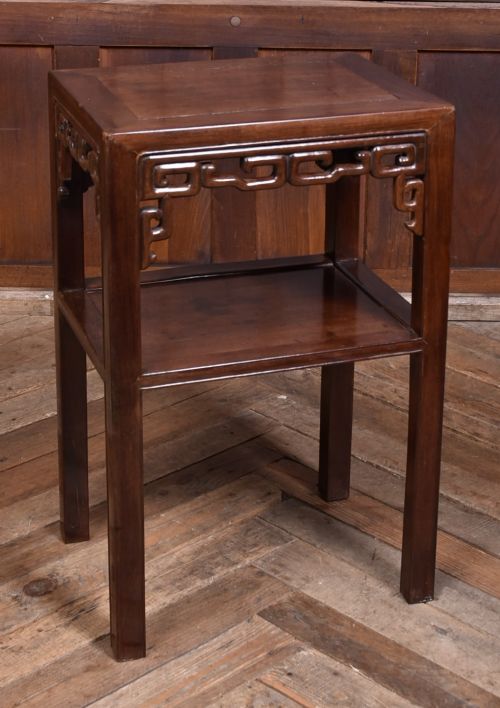
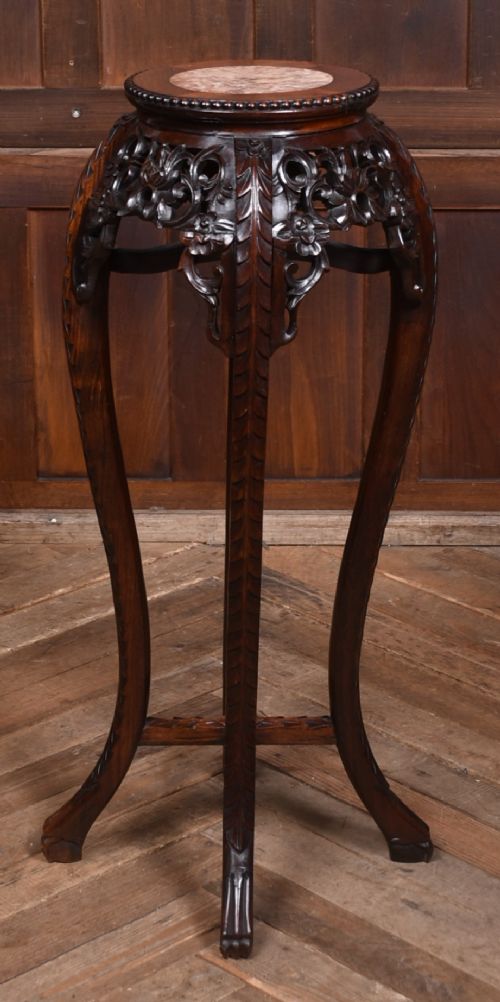
Most entries combine porcelain or earthenware vessels with plant stands, jardiniere stands and display stands made from hardwood, rosewood, mahogany and hongmu, frequently inset with marble tops.
The ceramic forms range from Imari wares and Rose Medallion vessels to Satsuma vases by makers such as Kinkozan, accompanied by Chinese export and Qing Dynasty designs.
How they were made
Wood stands are constructed from dense hardwoods like hongmu and rosewood, carved into intricate plant and vase supports with occasional lacquer finishes.
Vases utilise porcelain and earthenware bodies, decorated with polychrome enamels and gold leaf highlights typical of Chinese export and Japanese Meiji period production.
Marble inserts provide contrasting cool stone surfaces within carved wooden frames, designed to bear the weight of heavy decorative vessels.
Some nineteenth century stands include clever bamboo-handle ceramic forms that mimic natural plant stems with surprising realism.
What varies in quality
Depth and sharpness of carving in the hardwood stands distinguish standard production from superior examples, particularly in the handling of pierced foliage and joint construction.
Enamel crispness and the application of gold leaf on porcelain and earthenware vases dictate the visual refinement of the ceramic portion.
Integration of the marble top within the wooden frame shows the joinery skill applied to plant and urn stands.
Kinkozan
The Oriental Table Display Vases Glossary
- Hardwood
- Dense timber such as rosewood, mahogany or hongmu utilised for durable display stands and furniture frames. These dark woods take fine carved detail.
- Imari
- Japanese export porcelain decorated in underglaze blue, iron red and gold. This style originated in the Edo period and continued into production for western markets.
- Jardiniere
- A large ceramic pot or vessel intended for holding plants, usually set upon a dedicated low wooden stand. These planters are often paired with marble tops in nineteenth century rooms.
- Meiji Period
- The era of Japanese history lasting from eighteen sixty-eight to nineteen twelve, known for fine metalwork, Satsuma ceramics and bamboo-handle vase forms.
- Rose Medallion
- A nineteenth century Chinese export porcelain pattern featuring panelled scenes of figures and birds surrounded by green and pink enamel flowers.
- Qing Dynasty
- The final imperial dynasty of China, ruling from sixteen forty-four until nineteen twelve, encompassing traditional export wares and carved hardwood furniture.
Oriental Table Display Vases: Frequently Asked Questions
What are oriental table display vases?
They are decorative ceramic vessels, such as Imari and Rose Medallion pieces, alongside carved wooden stands used to elevate them on tabletops.
These items combine nineteenth century Chinese export pottery and Japanese Meiji period ceramics with hardwood, rosewood and marble plant supports.
How were display stands used?
Stands elevated jardinieres, urns and vases to protect tabletops and showcase ornamental plants or ceramic vessels within nineteenth century interiors.
Marble top variants provided a stable, cool surface for heavy planters and decorative lamps.
How do I identify Qing Dynasty pieces?
Look for dense carved hardwoods like hongmu and rosewood combined with traditional Chinese export motifs and nineteenth century construction methods.
Many examples feature inset marble tops and detailed foliage carvings associated with late nineteenth century workshops.
Where should I place a plant stand?
These nineteenth century hardwood and marble stands suit corners, side tables or window spaces where they can support vases or indoor plants.
Their solid construction allows them to function as lamp tables or small display surfaces.