

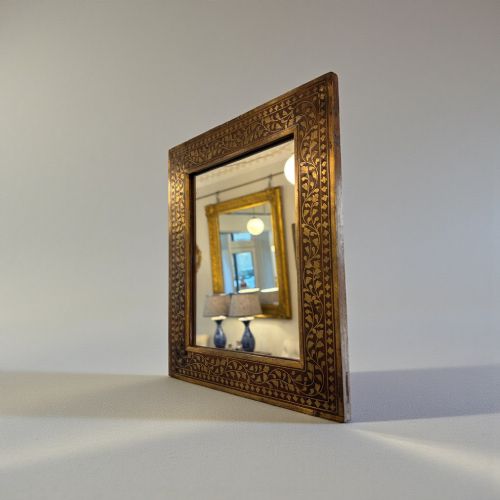
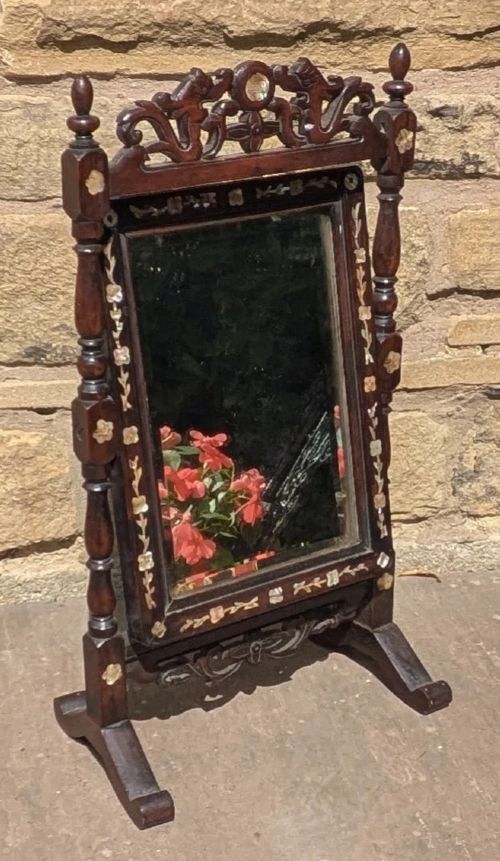
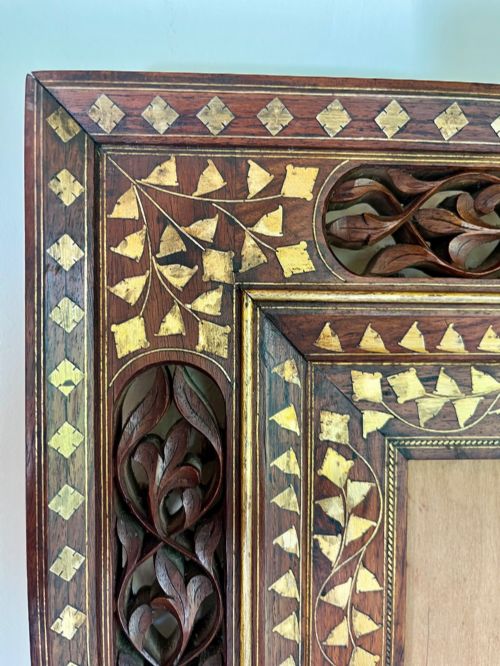
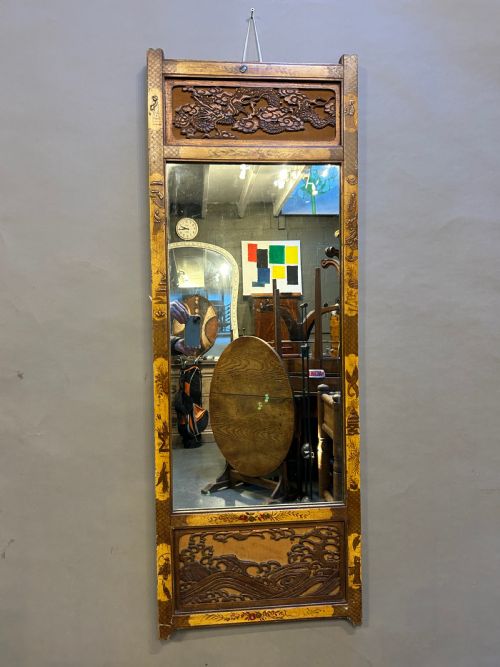
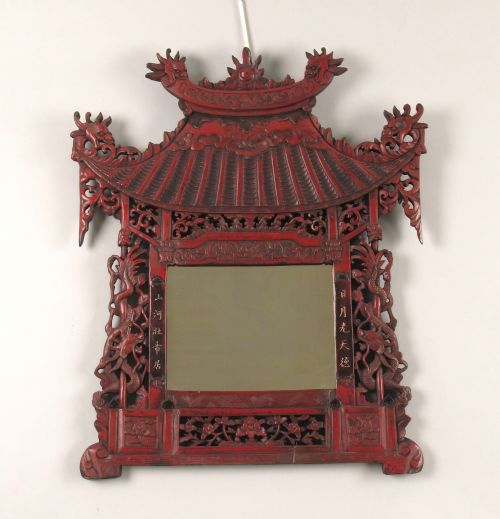


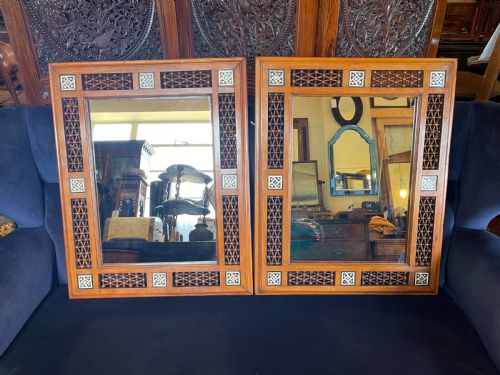


Oriental Carved Wood Mirror
An oriental carved wood mirror brings rich texture and intricate detail to a room, turning a simple reflective surface into a focal point.
Oriental Carved Wood Mirror
When you search for an oriental carved wood mirror, you encounter a diverse range of decorative objects spanning the nineteenth and early twentieth centuries. These pieces encompass wall mirrors, table mirrors, and freestanding cheval glasses originating from various Eastern and revival traditions.
The periods represented stretch from the late Victorian era into the 1930s, incorporating Chinoiserie and Moorish Revival aesthetics alongside authentic export pieces. Each form reflects the specific craftsmanship and ornamental vocabulary of its place of origin.
How they were made
Maker workshops utilised dense hardwoods such as rosewood, cherrywood, and sheesham as the primary structural support for deep relief carving. Artisans employed hand chisels to create intricate pierced borders and complex geometric or floral motifs.
Many examples incorporate contrasting materials, most notably shimmering mother-of-pearl inlay and hammered sheet brass wire set flush into the wood surface. Lacquering techniques, seen in red lacquer pagoda frames, provide a smooth, pigmented finish over the carved wooden core.
Oriental Carved Wood Mirror Retail Price Guide 2026
Typical asking prices for oriental carved wood mirror among the pieces listed under this phrase on Sellingantiques today, from the lower quarter to the upper quarter. They describe what is for sale here now, not the wider market.
Listings here span the 19th century up to 1930, featuring materials such as rosewood, sheesham, brass, and mother of pearl.
What varies in quality
The distinction between ordinary and exceptional pieces lies in the crispness and depth of the hand carving. Superior examples display high definition in the foliage and figures without splintering or loss in the hardwood ground.
Inlaid versions are judged by the precision of the fit between the brass wire or mother-of-pearl pieces and the surrounding timber. Tighter joints and more elaborate geometric or pictorial compositions indicate superior workshop output.
The Oriental Carved Wood Mirror Glossary
- Cheval mirror
- A freestanding mirror supported in a frame that allows it to tilt. These large pieces usually stand on the floor or a dressing table.
- Pier wall mirror
- A tall, narrow mirror designed to hang on the wall between windows. They often match the proportions of the narrow wall space they occupy.
- Hoshiarpur
- A town in Punjab renowned for intricate woodwork. Artisans there specialised in inlaying shesham wood with brass and resin.
- Chinoiserie
- European artistic style reflecting Chinese motifs. This aesthetic gained popularity across various decorative arts during the nineteenth and early twentieth centuries.
- Mother of pearl
- The iridescent inner layer of mollusc shells. Craftsmen cut this material into thin plates to inlay decorative wooden surfaces.
Oriental Carved Wood Mirror: Frequently Asked Questions
Where should I hang an oriental carved wood mirror?
These mirrors suit hallways, living rooms, and bedrooms where their intricate frames can catch the light. They function best against plain walls that allow the carved details and inlays to stand out clearly.
Because many pieces feature heavy hardwood construction, ensure you use secure wall fixings appropriate for the weight of the frame.
How do I clean an antique carved wood frame?
Dust the intricate carvings gently with a soft, dry brush to prevent dirt accumulation in the recesses. Avoid using liquid polishes or harsh chemical cleaners that can damage the old lacquer or dry out the hardwood.
For brass inlay or mother-of-pearl sections, wipe very carefully with a barely damp cloth and dry immediately to preserve the sheen.
How can I tell the period of these mirrors?
Dating relies on examining the construction methods, the type of wood, and the specific decorative style used in the frame. Nineteenth-century pieces often display hand-beveled glass and denser timbers, while later 1930s examples may show different joinery.
Comparing the motif to documented regional styles, such as Qing dynasty carvings or Anglo-Indian Hoshiarpur work, helps narrow down the era.
Are these mirrors fragile?
While the hardwoods used are generally sturdy, the intricate pierced edges and delicate inlays require careful handling. Moving the mirror demands support beneath the frame rather than relying on protruding decorative elements.
Original mirror plates can be thin and susceptible to foxing, which is part of their age and character.