



Orange Art Glass
Orange art glass pieces are vivid vessels and lamps that bring intense colour and warmth to a room.
Orange Art Glass
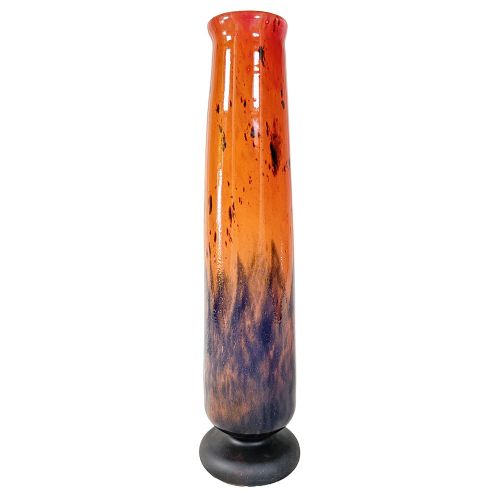
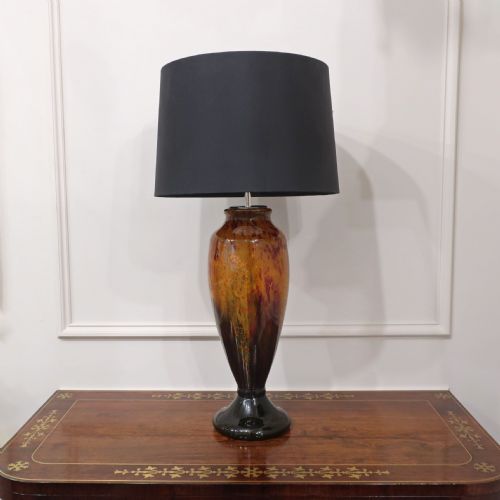
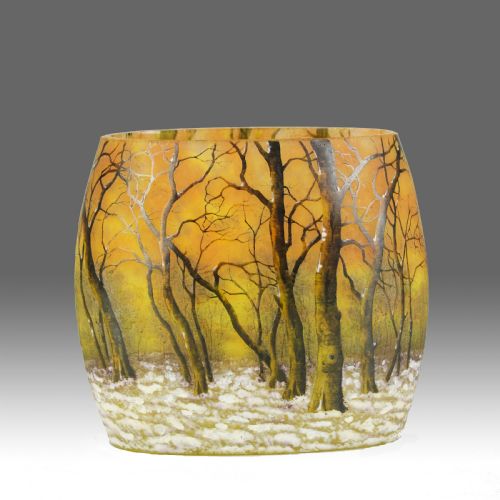
Orange art glass encompasses vibrant vases, lamps, and decorative bowls produced during the early twentieth century. These items span the Art Nouveau and Art Deco periods, showcasing striking hues that range from fiery sunset tones to deep mottled shades.
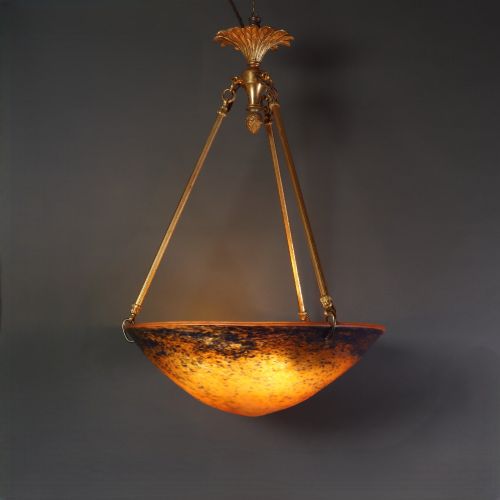
Vessels and lighting fixtures dominate the selection, often featuring complex multi-layered designs or distinctive acid-etched surfaces. Table lamps and pendant lights frequently incorporate wrought iron or gilt metal mountings alongside the colourful glass.
Makers from the 1900s through the 1930s utilised specialised techniques to achieve these intense orange tones, creating pieces that function equally well as decorative accents or illuminated focal points in an interior.
How they were made
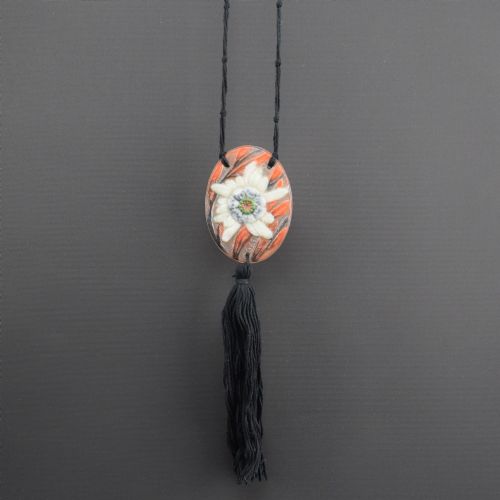
Makers produced these objects using blown glass, cameo glass, and acid-etched glass techniques, often layering different colours to achieve depth and variation. Methods such as pate de verre and enamelling added intricate surface detail and texture to the finished pieces.
Lighting fixtures combined the colourful glass bodies with structural elements like wrought iron and gilt metal. Artisans shaped the metal mounts by hand to support heavy glass shades, plafonniers, and chandeliers securely.
Orange Art Glass Retail Price Guide 2026
Typical asking prices for orange art glass among the pieces listed under this phrase on Sellingantiques today, from the lower quarter to the upper quarter. They describe what is for sale here now, not the wider market.
Form categories range from table lamps and chandeliers to decanters, liqueur glasses, and decorative bowls.
What varies in quality
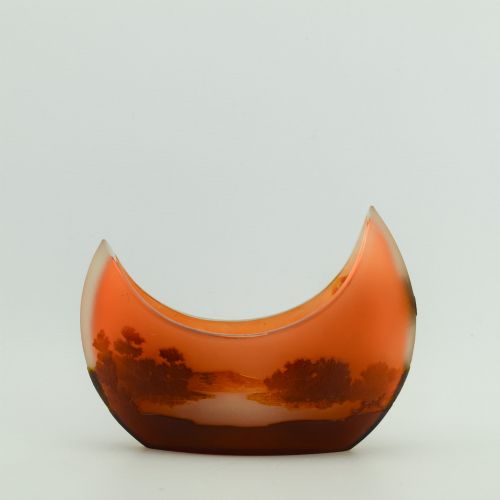
The sophistication of the cameo carving and the complexity of the acid-etching dictate the refinement of a piece. Finer examples display meticulous detail in landscape or floral motifs, with sharp transitions between the orange ground and contrasting glass layers.
The harmony between the glass body and any metal framework also defines the standard of craftsmanship. Superior lighting fixtures integrate hand-forged wrought iron or gilt metal that complements the organic forms of the coloured glass rather than overpowering them.
Charles Schneider·Argy Rousseau·Galle·Daum·Daum Freres·Legras·Le Verre Francais·Monart Glass·Verrerie Des Vosge
The Orange Art Glass Glossary
- Cameo Glass
- Glass vessels made with multiple layers of different colours, where portions of the outer layers are carved or acid-etched away to reveal a contrasting design beneath. This demanding technique creates a raised relief pattern.
- Acid-Etched Glass
- Glass treated with acid to eat away the surface, producing a frosted finish or a low-relief decorative pattern. Makers used this method to create textured backgrounds and subtle tonal shifts.
- Pate de Verre
- A kiln-casting method where finely crushed glass is mixed with a binder and packed into a mould, then fused with heat. The resulting pieces exhibit a distinctive sugary texture and mottled colour.
- Plafonnier
- A ceiling light fixture with a bowl-shaped shade mounted flat against the ceiling. These fixtures distribute diffused light evenly across a space.
- Tango
- A style of brightly coloured glassware developed in the early twentieth century, typically featuring intense orange or yellow bodies contrasted with black glass rims or handles.
Orange Art Glass: Frequently Asked Questions
How do I identify Art Nouveau orange art glass?
Art Nouveau pieces typically feature organic motifs such as floral scenes, aquatic themes, or natural landscapes rendered in flowing lines. The glass often incorporates cameo carving or delicate enamelling to depict winter scenes or sunset gradients.
Look for signature markings on the body or base, alongside stylistic cues like whiplash curves and asymmetrical plant forms characteristic of the early twentieth century.
Where should I place an orange art glass lamp?
These lamps function effectively on side tables, desks, or mantelpieces where their intense colour can be appreciated both unlit and illuminated. Wrought iron and glass table lamps provide a warm, ambient glow that enhances darker corners of a room.
Ensure the placement protects the lamp from accidental knocks, as the layered glass and metal mounts require stable surfaces away from high-traffic pathways.
How do I clean orange art glass?
Clean these pieces gently using a soft, dry cloth to remove dust from the surface. Avoid harsh chemical cleaners or abrasive sponges that could damage enamelled details or acid-etched textures.
For stubborn grime on non-enamelled glass, use lukewarm water with mild soap, then dry thoroughly with a lint-free cloth. Take extra care around metal mounts on lamps and chandeliers to keep moisture away from joints.