


Open Wood Shelving
Open wood shelving brings straightforward utility and rich timber grain to domestic spaces, offering accessible display for books and cherished objects.
Open Wood Shelving
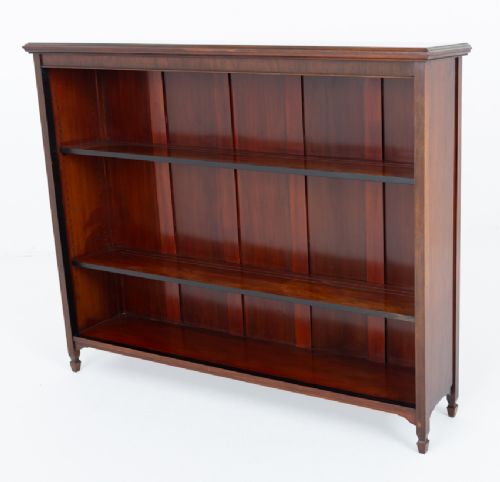
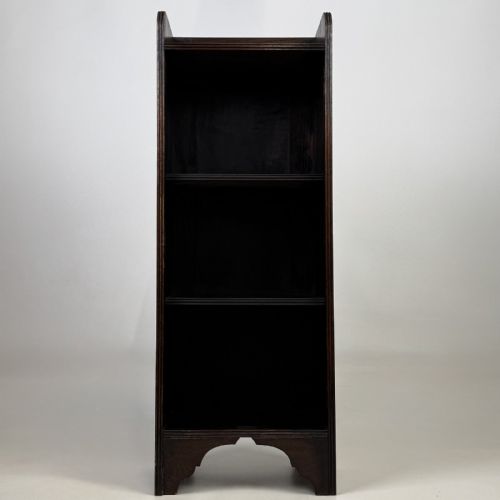
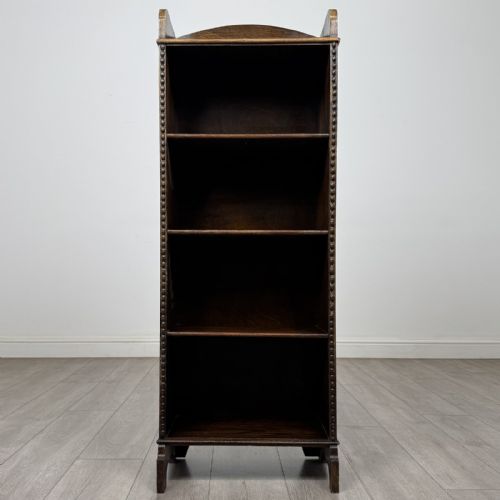
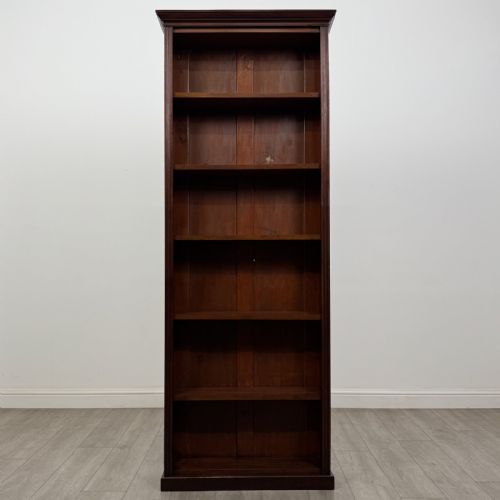
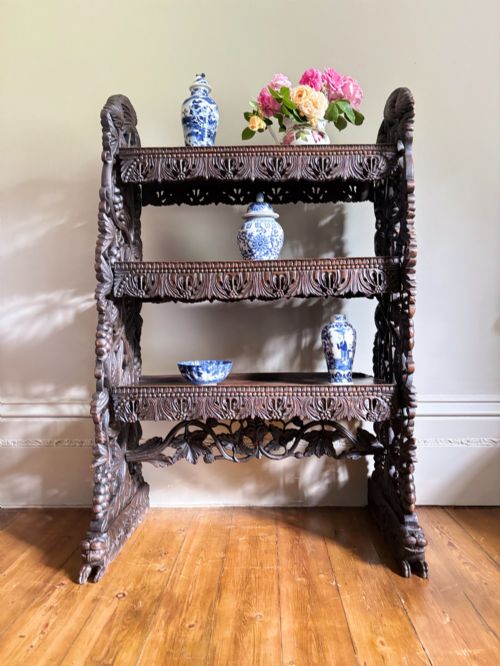
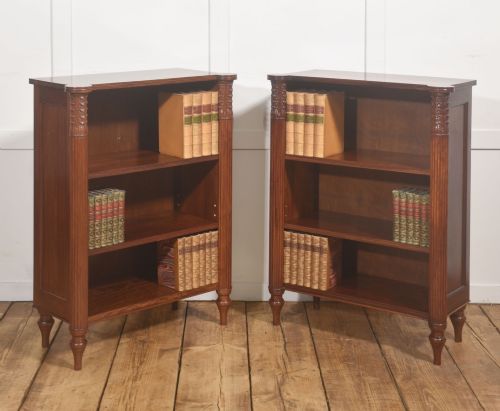
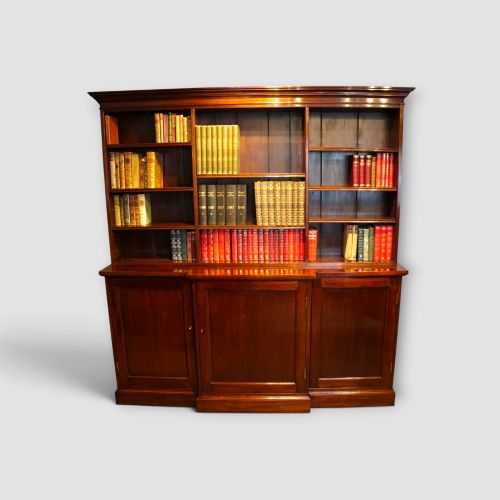
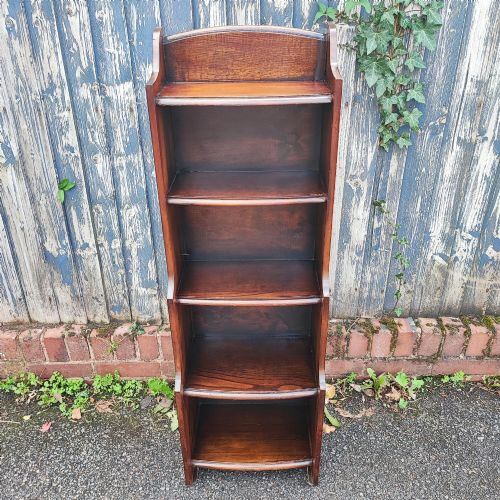
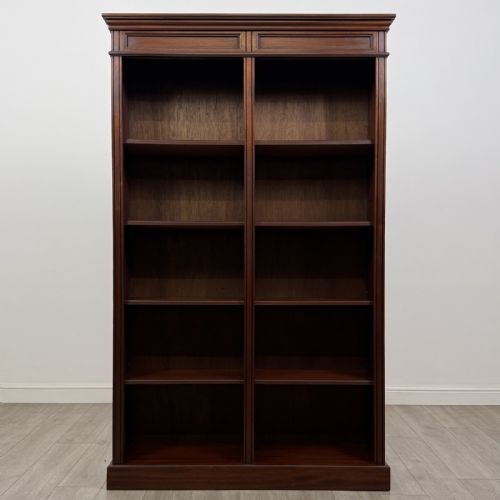
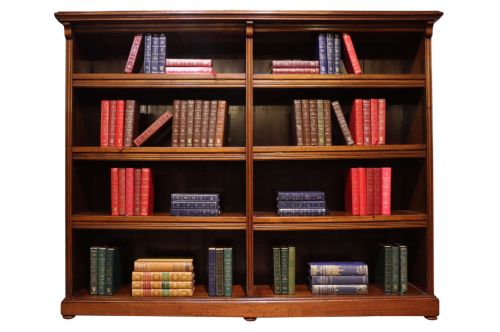
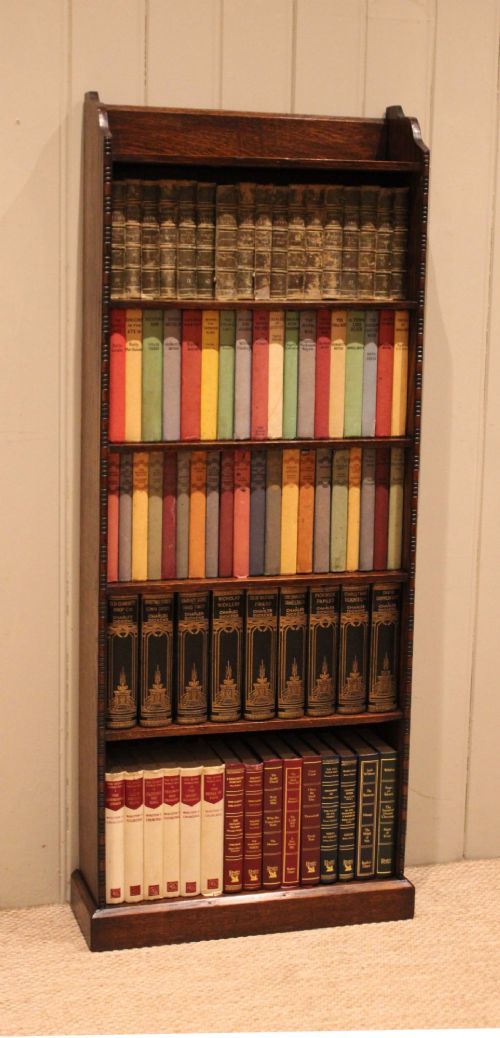
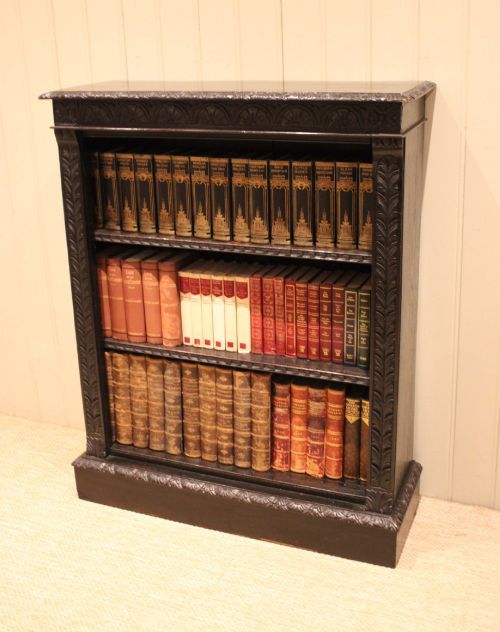
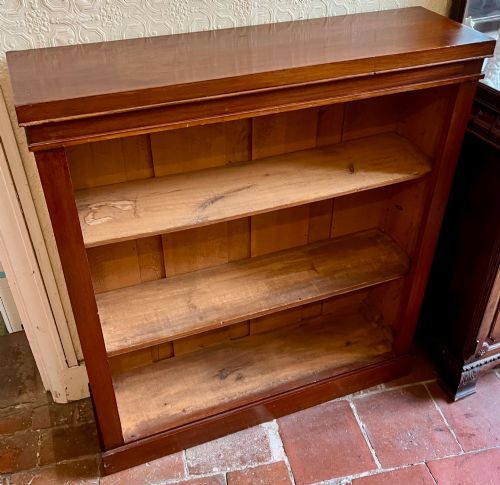
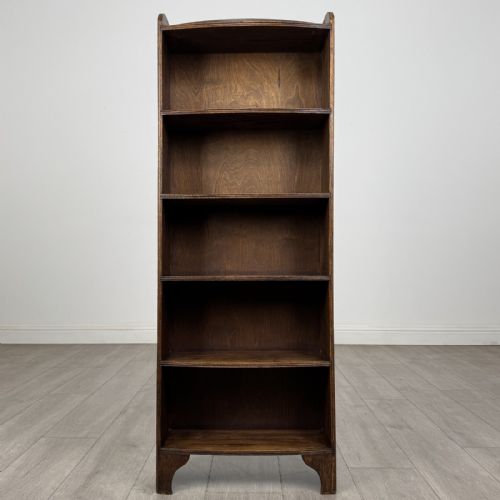
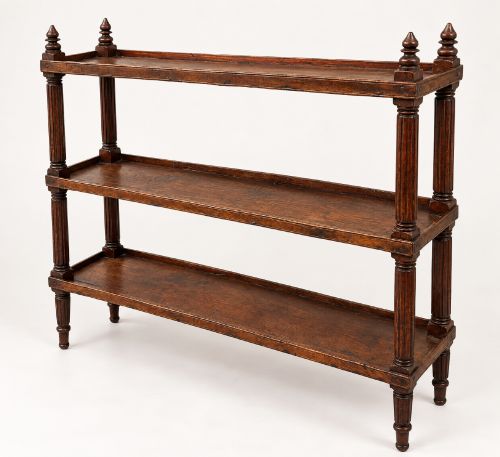
Open wood shelving encompasses various functional forms designed to hold books and display ornaments without enclosing glass doors. When exploring open wood shelving on this page, buyers frequently encounter Victorian and Edwardian bookcases, wall hanging shelves, and tiered whatnots.
The pieces span multiple centuries and stylistic revivals, ranging from Regency rosewood breakfronts to robust Arts and Crafts oak cabinets. Many incorporate practical architectural details such as dentil cornices, raised galleries, plinth bases, and adjustable shelves.
Makers utilised distinct regional timbers to construct these items, producing both tall slim proportions and wide breakfront formats. This diversity allows buyers to find suitable furniture for studies, drawing rooms, and hallways alike.
Materials and construction methods
Cabinet makers relied heavily on solid hardwoods like mahogany, oak, walnut, and rosewood, often enhancing finer pieces with satinwood stringing, brass mounts, or intricate carved detailing. Timber selection dictated the structural integrity and visual weight of each bookcase or whatnot.
Construction techniques evolved across the nineteenth and early twentieth centuries, balancing decorative flourish with everyday utility. Traditional joinery secured tiered shelves, fretwork galleries, and adjustable timber supports to withstand heavy volumes and display pieces.
Open Wood Shelving Retail Price Guide 2026
Typical asking prices for open wood shelving among the pieces listed under this phrase on Sellingantiques today, from the lower quarter to the upper quarter. They describe what is for sale here now, not the wider market.
Some Victorian whatnots feature intricate pierced fretwork designed to catch stray ribbons and wandering thoughts alike.
Judging the standard of manufacture
Quality separates standard utilitarian furniture from exceptional pieces through timber selection, decorative restraint, and the refinement of subsidiary details. Superior examples exhibit carefully matched mahogany or rosewood veneers, crisply carved cornices, and robust brass fittings.
The sophistication of the internal mechanisms, such as smooth adjustable shelf racks, alongside the depth of hand-finished polish, distinguishes high workshops from mass production. Well-executed proportion and balanced proportions elevate simpler oak and walnut items into enduring collector pieces.
Gillows
The Open Wood Shelving Glossary
- Breakfront
- A cabinet design where the central section projects forward from the flanking wings. This configuration creates architectural depth in larger libraries.
- Whatnot
- A set of open tiered shelves used for displaying ornaments and small objects. These freestanding pieces gained immense popularity throughout the nineteenth century.
- Dentil cornice
- A decorative moulding featuring a repeating series of small rectangular blocks resembling teeth. Cabinet makers frequently applied this detail beneath the top edge of formal bookcases.
- Gallery
- A raised ornamental railing or border edging the top surface of a shelf or cabinet. This feature prevents items from sliding off.
- Adjustable shelves
- Internal boards supported on movable brackets or ratchets to alter vertical clearance. This adaptation accommodates books of varying heights.
Open Wood Shelving: Frequently Asked Questions
How do I style open shelving in a modern room?
Balance books in vertical and horizontal stacks alongside carefully chosen decorative objects to maintain visual interest. Leave empty space around items so the timber grain remains visible.
Incorporate pieces with varied heights and textures, such as brass accents or ceramics, to complement the historical character of the wood.
Are these shelves suitable for heavy volumes?
Many period bookcases feature sturdy mahogany or oak construction designed specifically to bear significant weight. Adjustable wooden shelves provide robust support when properly seated on their original brackets.
Inspect the thickness of the timber and the condition of the internal supports before loading large collections of reference books onto older shelves.
What is the difference between a whatnot and a bookcase?
A whatnot is typically a multi-tiered freestanding open structure designed primarily for displaying decorative items, ornaments, and curiosities from multiple angles. Bookcases focus on vertical storage for bound volumes, often featuring enclosed lower cupboards or deeper adjustable shelving.
Both forms share open access but serve distinct functional roles within nineteenth-century domestic interiors.
How should I care for antique wood finishes?
Maintain timber surfaces by dusting regularly with a soft, dry cloth and avoiding placement near direct heat sources or strong sunlight. Apply a quality microcrystalline wax periodically to nourish the polish and protect the grain from drying out.
Avoid silicone-based sprays that can penetrate the pores and damage the historical patina over time.