




Open Book Storage
Open book storage brings together timber bookcases, low cabinets and tiered shelves designed to keep volumes within arm's reach.
Open Book Storage
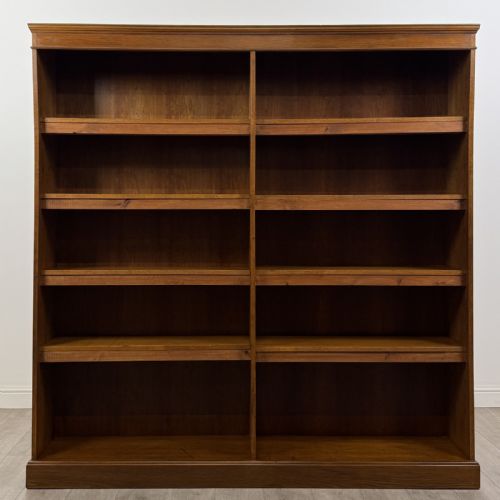
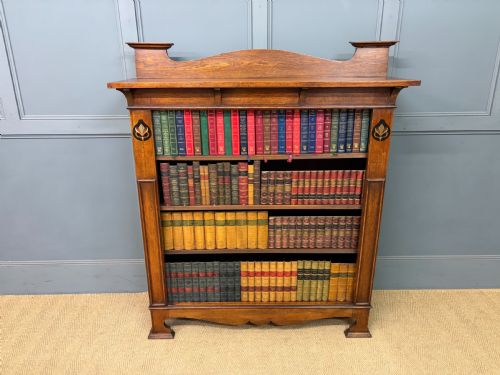
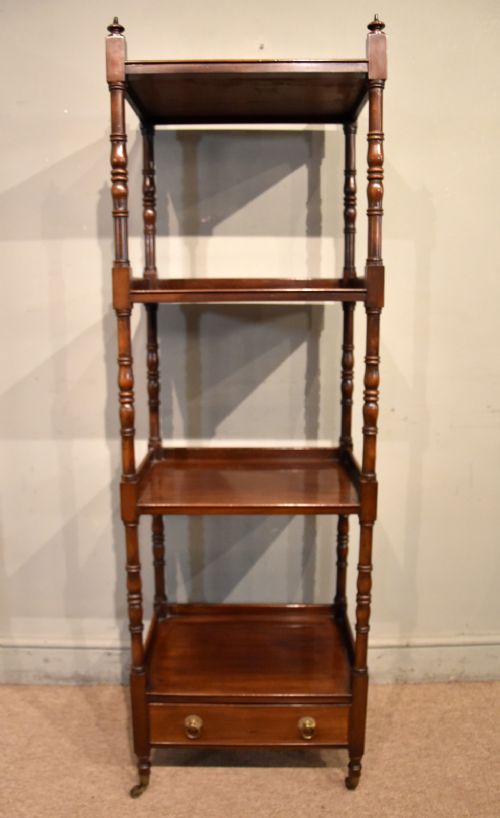
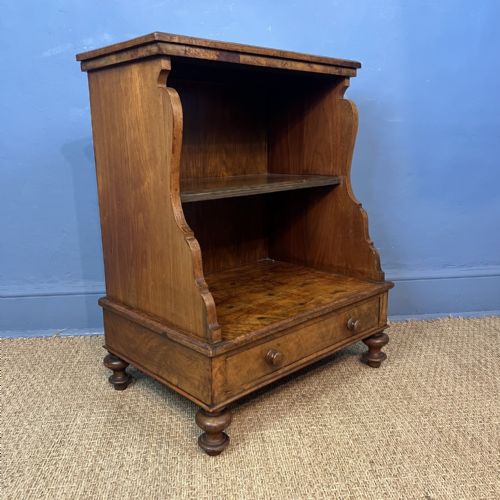
Open book storage spans Victorian, Edwardian and early twentieth-century examples, taking the form of upright bookcases, wall shelves, low cabinets and tiered whatnots. The versions most commonly met here are oak and mahogany open bookcases featuring adjustable shelves for everyday utility.
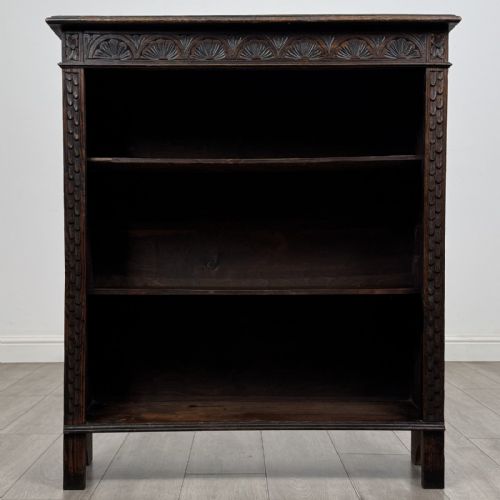
Makers and workshops constructed these pieces to serve libraries, parlours and studies, frequently incorporating lower cupboards, drawers or glazed compartments beneath the open shelving. Pieces range from plain dark oak designs to elaborate carved solid oak items featuring decorative panels and beaded edges.
Period variations include compact Edwardian freestanding bookcases alongside larger nineteenth-century walnut and burr walnut iterations. Buyers encounter both utilitarian shelving units and decorative display pieces suited to domestic rooms of varying scale.
Materials and construction
Cabinet makers relied primarily on solid oak, mahogany and walnut, frequently selecting figured veneers such as burr walnut for panel work and top surfaces. Brass fittings appear on adjustable shelf brackets and cupboard hardware, while glass is utilised in occasional door panels.
Construction techniques combined traditional joinery for carcases with hand-carved ornamentation seen in Jacobean Revival and Arts and Crafts examples. Surfaces received polish, wax or paint finishes to protect the timber grain whilst highlighting natural figures.
Open Book Storage Retail Price Guide 2026
Typical asking prices for open book storage among the pieces listed under this phrase on Sellingantiques today, from the lower quarter to the upper quarter. They describe what is for sale here now, not the wider market.
One unexpected nineteenth-century cabinet includes leather dummy books designed to conceal a secret compartment behind false bindings.
Gradations of quality
Quality rests upon the selection of timber, distinguishing plain utilitarian deal or standard oak from finely figured burr walnut and dense mahogany. Superior examples display thoughtful proportions, balanced grain patterns and careful matching across panels.
Carved enrichment separates standard production items from finer workshop pieces, where relief work, applied mouldings and brass hardware show considered execution rather than hurried stamping.
The Open Book Storage Glossary
- Whatnot
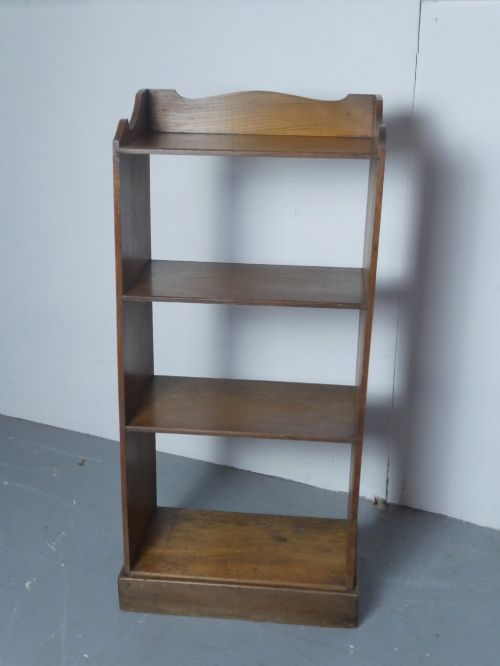
- A multi-tiered piece of furniture designed for displaying ornaments, books or small objects. These open pieces typically feature three or four ascending shelves supported by slender uprights.
- Chiffonier
- A low sideboard or cabinet featuring a combination of enclosed storage and upper shelving. Nineteenth-century versions frequently integrate open book shelves above a cupboard base.
- Waterfall bookcase
- A tiered shelving unit where each successive shelf steps back from the one below it, creating a profile resembling falling water. This form became popular during the nineteenth century.
- Burr walnut
- Timber taken from a growth or burl on the walnut tree, prized by cabinet makers for its intricate, swirling grain patterns. It is typically applied as a decorative veneer on prominent surfaces.
- Adjustable shelves
- Shelving supported by movable pins or racks that allow the interior vertical spacing to be altered. This practical mechanism appears frequently in Victorian and Edwardian bookcases.
Open Book Storage: Frequently Asked Questions
How do I style an open bookcase?
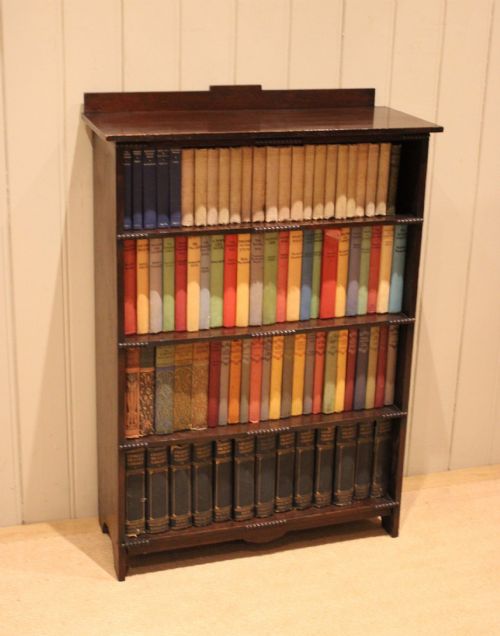
Arrange volumes by height or colour to create visual balance across the shelves, mixing vertical stacks with horizontal piles. Integrate small framed pictures or ceramic objects among the books to break up solid rows of text.
Keep surrounding furniture simple so the timber tones of the bookcase remain the primary focus in the room.
Are these shelves suitable for heavy books?
Solid oak and mahogany shelves easily support standard hardbacks and reference volumes without bowing over time. Thinner shelves benefit from occasional repositioning if loaded with particularly dense collections.
Adjustable shelf systems allow you to tailor the internal vertical clearance to accommodate oversized volumes comfortably.
How do I care for antique timber?
Apply a traditional beeswax polish sparingly to nourish the wood and maintain a soft lustre on the surface. Avoid placing wooden furniture in direct sunlight or near heat sources to prevent the timber from drying and splitting.
Dust regularly with a dry, soft cloth to prevent particulate accumulation within carved details and joints.
What is the difference between an Edwardian and a Victorian bookcase?
Victorian bookcases tend to feature heavier proportions, dense carving, and darker finishes such as figured walnut or robust oak. They often incorporate elaborate decorative elements like Green Man motifs or deep cornices.
Edwardian pieces generally lean towards lighter construction in oak or mahogany, favouring cleaner lines, simpler panel work, and practical domestic scale.