

Opal Diamond Cluster
When you search for an opal diamond cluster, you are looking at an enduring design where central iridescent stones meet sparkling diamond surrounds.
Opal Diamond Cluster
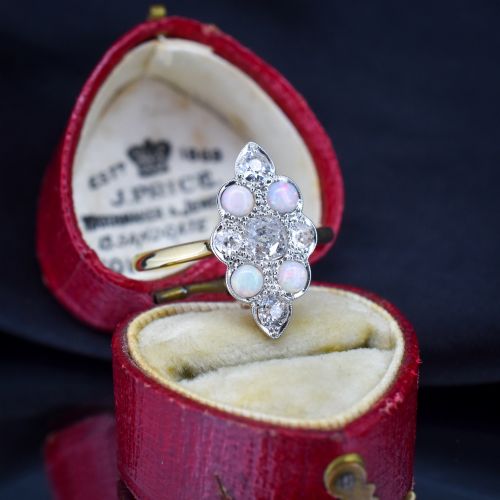
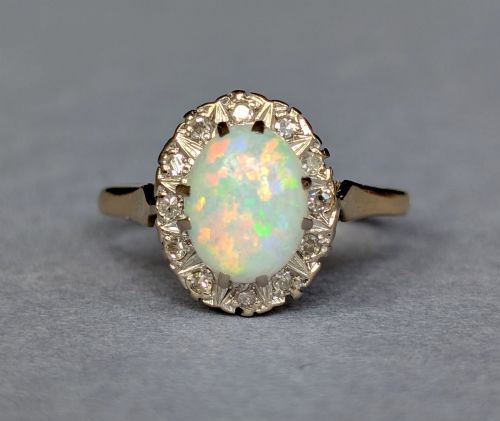
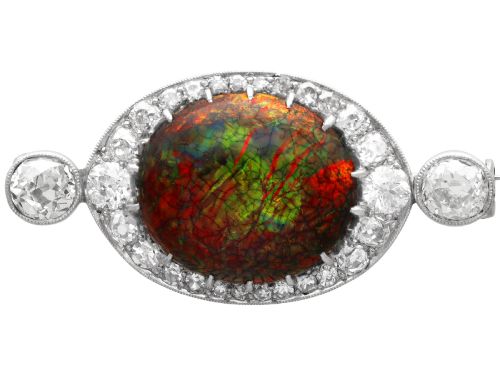
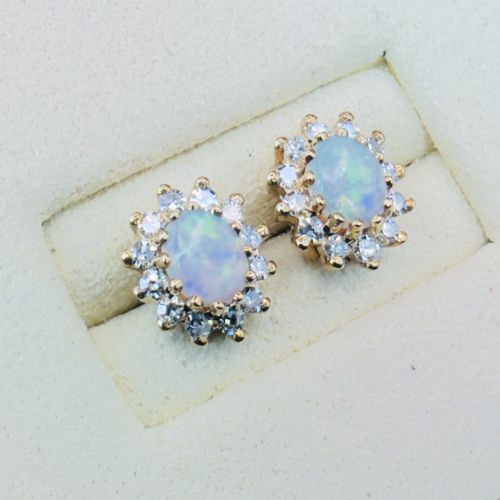
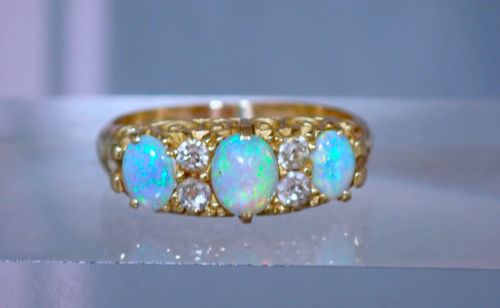
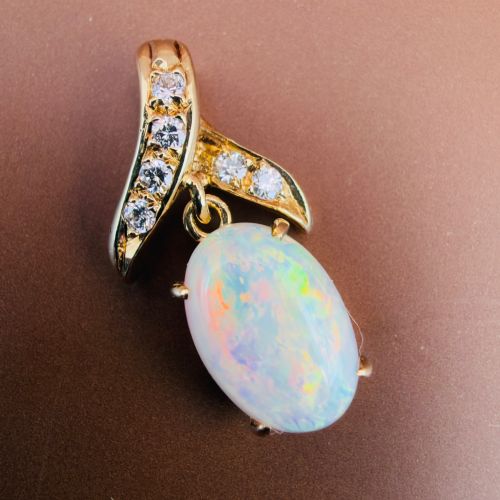
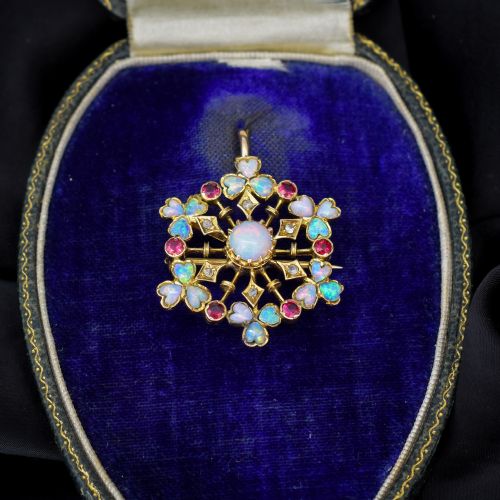
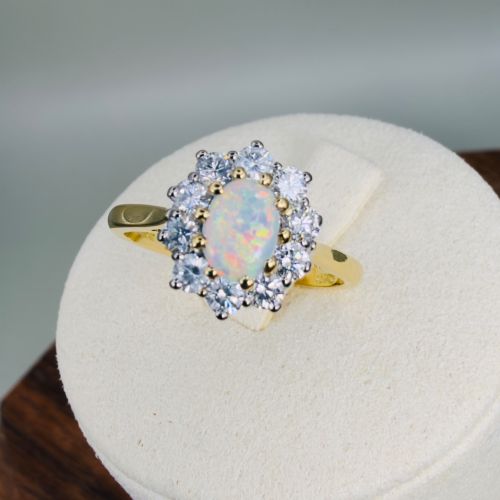
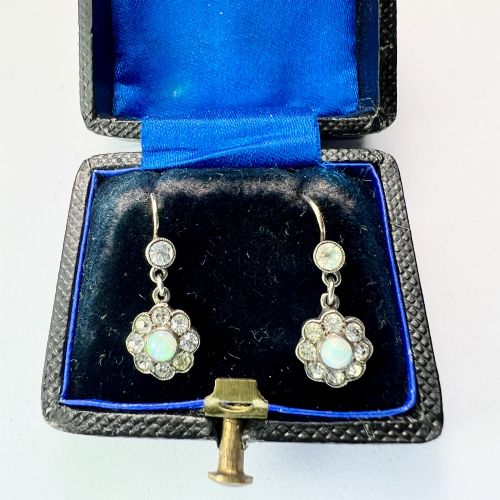
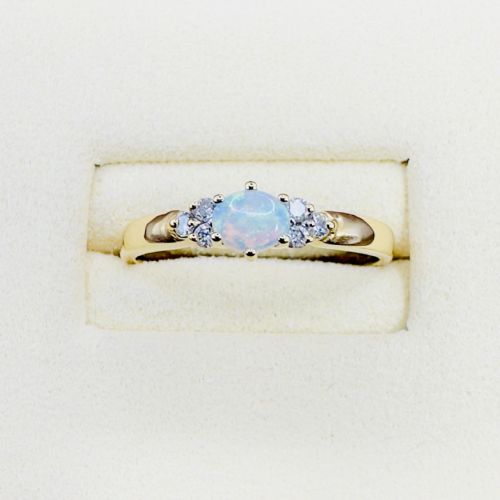
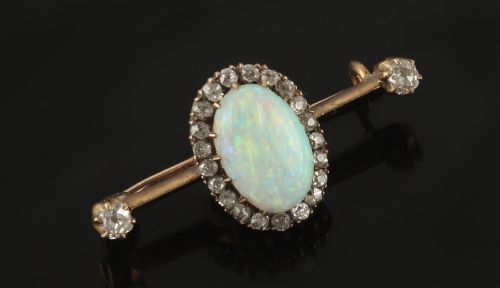
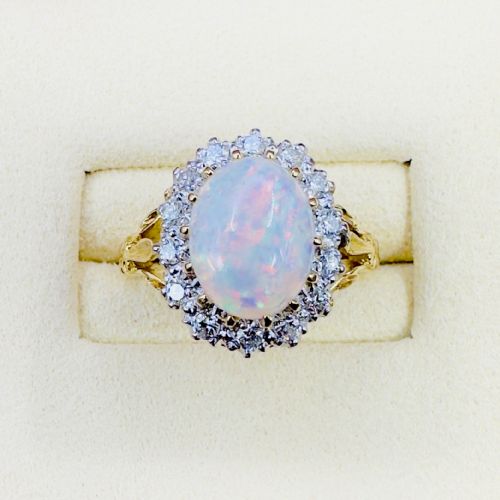
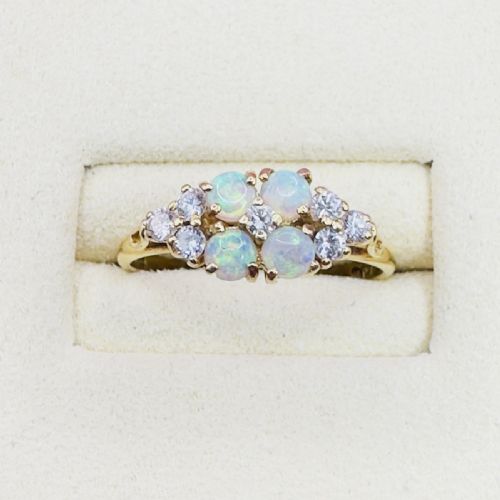
An opal diamond cluster typically pairs a central cabochon opal with a border of smaller cut diamonds, forming a ring, pendant, brooch, or set of earrings. The configuration highlights the play of colour in the main stone against the bright contrast of surrounding diamonds.
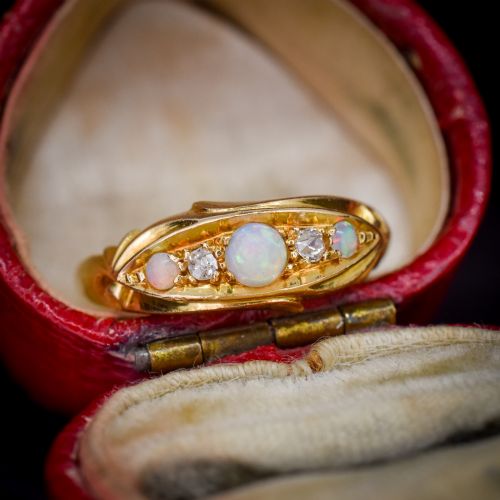
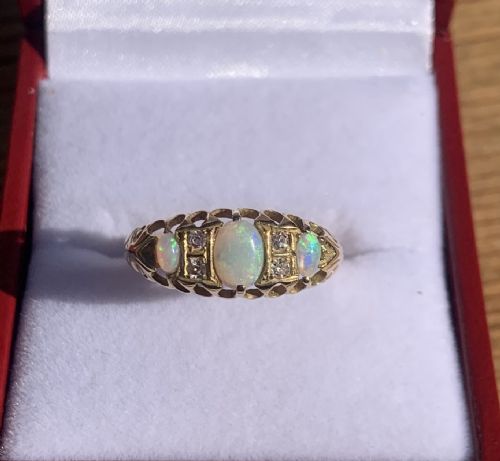
Pieces span Victorian, Edwardian, Art Deco, and mid-century periods, showing how goldsmiths adapted the cluster format across generations. Rings dominate the selection, alongside pendants and brooches incorporating natural white, black, boulder, and fire opals.
Early examples often feature yellow gold bands with rose-cut diamonds, while later mid-century creations introduce white gold and platinum settings alongside round or oval cabochons.
Materials and construction methods
Goldsmiths utilised yellow gold, white gold, platinum, and silver as primary mountings for these clusters, securing stones in claw settings, bezels, or halo arrangements. Silver and platinum frequently appear in tandem with gold during the Edwardian and Art Deco eras to brighten the diamond borders.
Opals are predominantly shaped as smooth cabochons to display their internal flashes, accompanied by rose-cut, old-cut, or brilliant-cut diamonds.
Judging the quality of a cluster
Quality rests on the vitality and play of colour within the opal itself, balanced by the matched size, cut, and brilliance of the surrounding diamonds. A superior stone displays a vibrant spectrum of shifting hues across the surface without dead patches.
Setting execution dictates durability and refinement, with tight, even claw work and substantial metal weight separating master workshops from standard production.
Knoll & Pregizer
The Opal Diamond Cluster Glossary
- Cabochon
- A gemstone cut with a smooth, rounded, convex upper surface rather than faceted planes. This style is essential for displaying the shifting optical phenomenon of opals.
- Cluster
- An arrangement of smaller gemstones grouped closely around a central focal stone. In these pieces, diamonds form a perimeter that frames the main opal.
- Rose cut
- An antique diamond cut featuring a flat base and a domed crown covered in triangular facets. These stones provide a softer, broader reflection than modern brilliant cuts.
- Boulder opal
- An Australian opal variety consisting of ironstone host rock naturally embedded with opal veins. The dark matrix intensifies the colour play of the gemstone.
- Halo
- A concentric ring of pavé or claw-set small diamonds encircling a larger centre stone. This layout maximises the perceived scale and brilliance of the jewel.
Opal Diamond Cluster: Frequently Asked Questions
How do I care for my opal ring?
Opals contain water within their structure and score lower on the hardness scale than diamonds. Avoid ultrasonic cleaners, harsh chemicals, and prolonged exposure to extreme dryness or sudden temperature changes.
Remove rings when washing hands, gardening, or engaging in heavy manual work to protect the softer central stone from scratching or fracture.
What is the difference between an opal doublet and a solid opal?
A solid opal consists of a single piece of natural opal material cut and polished from rough stone. Doublets combine a thin slice of natural opal glued to a dark backing layer, usually ironstone, to enhance body tone and perceived colour saturation.
Examination of the side profile under magnification reveals the distinct join line between the layers of a doublet.
How can I tell a Victorian cluster from a mid-century one?
Victorian examples frequently utilise warmer 18ct or 15ct yellow gold bands, sometimes paired with silver settings on the face, alongside hand-cut rose or old-cut diamonds. The prongs and gallery work often exhibit distinct hand-carved details.
Mid-century pieces from the 1950s and 1960s often introduce brighter white gold or platinum settings, heavier overall metal weights, and standardised brilliant-cut diamond clusters.
Can I wear an antique cluster every day?
Historic jewellery requires mindful wear, particularly pieces featuring softer gems like opals set in delicate antique mounts. Regular checks by a jeweller ensure the claws holding the diamonds and opal remain secure.
Reserve these pieces for lighter daily wear and special occasions to preserve the integrity of the original setting.