

Opal and Gold Ring
An opal and gold ring brings together the play of colour in the stone and the warmth of precious metal.
Opal and Gold Ring
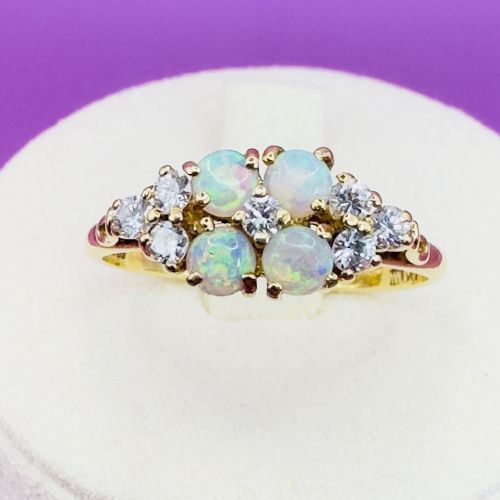
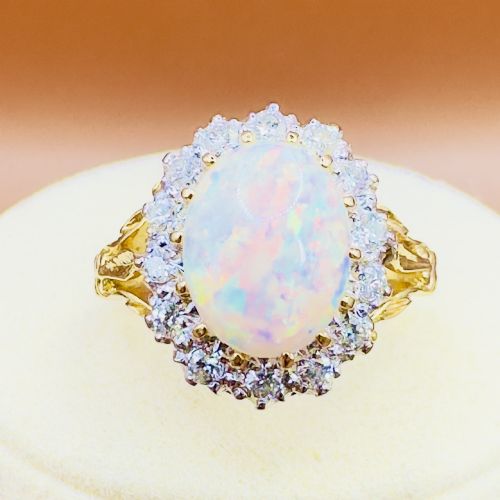
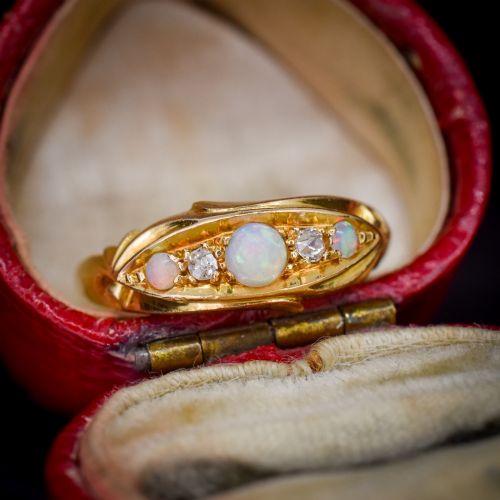
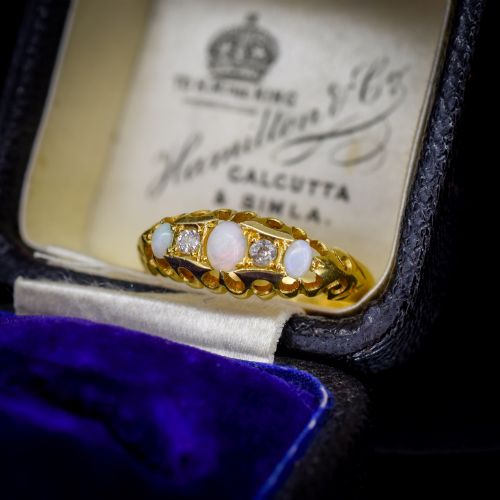
An opal and gold ring spans several decades of jewellery design, encompassing Victorian, Edwardian, Art Deco, and mid-century periods. The selection on this page relies heavily on Victorian and Edwardian examples alongside vintage pieces from the mid-twentieth century.
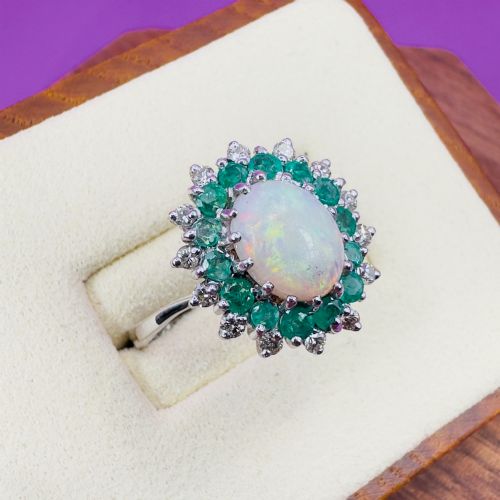
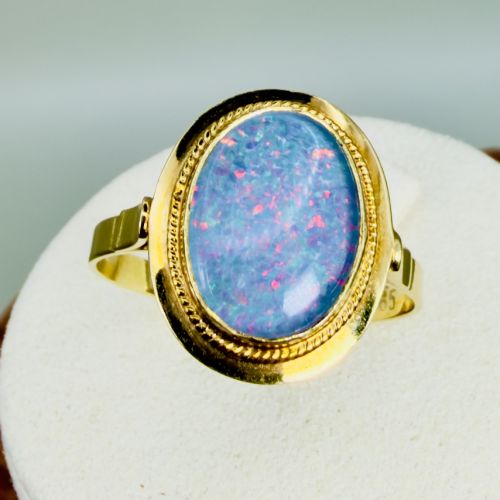
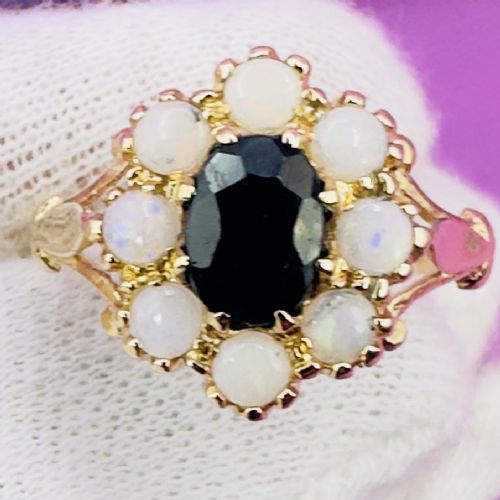
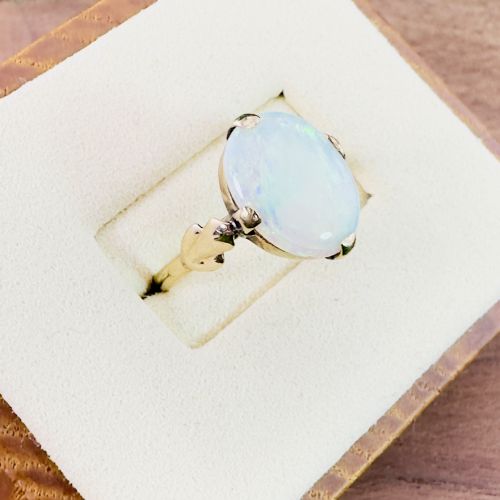
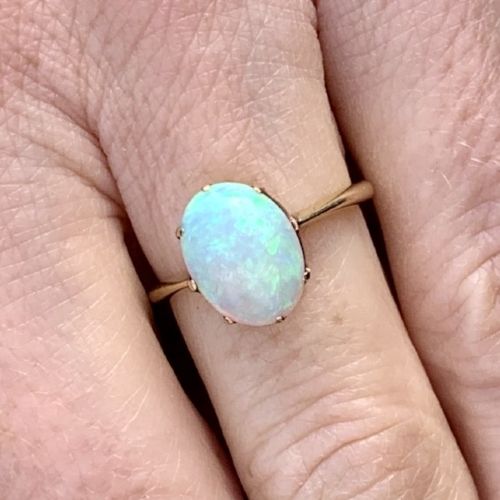
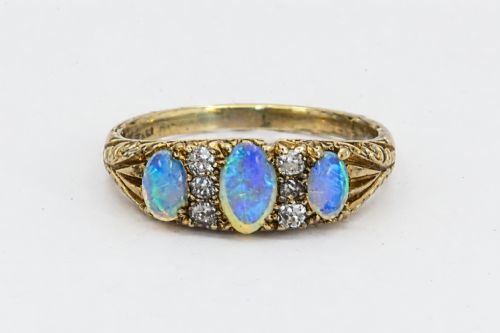
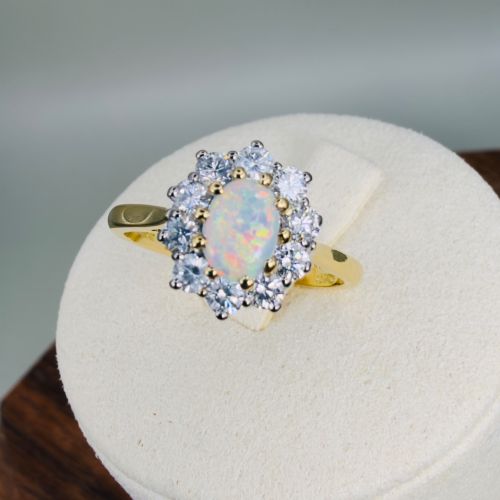
Forms vary from simple solitaire and five-stone settings to complex navette, boat, and diamond-accented clusters. Buyers encounter traditional yellow gold, white gold, and occasional platinum mounts housing white or black opals.
How they were made
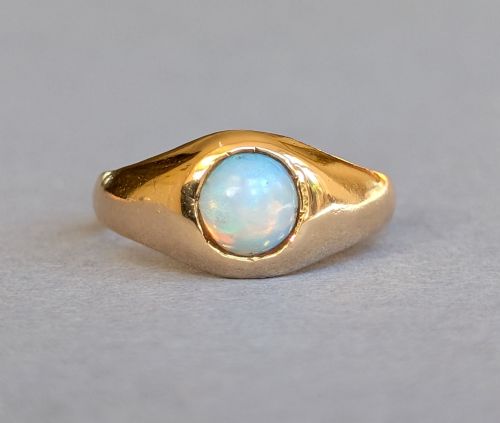
Goldsmiths utilised 9ct, 15ct, and 18ct gold, shaping bands through casting or hand-forging to secure the stones. Settings often incorporate claw, bezel, or gypsy mountings designed to protect the softer gemstone.
Opals are typically cut as cabochons to display their internal fire, occasionally paired with old-cut or brilliant-cut diamonds and other gemstones such as emeralds, sapphires, or garnets.
Opal and Gold Ring Retail Price Guide 2026
Typical asking prices for opal and gold ring among the pieces listed under this phrase on Sellingantiques today, from the lower quarter to the upper quarter. They describe what is for sale here now, not the wider market.
Listings feature 18ct gold, 9ct gold, and 15ct yellow gold, paired with platinum accents across Victorian and mid-century periods.
What varies in quality
The play-of-colour within the opal dictates much of the visual appeal, with stones exhibiting vibrant spectral flashes commanding greater attention. The integrity of the setting and the matching of secondary stones like diamonds also influence the overall standard.
Period craftsmanship shows in the crispness of the hallmarking, such as Chester or Birmingham assay office stamps, and the careful proportioning of the gold work relative to the central gemstone.
The Opal and Gold Ring Glossary
- Cabochon
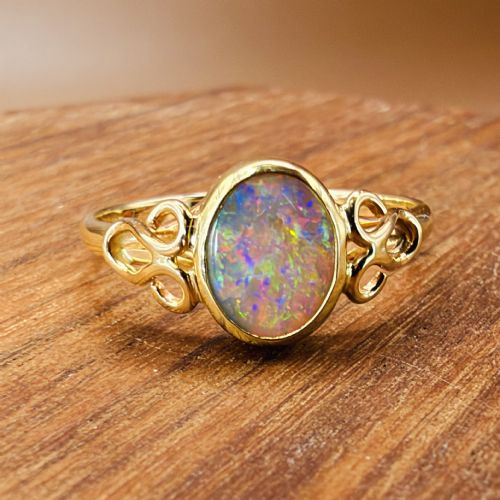
- A gemstone shaped and polished with a smooth, rounded surface rather than faceted. This style highlights the optical phenomena within opals.
- Boat ring
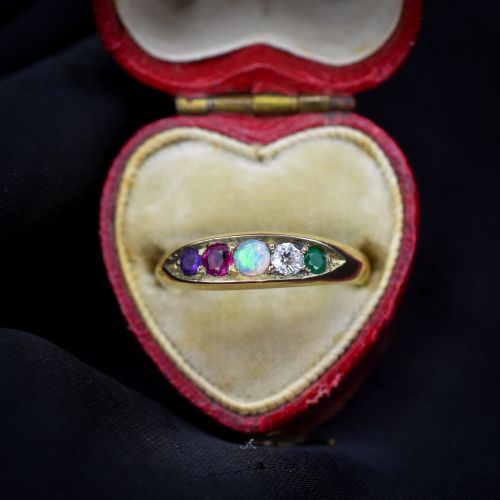
- A ring setting shaped like the hull of a boat, typically featuring a cluster of stones arranged horizontally along the finger.
- Navette
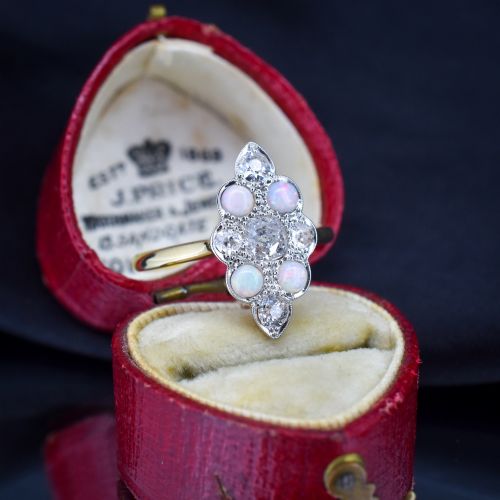
- A boat-shaped or marquise-like pointed mounting style popular in Edwardian jewellery. It stretches visually along the length of the hand.
- Gypsy ring
- A style where stones are flush-set directly into a heavy, tapering gold band. This creates a smooth exterior profile.
- Trilogy ring
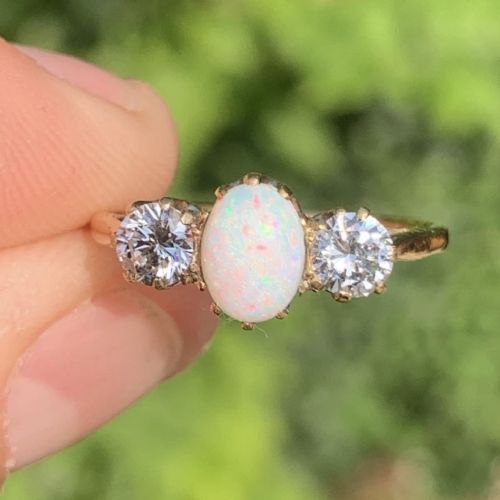
- A ring set with three stones, often signifying past, present and future. They frequently pair an opal centre with diamond shoulders.
Opal and Gold Ring: Frequently Asked Questions
How do I care for an opal ring?
Opals contain water and require gentle handling to prevent drying out or cracking. Avoid ultrasonic cleaners, harsh chemicals, and sudden temperature changes.
Remove the ring when doing heavy physical work, gardening, or swimming. Clean the stone simply with a soft, damp cloth.
Are these opals natural?
The pieces listed feature natural opals, including white opals, black opals, and boulder opals. They display genuine play-of-colour formed naturally within the stone.
Period pieces from the Victorian and Edwardian eras rely exclusively on mined natural stones rather than modern synthetics.
How can I date my ring?
Hallmarks stamped inside the band provide the most reliable guide to a ring's age. Assay office marks, date letters, and maker's marks often pinpoint the exact year and location of manufacture.
Stylistic clues like navette shapes or gypsy settings also point towards specific eras such as the Edwardian period or late Victorian times.
Can these rings be resized?
Many gold rings can be altered by a skilled jeweller, depending on the band design and the security of the stones. Solid gold shanks without intricate shoulder engraving resize most easily.
Extreme adjustments require caution because older claw or bezel settings can distort under heat during the resizing process.