


Olive Velvet Reading Chair
An olive velvet reading chair offers deep upholstery and comfortable seating, bringing character and rich texture to any room.
Olive Velvet Reading Chair
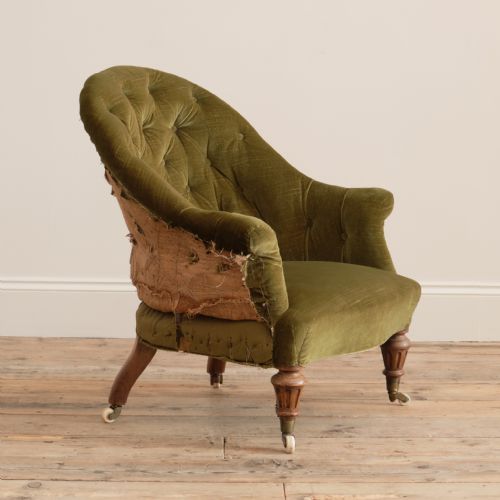
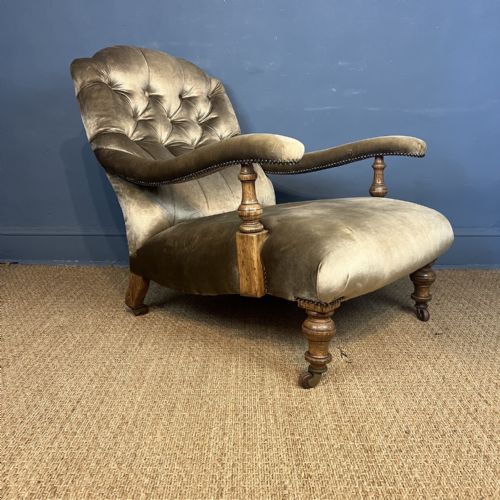
An olive velvet reading chair is an armchair designed for comfort during long hours of sitting with a book, appearing in styles from the Regency period through the Victorian era and Edwardian times. These pieces provide deep, upholstered seating supported by frames shaped from rosewood, mahogany, oak, and other hardwoods. Buyers searching for an olive velvet reading chair find armchairs that bring period character and rich textile warmth into a library or study.
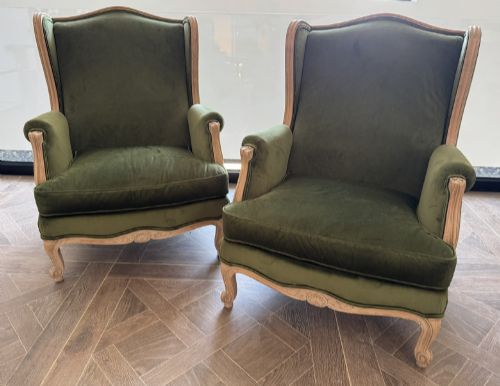
The versions most commonly met on this page date from the nineteenth century, including specific years like eighteen-eighty and nineteen-ten, as well as broader Victorian and Edwardian periods. Examples range from open armchairs and library chairs to tub armchairs, wingback armchairs, and barrel back designs. Each piece reflects the distinct craftsmanship of its era, combining sturdy timber frames with plush fabric upholstery.
How they were made
Makers constructed the supportive frames of these armchairs using dense timbers such as mahogany, rosewood, oak, and general hardwood. These woods were often carved or shaped to form the structural skeleton of the chair, providing stability beneath the upholstery. Some pieces incorporate turned wooden legs fitted with brass castors for ease of movement.
The upholstery technique involved padding the interior framework and covering it in textile materials like velvet. Frames were built in various configurations, including wingback, barrel back, and tub shapes, to support the back and arms of the person sitting.
Some nineteenth-century chairs sit on tiny brass wheels, ready to roll the moment the book gets heavy.
What varies in quality
The standard of timber framing differentiates chairs across the range, with dense hardwoods like rosewood and mahogany showing finer grain and more skilled cabinet work than standard timber frames. Carved details on the wooden elements demonstrate the proficiency of the maker and the time invested in shaping the structure.
The execution of the upholstery and the depth of the cushioning also distinguish pieces. Chairs with well-proportioned wingback or barrel back shapes and carefully fitted velvet upholstery represent a higher level of nineteenth and early twentieth-century seating design.
Hampton & sons pall mall
The Olive Velvet Reading Chair Glossary
- Armchair
- A chair with supports for the arms or elbows, designed for single-person seating.
- Library chair
- An upholstered armchair traditionally used in studies and reading rooms for extended periods of sitting.
- Wingback armchair
- A seat featuring high side panels designed to shield the sitter from drafts and trap heat.
- Castor
- A small wheel mounted on a swivel assembly attached to the base of a chair leg for rolling.
Olive Velvet Reading Chair: Frequently Asked Questions
How were library armchairs used?
Library armchairs were placed in studies, libraries, and sitting rooms to provide comfortable seating for reading and writing. Their upholstered designs and supportive arms were built for extended periods of indoor use.
These chairs served as functional furniture pieces that combined wooden structural framing with soft textile coverings.
What woods are found in these frames?
The frames are constructed from various timbers including mahogany, rosewood, oak, and general hardwood. These materials provided the necessary strength for the structural skeleton of the armchair.
Cabinet makers selected these woods for their durability and appearance under carved or polished finishes.
How do I identify a Victorian chair?
Victorian armchairs are identified by the characteristic styles and timber choices of the nineteenth century, such as mahogany and rosewood frames. Details like brass castors and specific upholstery configurations help indicate this period.
Items from this era range from simple open armchairs to tub and library chair forms.