

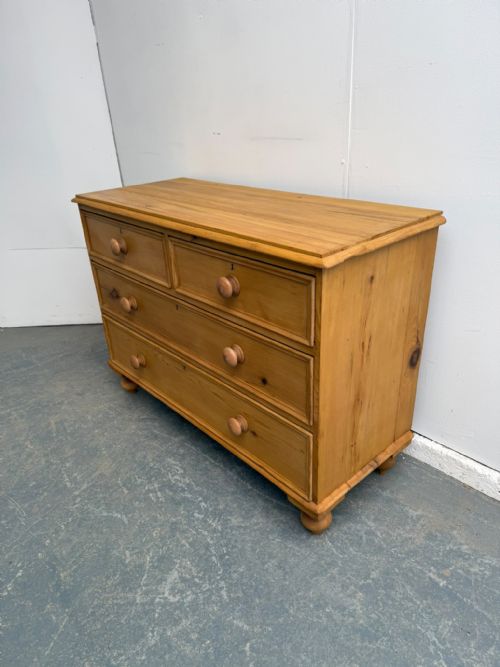
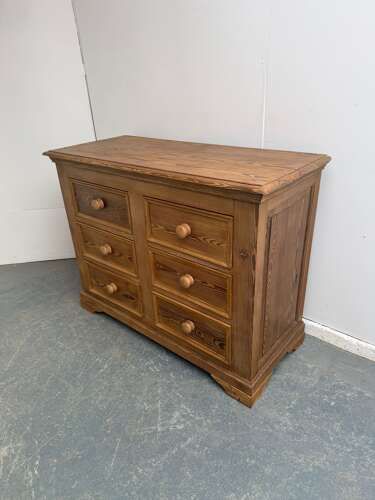

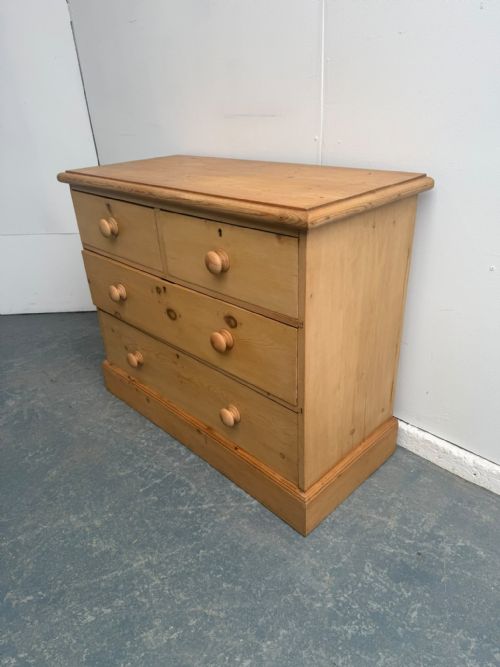

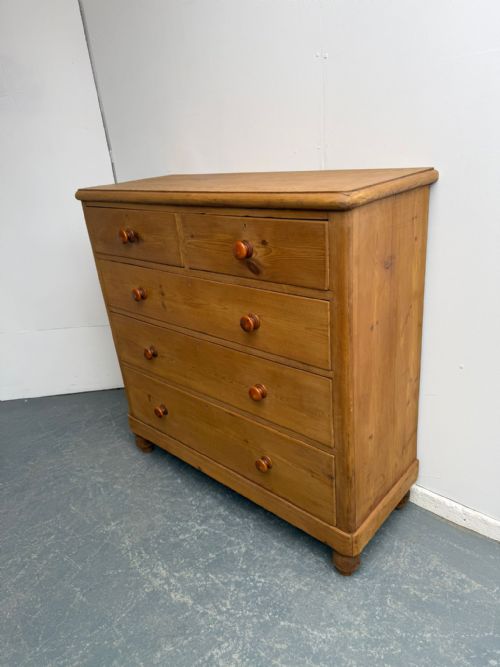


Old Wooden Tallboy
An old wooden tallboy brings serious presence and honest storage to a room, offering deep drawers built to last through generations.
Old Wooden Tallboy
When you search for an old wooden tallboy, you are looking at substantial storage furniture designed to hold garments and linens with vertical economy. The pieces seen here span the Victorian era, the year 1910, and 1900, taking the form of chests of drawers, armoires, wardrobes, linen presses, and storage cupboards.
The version you are most likely to meet on this page is a Victorian pine chest of drawers, often finished with a wax surface to highlight the grain. These range from low and wide four-drawer formats to soaring five-drawer and six-drawer heights, alongside two-piece linen presses and occasional variants in teak.
Origins stretch across English, Irish, and Hungarian traditions, plus Asian colonial and Victorian country styles, sometimes including Art Nouveau storage cupboards. Each regional variation brings subtle shifts in proportions and drawer arrangements, while retaining the core utility of tall wooden storage.
How they were made
Construction relies heavily on pine and teak, selected for structural strength and worked into carcases that house multiple stacked drawers. Timber is frequently treated with wax to protect the surface and bring out the natural warmth of the wood.
Metal hardware, specifically brass, appears on handles and drawer pulls to provide functional grip and contrast against the dark or honeyed tones of the timber. Joinery methods of the period ensure that these heavy pieces remain stable under daily domestic use.
Old Wooden Tallboy Retail Price Guide 2026
Typical asking prices for old wooden tallboy among the pieces listed under this phrase on Sellingantiques today, from the lower quarter to the upper quarter. They describe what is for sale here now, not the wider market.
Listings feature items spanning the Victorian era, 1900, and 1910, constructed predominantly from pine and teak with brass hardware.
What varies in quality
Quality in these pieces depends on the integrity of the timber selection and the precision of the cabinet work, particularly how smoothly the drawers run within their carcases. A top-quality tallboy shows careful attention to proportion, such as rounded edges or well-matched board widths.
The finish also separates examples, with clean waxed surfaces maintaining the character of the wood better than neglected or repeatedly painted alternatives. Original brass fittings and sound structural timber elevate certain pieces well above standard utility items.
The Old Wooden Tallboy Glossary
- Tallboy
- A tall chest of drawers, traditionally standing higher than a standard chest by stacking additional drawer tiers. It maximises vertical storage floor space in bedrooms and dressing rooms.
- Linen Press
- A two-piece storage item featuring upper cupboard doors enclosing sliding trays for textiles, positioned above a base of wider drawers. They were essential for storing folded household linens.
- Pine
- A softwood commonly utilised throughout the Victorian period for domestic furniture due to its availability and workability. It takes a wax finish particularly well.
- Teak
- A dense, durable hardwood utilised in Asian colonial and turn-of-the-century pieces for its resistance to environmental shifts and rich natural oil content.
- Waxed
- A surface treatment applied to timber to nourish the grain and provide a soft, protective sheen without forming a hard plastic modern gloss layer.
Old Wooden Tallboy: Frequently Asked Questions
What is an old wooden tallboy used for?
These pieces provide deep and vertically stacked storage for folded clothing, bed linen, and personal belongings. Their tall footprint allows maximum storage capacity while occupying a relatively small floor area.
Historically, they sat in bedrooms and dressing areas as the primary wardrobe solution before fitted furniture became common. Today, they serve the exact same practical purpose in modern homes.
How do I identify a Victorian tallboy?
Victorian pieces typically employ solid pine timber, hand-cut dovetail joints on the drawer construction, and traditional wax finishes. You will often see turned wooden knobs or brass drop handles.
Proportions tend to be generous and heavy, reflecting the period's preference for robust domestic furniture. Regional hints, such as English country or Hungarian workshop traits, can also indicate the origin.
Are these tallboys made of solid wood?
The pieces listed here utilise solid timbers such as pine and teak throughout their carcases and drawer structures. This heavy solid construction accounts for their longevity and weight.
Because they pre-date modern manufactured board materials, you can expect genuine timber construction across the frame, panels, and drawer linings.
How do I care for a waxed pine tallboy?
Maintain the finish by applying a traditional beeswax paste every six to twelve months to feed the wood and prevent the surface from drying out. Buff the wax gently with a soft cloth to restore the subtle sheen.
Keep the tallboy away from direct heat sources and strong sunlight, which can dry out old pine and cause the timber to split or warp over time.