

Old Pine Drawers
Old pine drawers bring honest utility and warmth to a room, offering practical storage built from solid softwood.
Old Pine Drawers
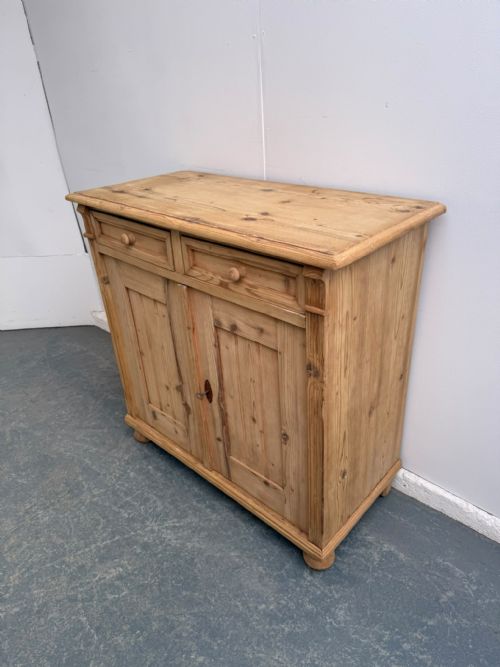
Old pine drawers encompass a range of domestic and commercial storage forms, including chest of drawers units, banks of shop drawers, and multi-drawer dressers originating from Georgian, Victorian, Edwardian, and nineteen-ten periods.
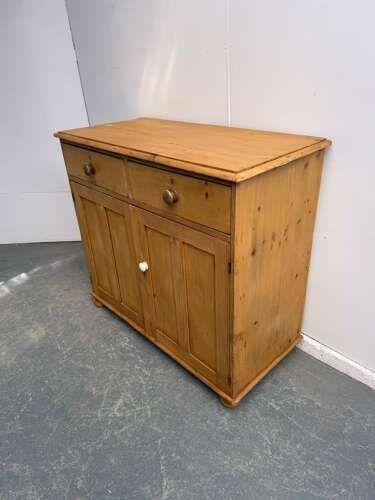
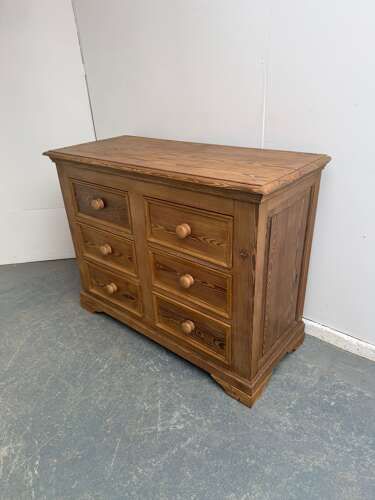
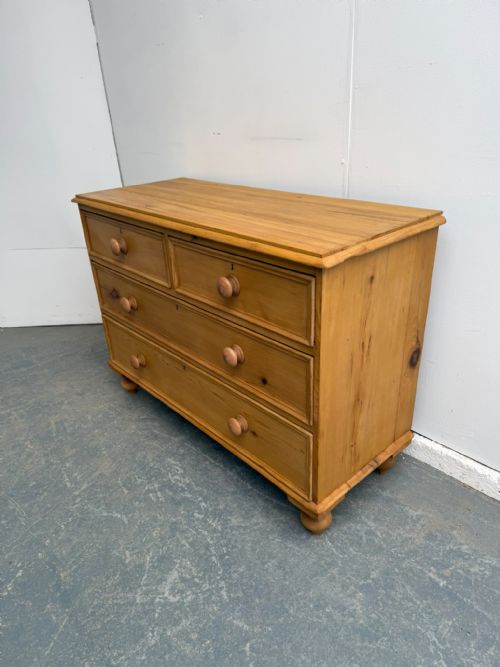
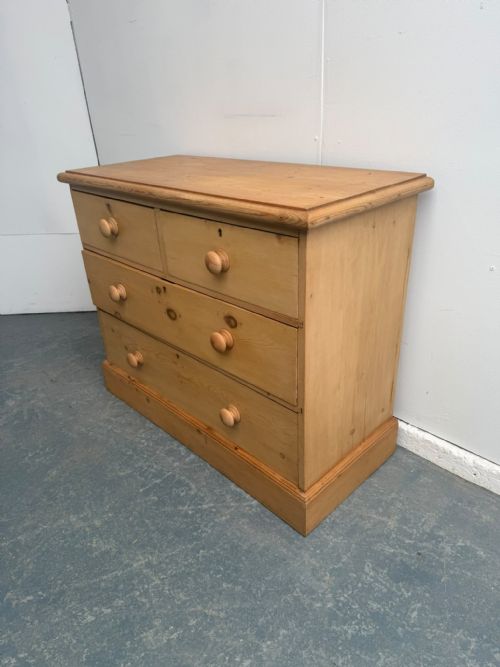
The version a buyer meets most frequently on this page is the Victorian chest of drawers, appearing in low wide formats, tall five-drawer configurations, and massive proportions.
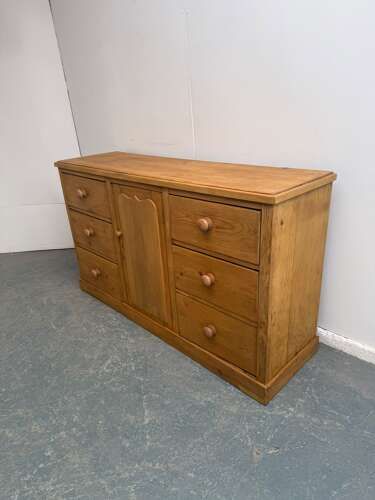
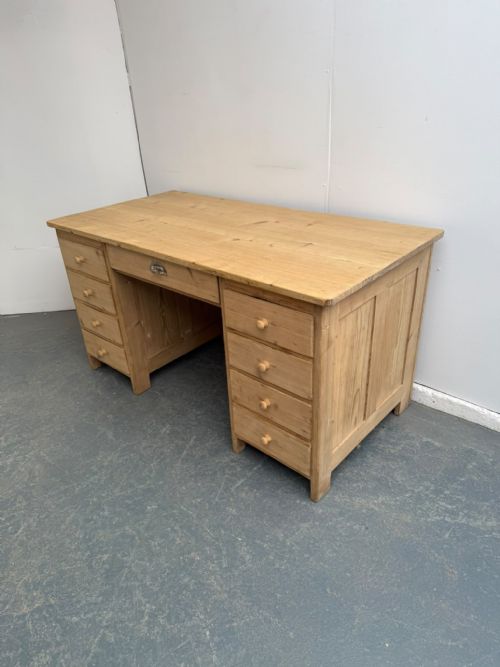
Beyond standard chests, the selection includes specialised pieces such as shop fittings, mule chests, and large desks built from the same durable softwood.
Materials and construction
Makers utilised pine as the primary timber, complemented by iron or brass hardware for handles and drawer pulls, and occasionally ceramic elements.
Surfaces receive finishes of wax, paint in colours such as blue and light green, or remain in a raw state ready for waxing or painting.
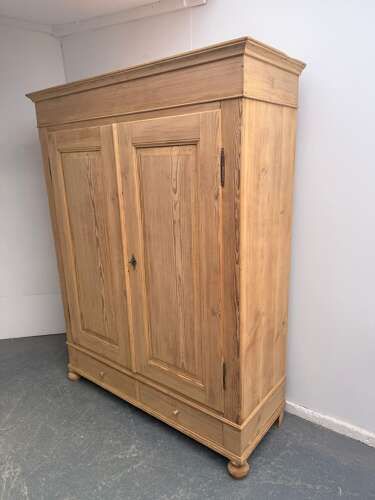
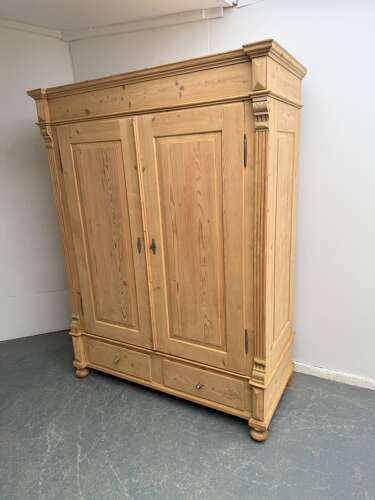
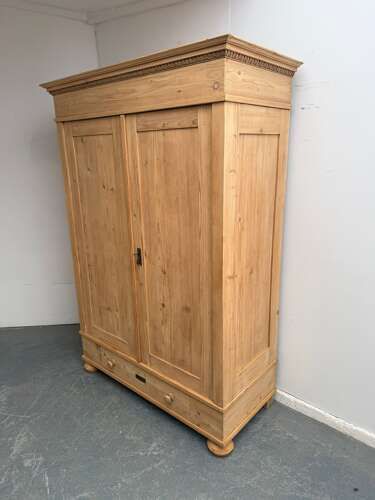
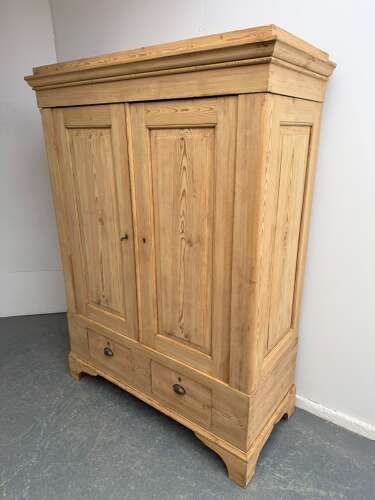
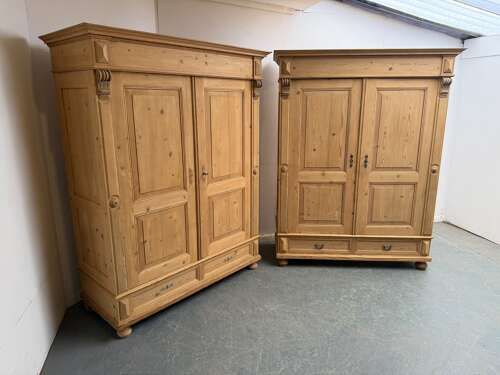
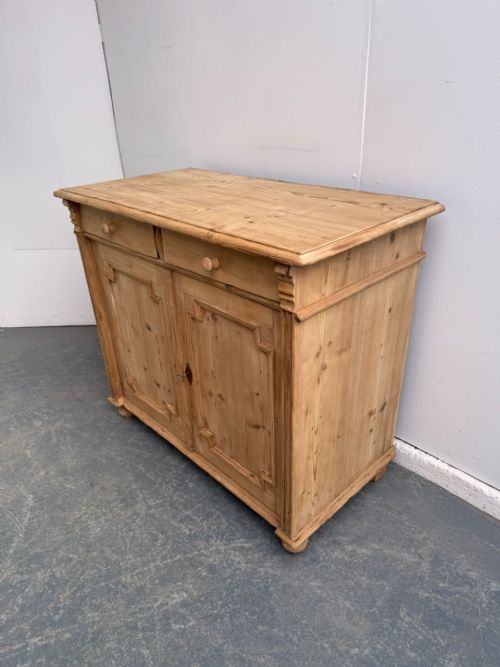
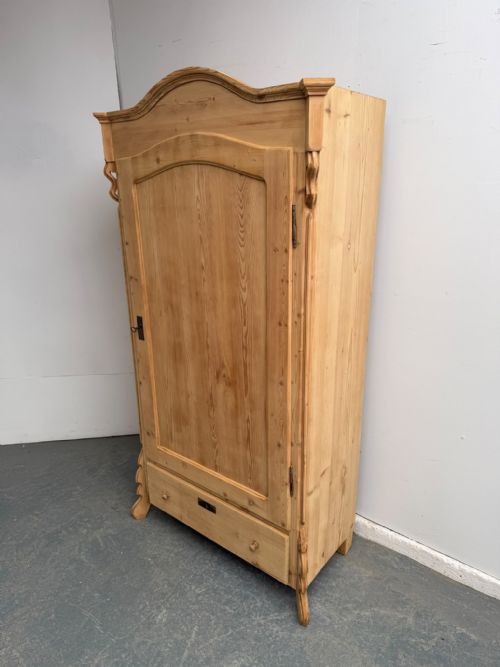
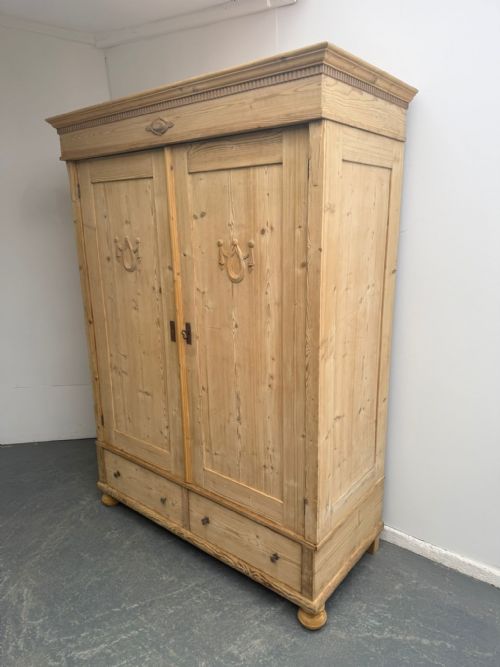
Construction methods accommodate both regional English vernacular and Hungarian origin pieces, involving columned details, carved elements, and knockdown wardrobe frameworks.
Old Pine Drawers Retail Price Guide 2026
Typical asking prices for old pine drawers among the pieces listed under this phrase on Sellingantiques today, from the lower quarter to the upper quarter. They describe what is for sale here now, not the wider market.
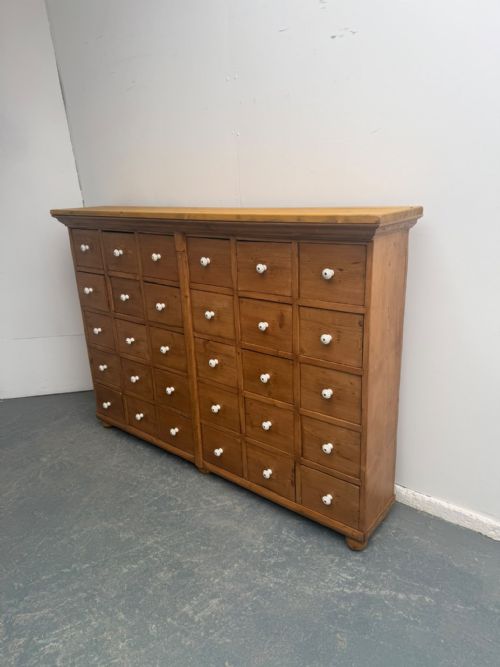
A thirty-drawer shop bank proves that someone once needed to organise thirty distinct varieties of very small things.
Quality differences
The standard of timber selection and drawer capacity distinguishes pieces, ranging from compact three-drawer chests to massive thirty-drawer shop banks.
Proportions and surface treatments determine the character of a piece, from plain waxed utility surfaces to original painted finishes and columned details.
The Old Pine Drawers Glossary
- Knockdown wardrobe
- A large wardrobe constructed to be taken apart for transport. These pieces utilise modular panels rather than fixed joints.
- Dresser base
- The lower section of a kitchen dresser featuring cupboards and drawers. These items provide robust kitchen storage without the upper plate rack.
- Mule chest
- A storage chest fitted with one or two drawers at the base. This form bridges the gap between a blanket box and a chest of drawers.
- Shop fitting
- Commercial furniture designed for retail environments, such as multi-drawer counters. These pieces offer heavy-duty internal capacity.
- Waxed finish
- A treatment where melted wax is rubbed into the pine grain to protect the wood and impart a soft sheen. This method preserves the natural colour of the timber.
Old Pine Drawers: Frequently Asked Questions
How do I clean old pine drawers?
Clean surfaces using a soft, dry cloth to remove dust without disturbing the timber. Avoid harsh chemical cleaners that strip the historic wax or painted finish.
Nourish waxed pine periodically with a traditional beeswax polish applied sparingly and buffed to a gentle shine. This maintains the moisture balance of the wood.
Are these drawers suitable for a bedroom?
These pieces provide deep and sturdy compartments well-suited for clothing storage in a domestic bedroom. Low wide chests double as surface tops for lamps and mirrors.
Ensure you measure floor space and ceiling clearance carefully, as many period items possess substantial dimensions.
How do I date an old pine chest?
Examine the construction joints, timber thickness, and hardware to establish an approximate period such as Georgian or Victorian. Drawer linings and backboards often display tool marks indicative of nineteenth-century methods.
Stylistic cues like columned corners or original painted schemes help narrow the decade of manufacture.
What is the difference between English and Hungarian pine?
Hungarian pine items often display distinct grain patterns and proportions compared to domestic English vernacular furniture. These continental pieces frequently arrive as massive or low wide chests with robust carcases.
Both origins utilise soft pine construction but reflect the local cabinet-making traditions of their respective regions.