





Old Cut Trilogy Ring
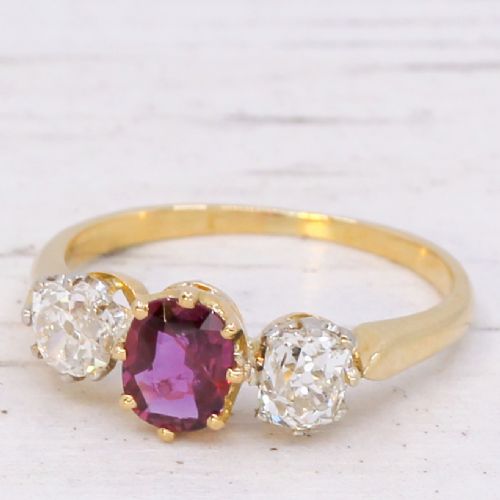
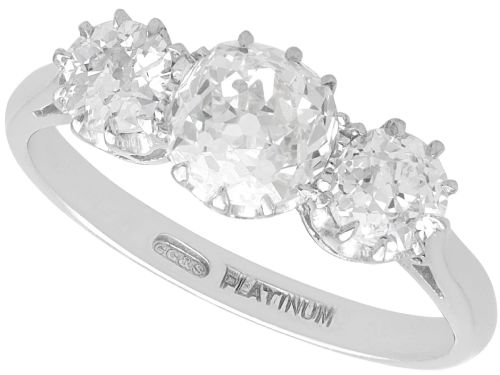
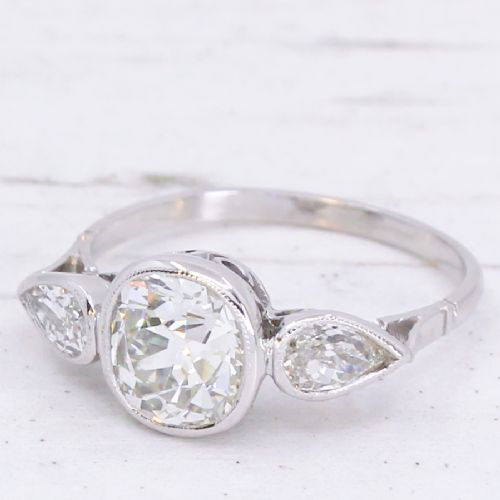
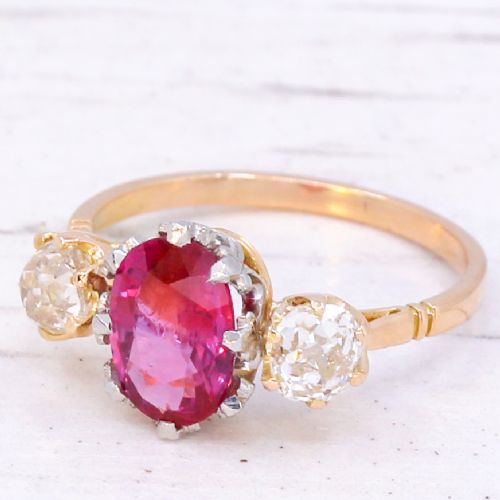
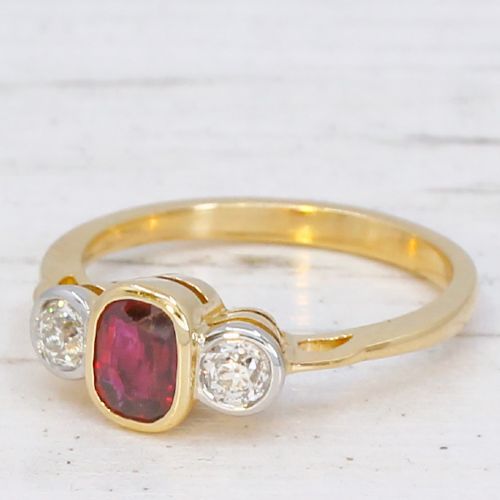
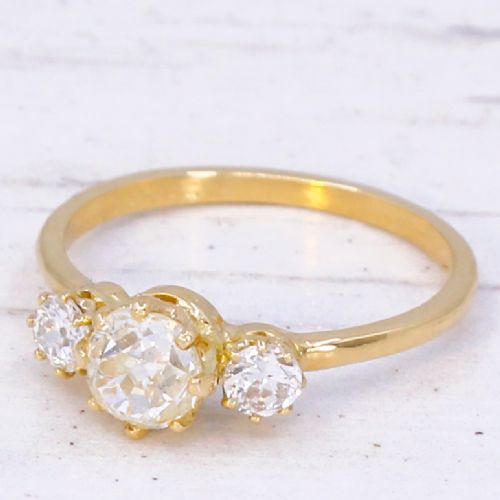
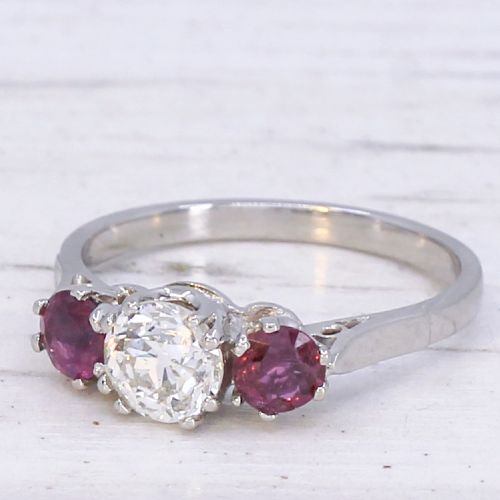
An old cut trilogy ring brings together three hand-faceted stones on a precious metal band, offering past centuries of character for daily wear.
Old Cut Trilogy Ring
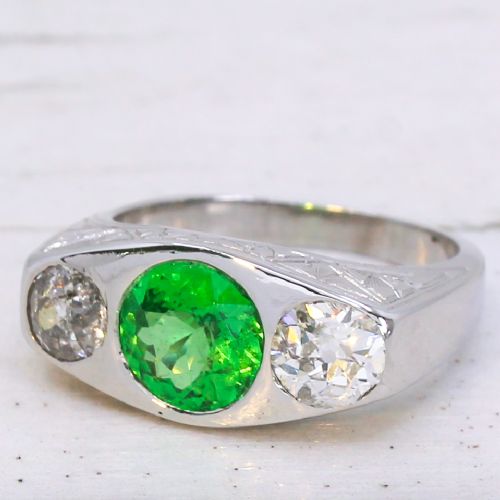
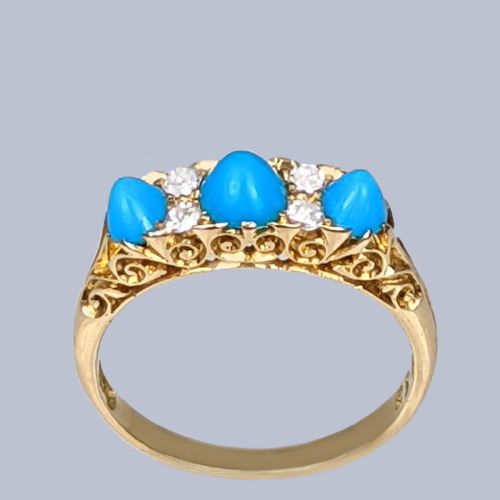
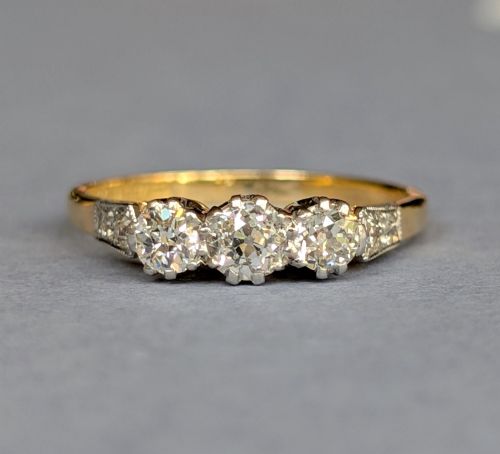
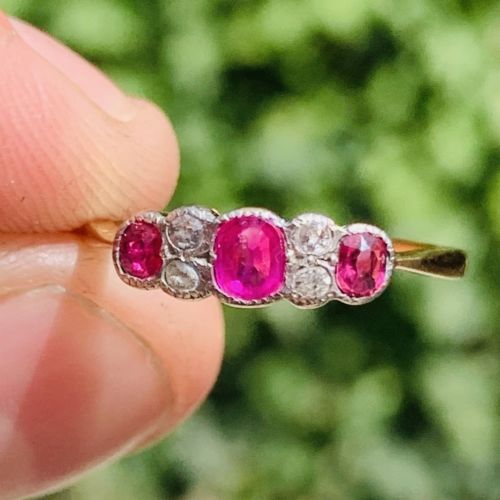
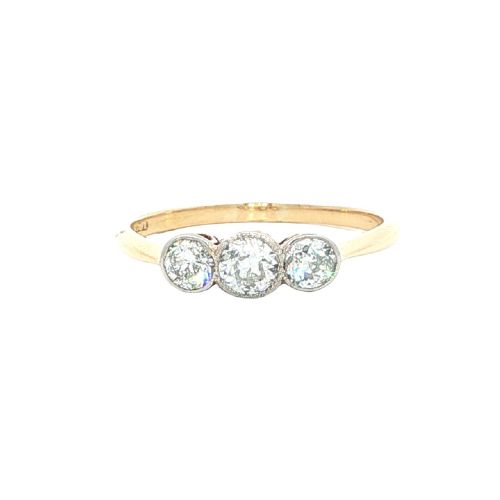
Most examples found in this selection pair central diamonds with flanking stones, or intersperse diamonds with coloured gems such as rubies, sapphires, emeralds or pearls. These pieces span from the late nineteenth century through to the mid-twentieth century, showing both traditional claw settings and flush gypsy styles.
How they were made
Jewellers constructed these rings primarily using 18ct yellow gold, white gold, and platinum, often combining gold bands with platinum-topped settings to display diamonds to best effect. Stones were shaped by hand before standardisation, resulting in old mine cuts, old cushion cuts and old European cuts with distinctively high crowns and deep pavilions.
Settings range from delicate pierced galleries and claw mounts to robust half-hoop and gypsy settings designed for secure everyday use. Metalwork techniques of the periods include hand-fabrication and early casting methods, finished with subtle millegrain edging on Edwardian and Art Deco pieces.
Old Cut Trilogy Ring Retail Price Guide 2026
Typical asking prices for old cut trilogy ring among the pieces listed under this phrase on Sellingantiques today, from the lower quarter to the upper quarter. They describe what is for sale here now, not the wider market.
The documented periods span from Victorian and Edwardian eras through Art Deco to Mid-Century Modern.
What varies in quality
The overall standard depends upon the proportion and matching of the three stones, as well as the integrity of the original metalwork. Finer examples maintain stones of balanced spread and colour that complement one another harmoniously within the setting.
The preservation of the original hand-cut facets and the crispness of the surrounding gallery work separate standard production from more accomplished goldsmithing. Unaltered settings that retain their original hallmarking and substantial shank thickness represent the higher tier of survival.
The Old Cut Trilogy Ring Glossary
- Old cut
- A diamond facet style cut by hand before modern machinery, typically featuring a smaller table, higher crown and open culet. These stones produce a distinct candlelit sparkle rather than modern brilliant scintillation.
- Trilogy ring
- A ring set with three principal stones arranged horizontally across the finger. The configuration carries traditional sentimental meaning relating to time.
- Gypsy set
- A mounting style where stones are set flush into the solid metal band rather than held by raised claws. This technique provides a smooth profile suited to practical wear.
- Millegrain
- A decorative border of tiny raised metal beads running along the edges of settings. This detail became prominent during the Edwardian and Art Deco periods.
- Culet
- The small flat facet at the very bottom of an antique diamond. Old cuts frequently display a visible culet when viewed from the top through the table.
Old Cut Trilogy Ring: Frequently Asked Questions
Can I wear an old cut trilogy ring daily?
Most of these rings were built for regular wear using durable metals like 18ct gold and platinum. Standard care involves checking the settings periodically to ensure the stones remain secure.
Removing the ring during heavy manual tasks helps protect the antique metalwork and older gemstone surfaces from accidental impact.
What periods do these rings come from?
The pieces span several decades, stretching from late Victorian and Edwardian workshops through to Art Deco designs and mid-century items. Each era brings distinct structural characteristics and mounting styles.
Victorian examples often utilise yellow gold and gypsy settings, while Edwardian and Art Deco pieces frequently introduce platinum and open-work filigree.
What is the difference between old cut and modern stones?
Old cuts were shaped by eye under different lighting conditions, resulting in deeper proportions and wider facets. This historical cutting style creates broad flashes of light rather than the precise brilliance of modern cut stones.
Each antique stone remains individual due to the hand-crafting process involved in its creation.
Are coloured gemstones in these rings natural?
The rubies, sapphires, emeralds and pearls found in these settings are period gems originating from natural sources. Many listings note specific origins or the absence of artificial treatments where documented.
These coloured stones are typically paired with old cut diamonds to create contrast within the three-stone layout.