



Old Cut Gold Earrings
Old cut gold earrings bring hand-faceted sparkle and period charm to the ear, spanning Victorian, Edwardian, and Art Deco designs crafted in gold, silver, and platinum.
Old Cut Gold Earrings
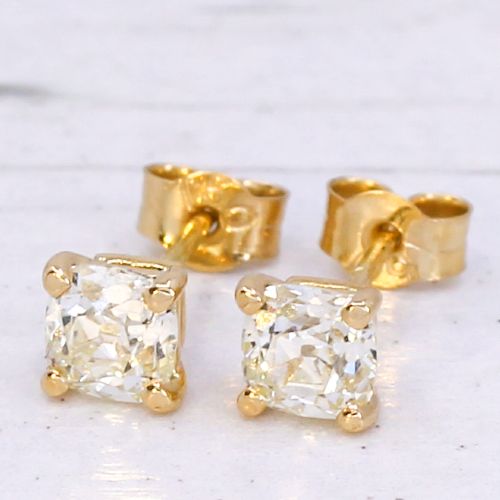
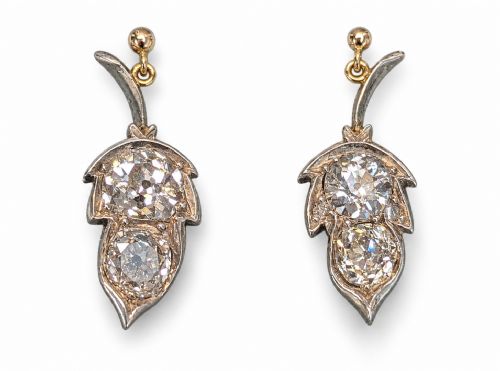
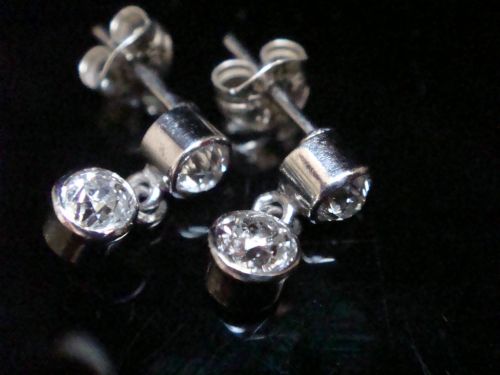
When buyers search for old cut gold earrings, they encounter historic jewels shaped by hand rather than modern machinery. The selection on this page centres on drop earrings, cluster studs, and articulated designs from the Victorian, Edwardian, and Art Deco periods.
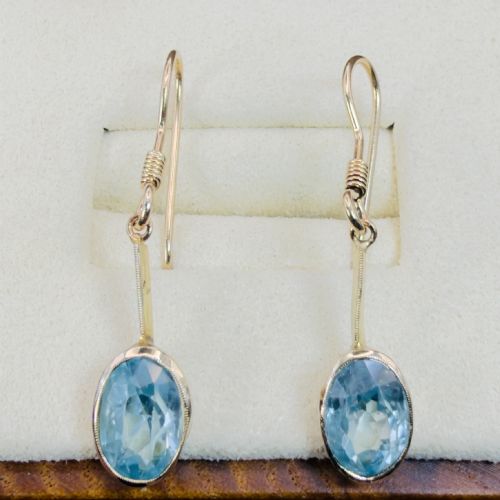
Most examples pair old mine cut or old European cut diamonds with yellow gold, white gold, or platinum settings. Alongside diamond centerpieces, pieces featuring blue zircon, turquoise, and natural pearls appear from eras including the 1920s and 1950s.
The forms range from simple claw set studs to elaborate floral clusters and swinging drop earrings. Edwardian white gold and platinum combinations dominate the inventory alongside substantial Victorian yellow gold mountings.
How They Were Made
The construction of these antique pieces relies on precious metals combined to hold historic stones securely. Makers utilised 18ct yellow gold, 18ct white gold, 9ct gold, and platinum, often backing white gold or yellow gold settings with silver to enhance the brilliance of early diamond cuts.
Stones are hand-set using claws, bezels, or micro-settings tailored to accommodate the irregular proportions of old mine, old European, and rose cut diamonds. Articulated joints and lever-backs in mid-century items allowed movement, whilst earlier Victorian and Edwardian pairs utilised traditional hook and screw fittings.
Old Cut Gold Earrings Retail Price Guide 2026
Typical asking prices for old cut gold earrings among the pieces listed under this phrase on Sellingantiques today, from the lower quarter to the upper quarter. They describe what is for sale here now, not the wider market.
What Varies in Quality
Quality in these jewels rests on the harmony between the historic stones and the metalwork supporting them. Finer examples display meticulous hand-piercing in white gold or platinum and balanced proportions in cluster and drop configurations.
The character and symmetry of the old cut diamonds heavily influence the stature of a pair. Stones featuring lively hand-faceting combined with substantial gold or platinum weight mark the upper tier of the range.
The Old Cut Gold Earrings Glossary
- Old mine cut
- An early diamond cut characterised by a roughly square girdle, high crown, and large culet facet. This hand-polished form preceded modern brilliant cuts.
- Old European cut
- A round historic diamond cut featuring a small table, heavy crown, and open culet. It provides a distinct pattern of light reflection compared to contemporary stones.
- Rose cut
- A diamond or gemstone cut with a flat base and a domed crown composed of triangular facets arranged in a star shape. It produces a soft, translucent shimmer.
- Drop earrings
- An earring style that hangs below the earlobe, remaining relatively stationary rather than swinging freely. They often incorporate articulated sections.
- Cluster
- An arrangement of smaller gemstones clustered closely around a larger central stone or focal point. This configuration maximises visual impact and perceived size.
Old Cut Gold Earrings: Frequently Asked Questions
Are old cut gold earrings suitable for daily wear?
Many buyers wear these historic jewels regularly, provided the settings and fastenings receive careful handling. Their sturdy gold and platinum constructions are built to endure, though older clasps benefit from gentle use.
Storing them in dedicated compartments prevents friction against other items. Removing them before sleeping or strenuous activity preserves the delicate metalwork and claw settings.
How do I identify the period of my earrings?
Dating relies on examining the mounting style, metal combinations, and the specific cut of the diamonds. Victorian pieces often feature heavy yellow gold or silver-topped gold, whereas Edwardian items favour white gold and platinum lace-like settings.
Art Deco examples introduce geometric lines and calibrated stones from the 1920s and 1930s. Consulting the accompanying hallmarks and overall construction style clarifies the manufacturing era.
What is the difference between old mine and old European cuts?
Old mine cut diamonds display a softer, squarish outline with a prominent culet at the base. They originate from periods prior to the standardisation of round brilliant geometry.
Old European cuts possess a rounder girdle shape that bridges the gap between antique hand-shaped stones and modern brilliant cuts. Both types exhibit distinctive open culets visible under magnification.