




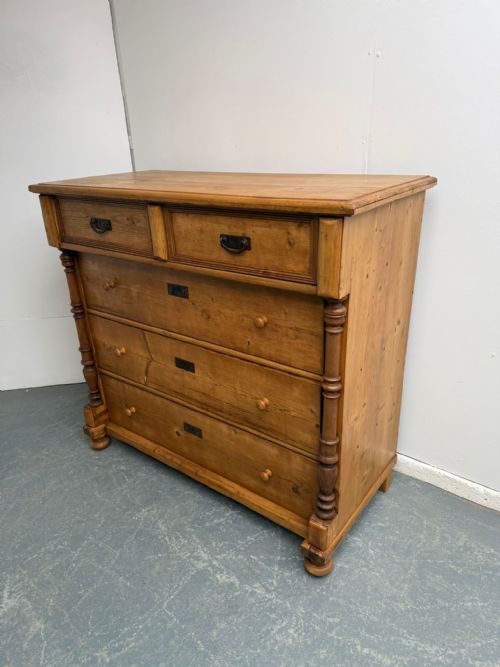
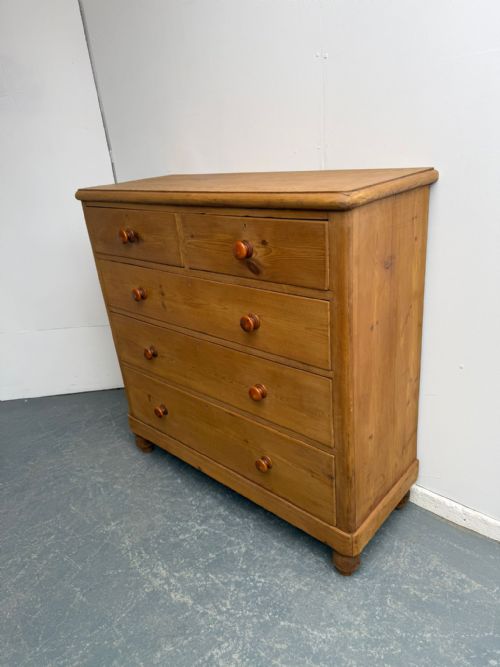
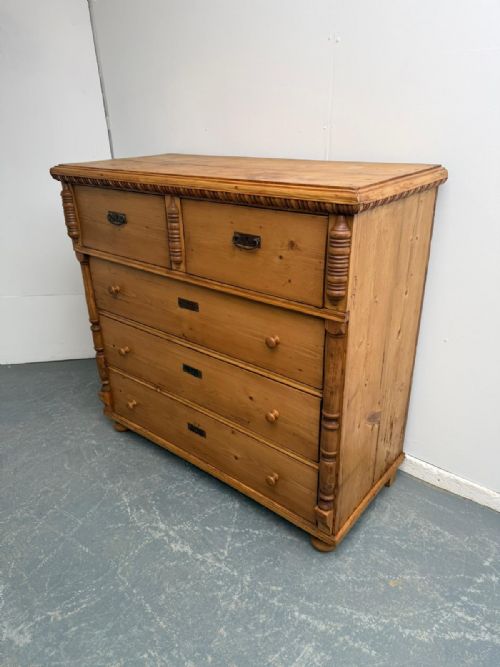
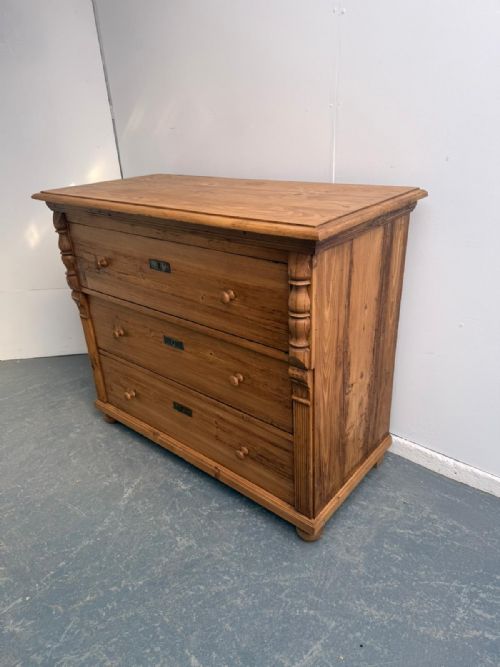


Old Chest of Drawers
An old chest of drawers provides solid timber storage and deep period character.
Old Chest of Drawers
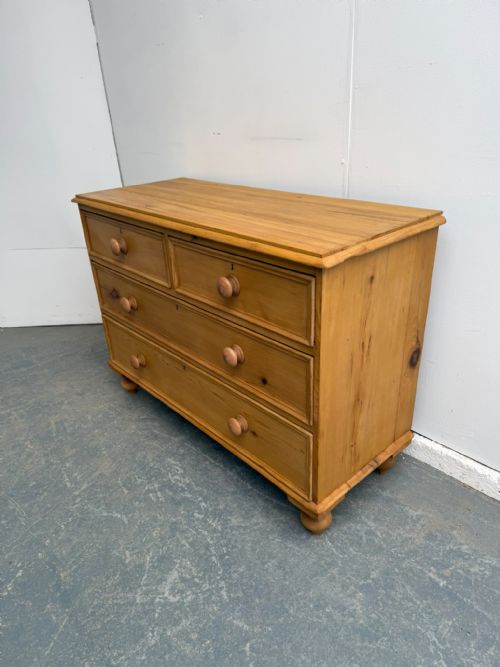
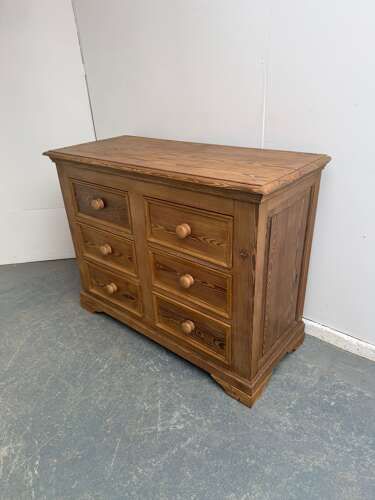
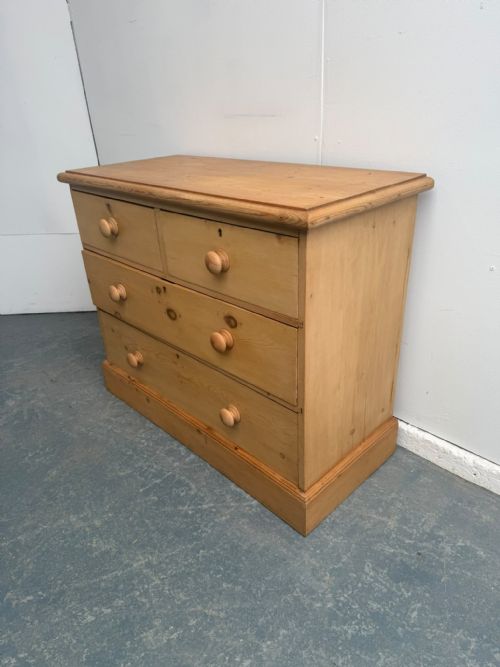
An old chest of drawers brings practical storage through robust timber construction shaped across the Victorian, Georgian, and Edwardian periods. Buyers searching for an old chest of drawers encounter various configurations, from low four-drawer pieces to massive five-drawer formats.
Regional variations appear frequently, spanning English country designs, European folk art styles, and 19th-century continental builds. These pieces serve domestic rooms efficiently while retaining utilitarian origins from workshops and kitchens.
Materials and construction methods
Pine serves as the primary timber across the inventory, providing a resilient structure that accepts traditional wax finishes or original paint layers. Makers constructed carcasses using solid boards, often incorporating columned details or rounded edges on the larger carcase designs.
Hardware consists mainly of brass and iron handles, locks, and hinges fitted to drawers and compartments. Surfaces receive either a clear wax treatment to highlight the grain or retain their historical painted finishes.
Old Chest of Drawers Retail Price Guide 2026
Typical asking prices for old chest of drawers among the pieces listed under this phrase on Sellingantiques today, from the lower quarter to the upper quarter. They describe what is for sale here now, not the wider market.
The listings span Victorian, Georgian, and Edwardian periods, featuring pine constructed alongside brass, iron, and ceramic hardware.
Distinctions in craftsmanship
Quality rests in the proportion of the timber and the integrity of the original construction rather than decorative excess. Superior examples display thoughtful joinery, such as well-fitted drawer runners and intact structural columns.
The preservation of original surface treatments marks a higher tier, whether that involves a deep waxed patina or untouched historical paint. Pieces retaining their original brass or iron hardware and unblemished pine boards command greater appreciation.
The Old Chest of Drawers Glossary
- Mule chest
- A storage chest fitted with one or more drawer compartments at the base beneath a hinged lid. This form bridges the gap between traditional coffers and standard drawer units.
- Linen press
- A tall two-piece piece of furniture combining upper shelving with lower drawers for storing textiles. It stands as a substantial storage solution in larger bedrooms.
- Collectors chest
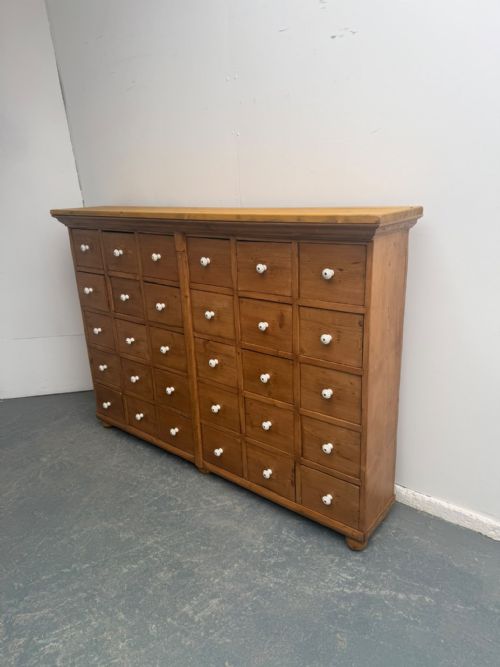
- A specialised cabinet housing numerous shallow drawers designed for organising small specimens or items. These items require precise internal joinery to ensure smooth drawer operation.
- Shop fitting
- A utilitarian bank of drawers originally built for commercial premises rather than domestic use. Their industrial scale and high drawer counts suit modern utilitarian interiors.
- Wax finish
- A protective treatment applied to timber surfaces to nourish the wood and produce a soft sheen. This method enhances the natural grain of pine without creating a high-gloss plastic barrier.
Old Chest of Drawers: Frequently Asked Questions
How do I date an old chest of drawers?
Dating relies on observing construction methods, timber selection, and hardware styles characteristic of Georgian, Victorian, or Edwardian eras. Simpler dovetails and native pine usage often point towards specific regional workshops of the nineteenth century.
Examining the backboards, drawer linings, and internal framing helps separate earlier Georgian pieces from later Victorian and Edwardian iterations.
Can I paint an unpainted pine chest?
Many items in the inventory arrive in bare pine or un waxed states specifically intended for painting or waxing by the buyer. Applying a durable paint finish is a traditional method for customising these versatile timber pieces to match modern interiors.
Preparation involves cleaning the pine surface thoroughly and applying a suitable primer before adding your chosen colour over the solid wood.
How do I maintain a waxed pine surface?
Maintaining waxed pine requires occasional applications of traditional beeswax to nourish the timber and protect against moisture. Avoid placing these pieces in direct sunlight or near heat sources to prevent the pine from drying out.
Buffing the surface with a soft, clean cloth maintains the subtle lustre characteristic of well-kept antique pine furniture without stripping the patina.