



Officer Travel Trunk
An officer travel trunk provides sturdy, portable storage designed for military service, crafted from robust timbers and metal mountings to endure arduous journeys.
Officer Travel Trunk
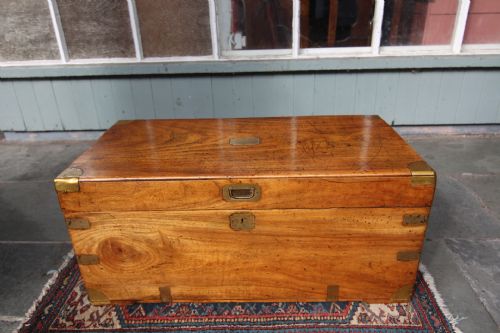
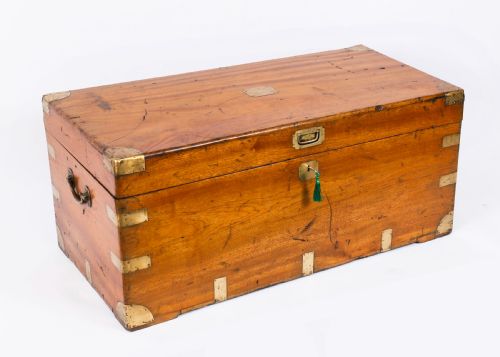
An officer travel trunk is a robust portable chest designed for military life, frequently appearing in forms such as campaign chests and blanket boxes. These pieces originate predominantly from the nineteenth century, encompassing Regency, Victorian, and later periods around nineteen hundred.
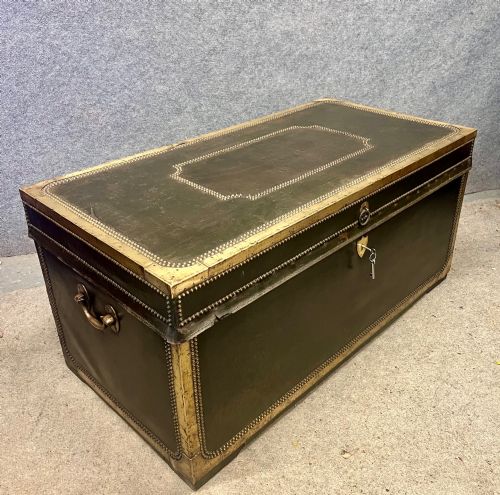
Buyers encounter solid woods like camphorwood, teak, and oak, often paired with protective leather and iron or brass bindings. The structural design prioritises durability and ease of transport for officers on active service.
The selection ranges from plain travelling packing cases to brass-mounted chests featuring original inscriptions and specific historical provenances. Each variant reflects the utilitarian demands placed upon military personnel during travel.
How they were made
Makers constructed officer travel trunks using dense timbers such as camphorwood, teak, and oak, frequently reinforcing the exteriors with pine or leather coverings. These materials provided necessary resistance to moisture and rough handling during transit.
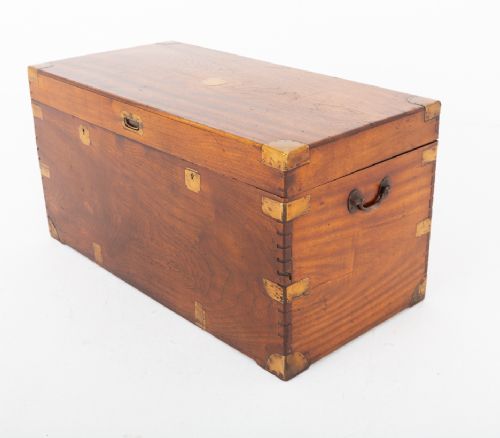
Brass and iron mounts, including bound corners and flush handles, protected vulnerable edges and facilitated lifting. Zinc linings occasionally appeared inside to safeguard contents from damp environments.
Officer Travel Trunk Retail Price Guide 2026
Typical asking prices for officer travel trunk among the pieces listed under this phrase on Sellingantiques today, from the lower quarter to the upper quarter. They describe what is for sale here now, not the wider market.
Camphorwood chests naturally smell of mothballs, a built-in antique defence against pests that lingers for centuries.
What varies in quality
The grade of timber and the complexity of the brass mountings determine the distinction between standard supply and superior officer pieces. Finer examples display carefully selected grain patterns in solid camphorwood or teak alongside robust dovetail joinery.
Original inscriptions, functional keys, and documented military provenance elevate the historical interest of a trunk. The integration of specialised linings and heavier metal hardware indicates a higher standard of original commissioning.
Allen of London
The Officer Travel Trunk Glossary
- Campaign chest
- A portable chest of drawers or trunk made in sections for military officers on the move. These items feature recessed handles and brass corners to withstand travel.
- Camphorwood
- An aromatic timber prized for campaign furniture due to its natural insect-repellent properties. It offers a distinct grain and durability suitable for tropical climates.
- Brass bound
- A construction method utilising brass straps and corners to reinforce wooden chests. This protects the edges from heavy impacts during transport.
- China Trade
- Goods manufactured in China during the nineteenth century specifically for Western markets. These items frequently utilised local camphorwood.
Officer Travel Trunk: Frequently Asked Questions
What is an officer travel trunk?
An officer travel trunk is a durable, portable chest built to transport a military officer's personal belongings during nineteenth-century campaigns. They are constructed to withstand arduous journeys across varying climates.
These pieces typically feature reinforced corners and sturdy handles to facilitate frequent loading and unloading from transport.
How were these trunks used?
Officers utilised these chests to pack uniforms, books, and essential gear while on active service or relocation. The heavy-duty construction protected contents from weather and rough handling.
Many designs allowed the trunk to double as a makeshift desk or table within a campaign tent.
Where should I place one?
These trunks suit living spaces as coffee tables, blanket boxes, or end-of-bed storage units. Their flat tops and robust construction offer practical utility alongside historical character.
Keep them away from direct heat sources to prevent the timber from drying out or splitting.
How do I identify the period?
Dating relies on material combinations, construction techniques, and brass hardware styles typical of the nineteenth century. Regency and Victorian examples often exhibit distinct joinery and specific locking mechanisms.
Inscriptions and maker stamps provide direct evidence of manufacture dates and original ownership.