

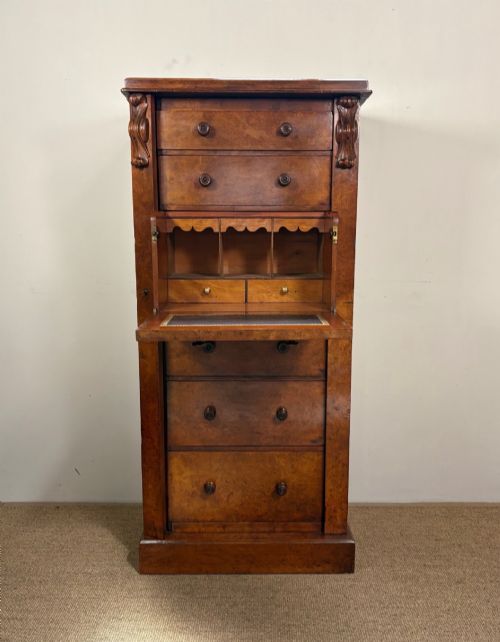


Office Side Cabinet
These office side cabinet pieces offer practical storage with period character, bringing traditional workspace utility into the modern home.
Office Side Cabinet
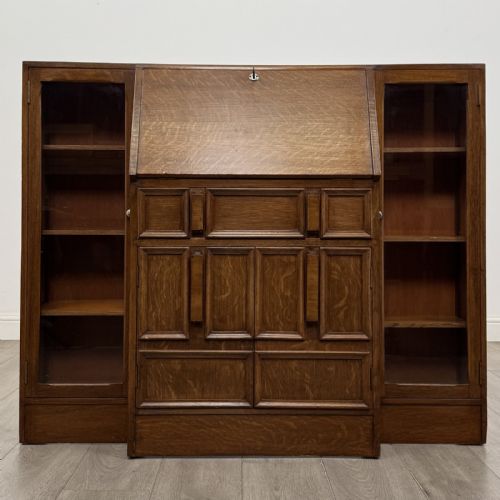
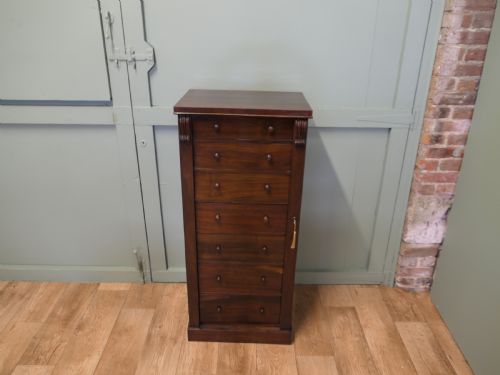
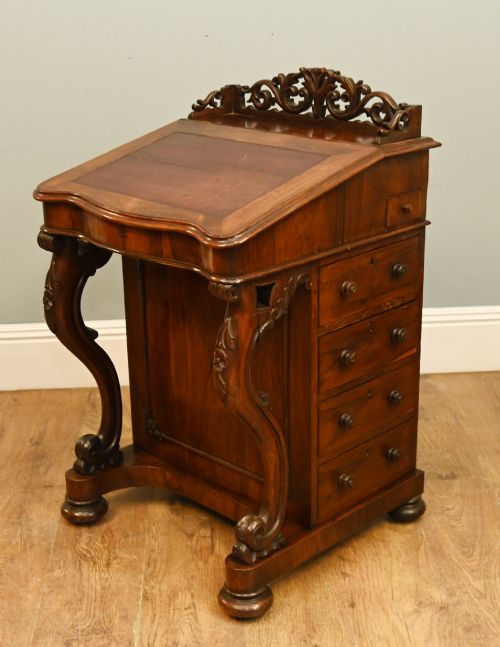
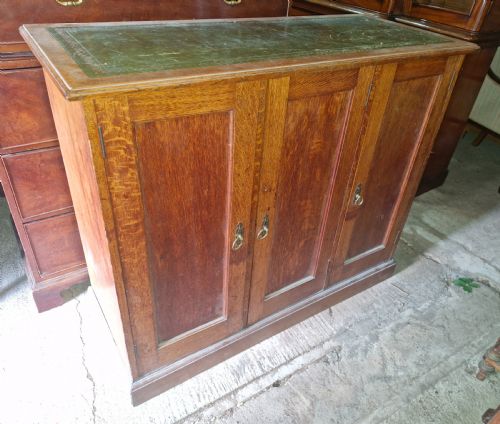
An office side cabinet brings together utilitarian storage and period craftsmanship, drawing from styles like Georgian, Victorian, and Edwardian design. When buyers search for an office side cabinet, they encounter forms ranging from filing drawers and Wellington secretaire chests to library cupboards, music cabinets, and Davenport desks.
The pieces appearing on this page span several decades and centuries, including the Georgian era, the nineteenth century, the Edwardian period, and the early twentieth century. Oak, mahogany, and flame mahogany dominate the forms, supplemented by brass, leather, metal, and steel details.
How they were made
Cabinet makers utilised dense timbers such as oak, mahogany, and flame mahogany to build durable frames for office side cabinet forms. Grain patterns receive careful alignment across doors and drawer fronts to enhance the visual depth of the wood.
Metal and brass hardware, including handles and locking mechanisms, provide structural reinforcement and functional operation. Leather inserts occasionally appear on writing surfaces within secretaire and Davenport forms, stitched and fitted directly to the timber base.
Office Side Cabinet Retail Price Guide 2026
Typical asking prices for office side cabinet among the pieces listed under this phrase on Sellingantiques today, from the lower quarter to the upper quarter. They describe what is for sale here now, not the wider market.
One Wellington chest arrives ready to guard private correspondence with its hinged locking stile.
What varies in quality
The standard of timber selection largely dictates the quality of an office side cabinet, with figured mahogany and quarter-sawn oak sitting at the upper end of the scale. Superior examples display thoughtful grain matching and seamless integration of secondary woods in less visible areas.
Joinery execution and the integrity of internal mechanisms, such as locking bars on filing drawers and smooth-sliding pigeonhole fittings, separate utilitarian pieces from finer workshop productions. The retention of original brass hardware and working locks further distinguishes better-preserved examples.
Gillows
The Office Side Cabinet Glossary
- Wellington chest
- A tall, narrow chest of drawers secured by a hinged locking stile on one side that fastens with a key. This design originated in the nineteenth century for secure document storage.
- Davenport
- A small desk featuring a sloped, leather-lined writing surface above a pedestal of drawers. It typically incorporates side drawers and internal stationery compartments.
- Flame mahogany
- Timber cut from the fork of the mahogany tree where the branch joins the trunk, producing a distinctive flickering flame pattern. Cabinet makers prize this veneer for principal display surfaces.
- Secretaire
- A piece of furniture incorporating a pull-down writing drawer that conceals small drawers and pigeonholes. It combines the utility of a desk with the storage capacity of a chest.
- Stile
- A vertical framing member of a panelled door or cabinet side. It provides structural rigidity and houses the hinges or locking hardware.
Office Side Cabinet: Frequently Asked Questions
What is an office side cabinet?
An office side cabinet is a period storage piece designed for paperwork, books, or writing implements. These items range from compact filing drawers to large library cupboards and music cabinets.
They reflect the functional needs of past centuries, utilising hardwoods like oak and mahogany to provide sturdy storage in domestic or working spaces.
How do I date an office side cabinet?
Dating relies on identifying the prevailing style, construction methods, and timber choices relative to periods like the Georgian era, Victorian times, or the Edwardian period. Examining internal secondary woods and hardware also helps determine age.
Earlier pieces often feature hand-cut dovetails and solid timber construction, while twentieth-century examples may incorporate metal or steel components for filing.
Where were these cabinets used?
These pieces served in country house libraries, studies, offices, and music rooms. They were built to organise correspondence, sheet music, and administrative documents.
Today, their varied configurations allow them to function as bedside tables, hallway storage, or compact workspace units in modern homes.
Are these cabinets suitable for modern filing?
Certain forms, particularly dedicated filing cabinets and deep drawer chests, accommodate modern paper sizes and folders. The internal depth and drawer construction determine suitability for current storage needs.
Buyers often adapt antique oak and mahogany cabinets to blend traditional office utility with contemporary interior layouts.