



Ocean Wave Artwork
Ocean wave artwork captures the movement and power of the sea through historic paintings and watercolours.
Ocean Wave Artwork
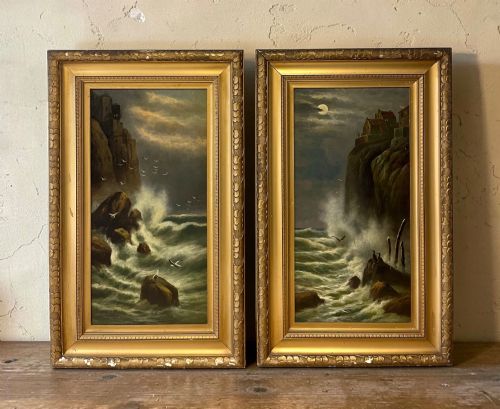
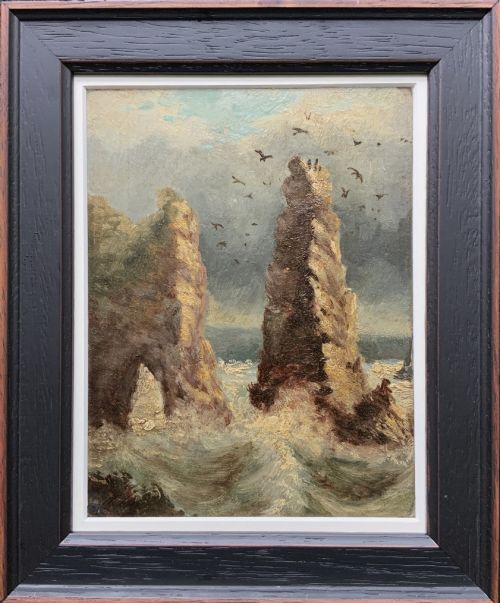
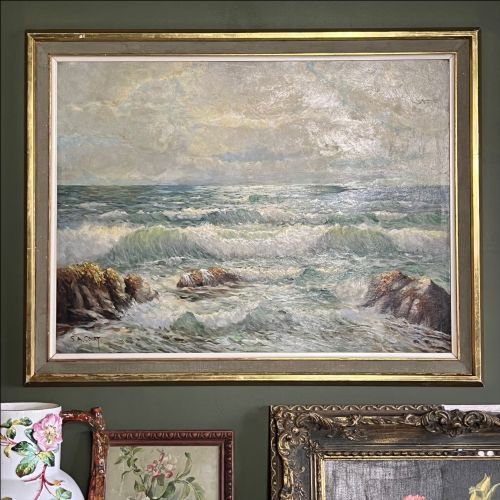
Ocean wave artwork spans traditional paintings and watercolours depicting coastal scenes, maritime subjects, and stormy seas. Collectors find works dating from the Victorian era and the nineteenth century through to the mid-twentieth century.
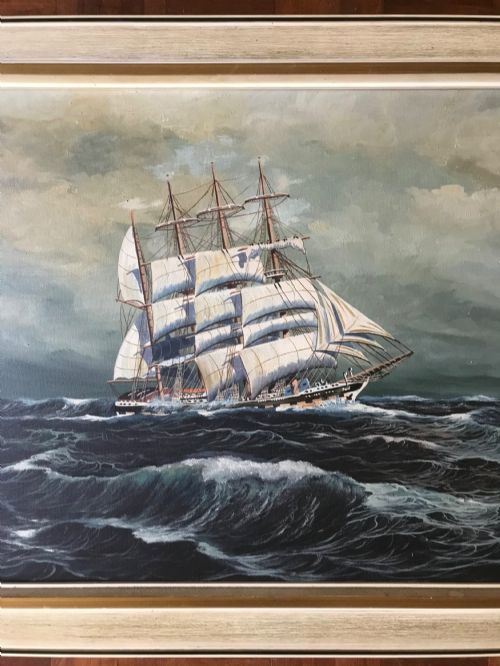
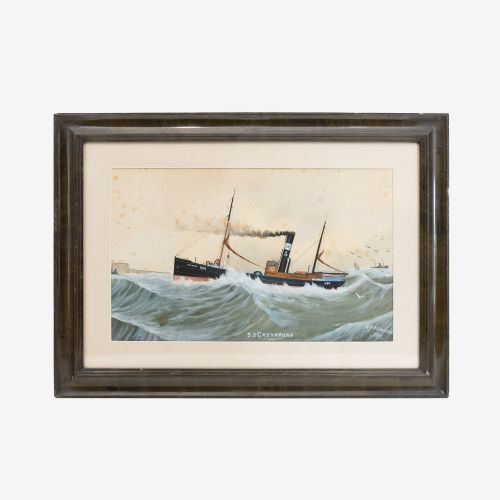
The most common examples on this page are oil paintings on canvas and paper-based watercolours showing British coastal views and marine traffic. These pieces range from plein air studies of Cornish cliffs to detailed depictions of sailing ships and steamers in heavy seas.
Makers and artists represented include Charles Napier Hemy, Sidney A. Court, Alexander Harwood, William Greaves, and Edmund Gouldsmith. Each creator brings a distinct regional focus, capturing locations from Cornwall and Devon to the Isle of Man and Filey Brigg.
How they were made
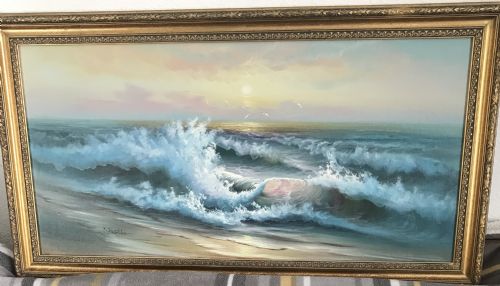
Artists painted these marine scenes using oil paint on canvas or wood, as well as watercolour and gouache on paper. The application of oil ranges from thick, textured brushwork to smooth en plein air treatments of coastal light.
Framed formats often incorporate gilt surrounds to complement the maritime subject matter. Many works rely on the direct observation of coastal weather, capturing the specific action of waves against rocks and shorelines.
Ocean Wave Artwork Retail Price Guide 2026
Typical asking prices for ocean wave artwork among the pieces listed under this phrase on Sellingantiques today, from the lower quarter to the upper quarter. They describe what is for sale here now, not the wider market.
Several artists braved the unpredictable Cornish weather to paint coastal waves directly onto the canvas in the open air.
What varies in quality
Quality rests on the artist's ability to render the dynamic movement of water and atmospheric light. Finer works convey the weight of stormy seas and the specific qualities of coastal weather with assured brushwork.
The choice of medium and support also influences the piece, with substantial oil paintings on canvas offering a different visual presence compared to delicate watercolours on paper. Provenance and the inclusion of original framing elements further distinguish individual works.
Sidney A. Court·Alexander Harwood·Charles Napier Hemy·William Greaves·Edmund Gouldsmith
The Ocean Wave Artwork Glossary
- Plein air
- Painting outdoors to capture natural light and direct observations of coastal scenery. This method allows the artist to record changing weather conditions on the spot.
- Gouache
- An opaque water-based paint used alongside watercolour to add solid highlights and rich colour. It provides stronger coverage than traditional transparent washes.
- Seascape
- A work of art depicting the sea, coastlines, and marine vessels. These compositions focus primarily on water and maritime environments.
- Pierhead painting
- A specific genre of ship portrait, often commissioned by captains or shipowners, showing a vessel near a port. These works frequently record historical steamships and sailing vessels with technical accuracy.
- Gilt
- A gold-coloured surface coating applied to picture frames. This finish enhances the presentation of historic paintings.
Ocean Wave Artwork: Frequently Asked Questions
What subjects appear in these works?
These pieces feature coastal landscapes, stormy seas, and portraits of sailing ships and steamships.
Artists recorded specific locations such as Cornwall, Devon, the Isle of Man, and Filey Brigg.
Which materials did artists use?
Painters worked primarily with oil paint on canvas and wood panels.
Others chose watercolour and gouache on paper to render marine subjects.
How do I date an artwork?
Dating relies on recorded periods such as the Victorian era, the nineteenth century, and specific decades from the early to mid-twentieth century.
Signatures, artist life dates, and framing styles also provide chronological clues.
Where were these scenes painted?
The works focus heavily on British coastal environments and local maritime traffic.
Artists travelled to specific coastal points to paint directly from nature.