


Occasional Parlour Table
An occasional parlour table brings small-scale timber craftsmanship and rich Victorian or Edwardian character directly to a sitting room.
Occasional Parlour Table
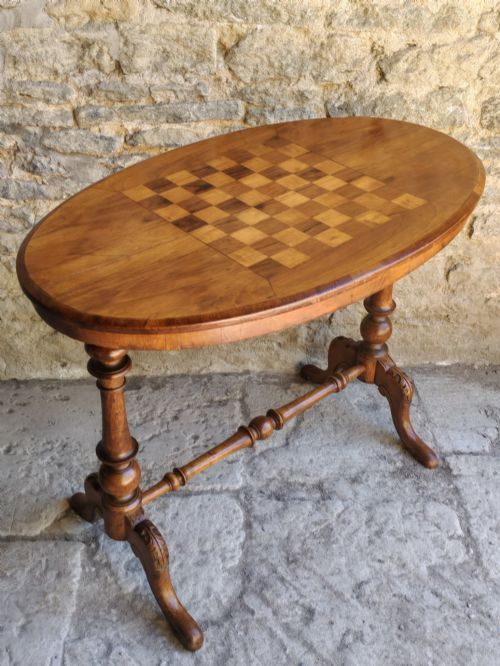
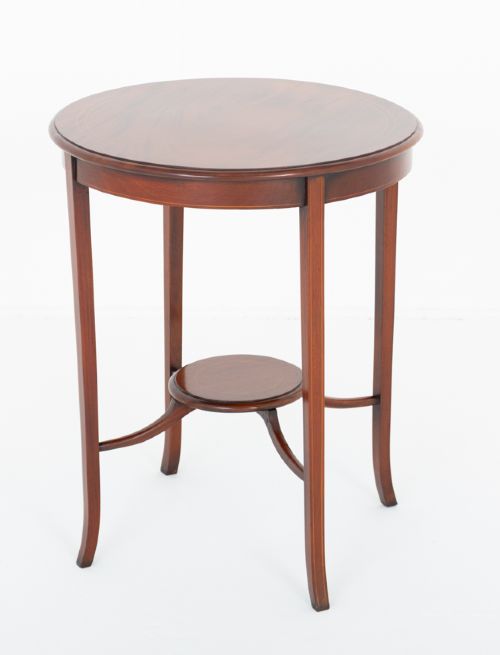
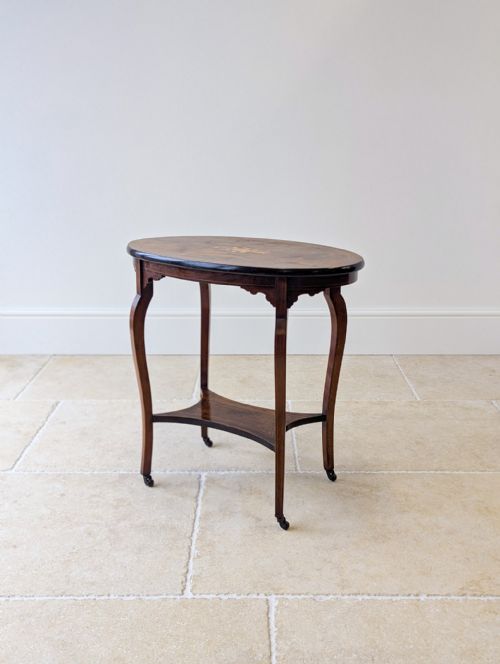
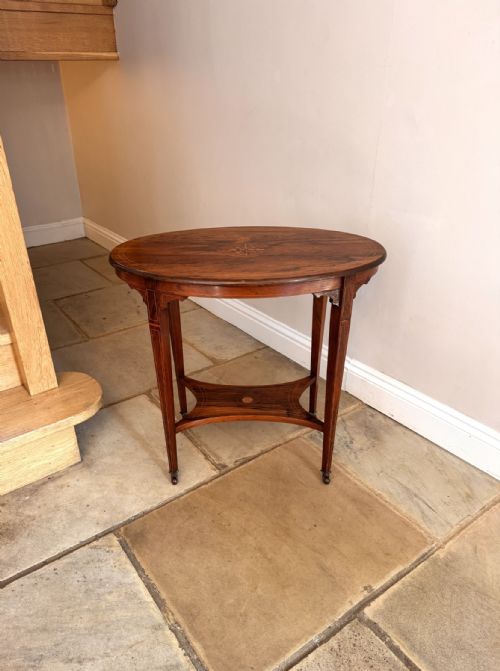
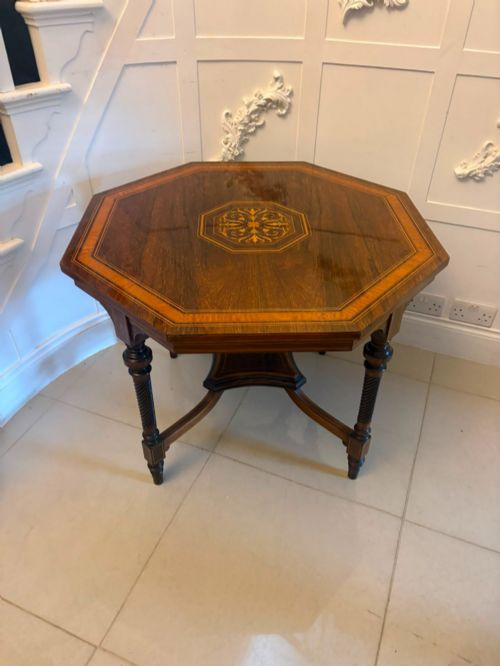
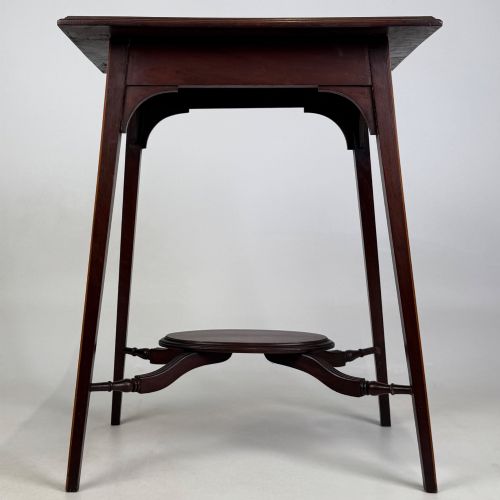
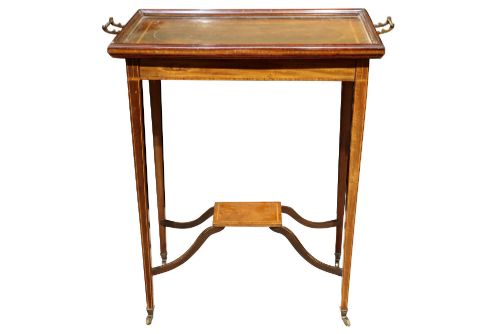
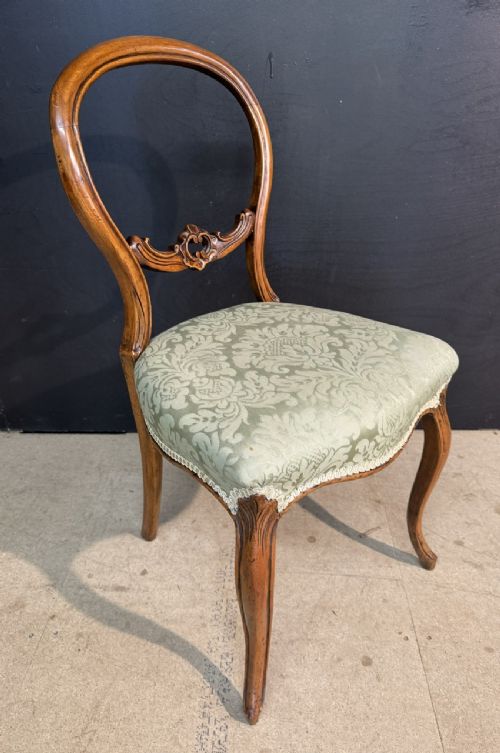
An occasional parlour table spans compact occasional surfaces, centre tables, and side pieces originating primarily from the Victorian and Edwardian eras. These portable timber pieces served diverse domestic functions in formal reception spaces, ranging from tea service to displaying decorative objects.
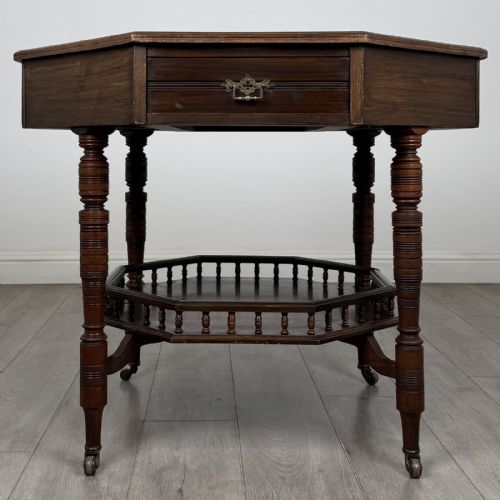
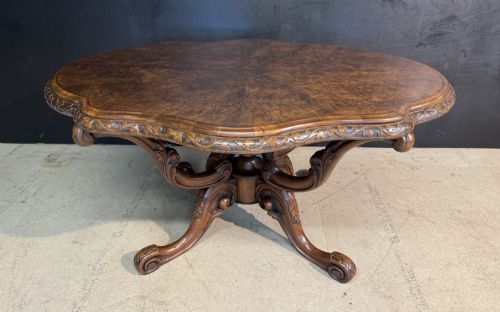
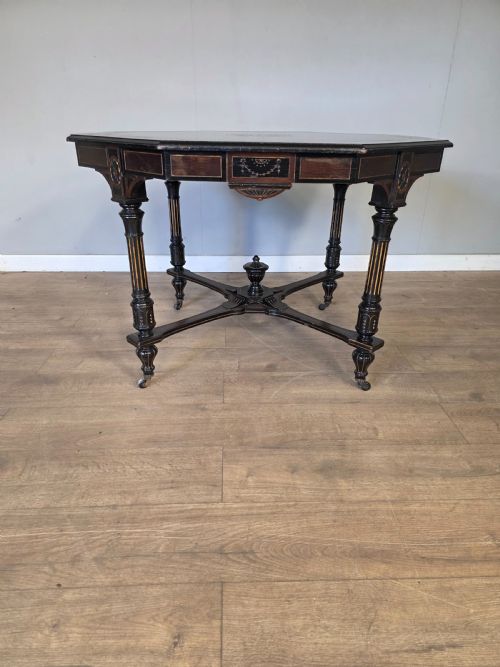
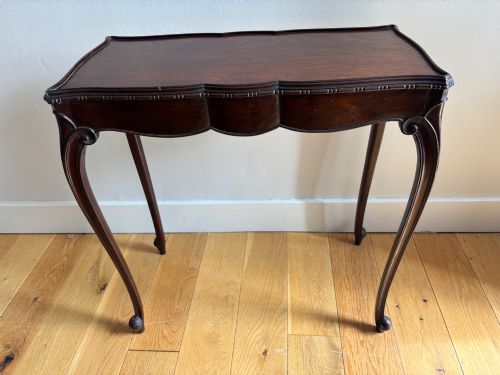
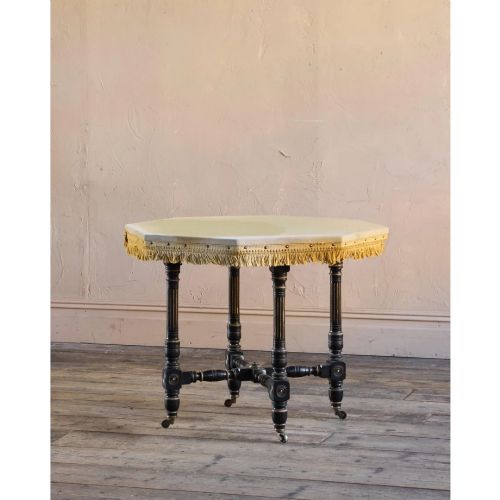
Edwardian examples frequently employ mahogany or satinwood with delicate inlay, while Victorian iterations lean towards figured burr walnut, rosewood, and octagonal or oval formats. Buyers encounter many variations of these versatile occasional parlour table designs, often featuring lower tiers or galleried edges for practical utility.
Origins stretch across English workshops and French revival studios, yielding diverse expressions from simple turned legs to ornate marquetry. The surviving pieces demonstrate the evolution of domestic hospitality and interior decoration across the nineteenth and early twentieth centuries.
How they were made
Cabinetmakers constructed these tables using solid timbers and carefully selected veneers such as mahogany, walnut, rosewood, and satinwood over supportive softwood or hardwood bases. Artisans applied boxwood inlay, marquetry, and hand-carved foliate details to enhance the surface appearance of the wood.
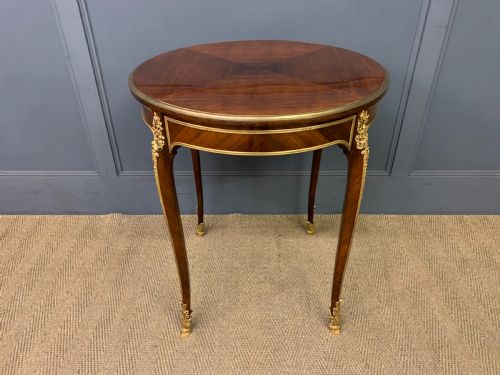
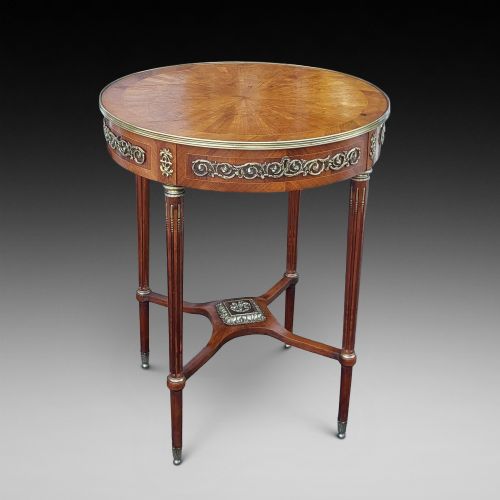
Structural stability relied on traditional joinery methods, supplemented by turned legs, cabriole supports, and occasional pedestal bases. Metal components like brass mounts and gilt bronze or ormolu provide structural accents and decorative borders on French revival and Empire models.
Occasional Parlour Table Retail Price Guide 2026
Typical asking prices for occasional parlour table among the pieces listed under this phrase on Sellingantiques today, from the lower quarter to the upper quarter. They describe what is for sale here now, not the wider market.
Some Victorian parlour tables doubled as tarot spaces, featuring dedicated zodiac carvings for nineteenth-century divination evenings.
What varies in quality
The refinement of timber selection and the precision of veneer work separate standard examples from finer productions. Master workshops utilised highly figured burr walnut and intricate marquetry with crisp boxwood inlay, whereas simpler pieces relied on plain mahogany grains and minimal decoration.
Execution of hand-carved details and the integration of secondary elements, such as galleried shelves or shaped trays, indicate the level of craftsmanship invested in the piece. Well-proportioned framing and stable joinery distinguish superior nineteenth-century parlour furniture from mass-produced alternatives.
Francois Linke·A Hindley & Sons
The Occasional Parlour Table Glossary
- Marquetry
- Decorative patterns formed by fitting together thin slices of wood veneer into pictorial or geometric designs. This technique decorates the tops of many Victorian centre tables.
- Ormolu
- Gilt bronze mounts applied to furniture for decorative effect, commonly seen on French-influenced nineteenth-century pieces. The metalwork is cast and gilded to provide metallic contrast against dark timber.
- Galleried shelf
- A low auxiliary platform beneath the main table top featuring a raised decorative edge to keep items secure. Edwardian occasional tables frequently incorporate this feature on a lower tier.
- Burr walnut
- Timber taken from the gnarled growth of a walnut tree, yielding highly patterned and swirled wood grain. Cabinetmakers prized this material for high-end Victorian table tops.
- Tilt top
- A hinged table mechanism allowing the surface to fold vertically when not in use for convenient storage. This construction appears on specific nineteenth-century parlour drinking and supper tables.
Occasional Parlour Table: Frequently Asked Questions
What is an occasional parlour table used for?
These tables provided a movable surface for serving tea, holding books, or displaying decorative items in a Victorian or Edwardian drawing room.
Their portable nature allowed residents to reposition them easily depending on the social requirements of the room.
How do I date a parlour table?
Stylistic clues such as Edwardian inlay work, Victorian burr walnut veneers, and Georgian revival proportions help determine the period.
Leg profiles, secondary timber choices, and construction techniques also offer clear indicators of age.
Where should I place one at home?
They fit naturally beside armchairs, in small reception corners, or as central accent pieces in a sitting room.
Their compact scale ensures they function well in modern interiors without dominating the surrounding floor space.
Are these tables sturdy enough for daily use?
Traditional joinery and dense hardwoods like mahogany and oak provide reliable stability for everyday placement.
However, delicate marquetry surfaces benefit from coasters and careful handling to preserve the antique finish.