



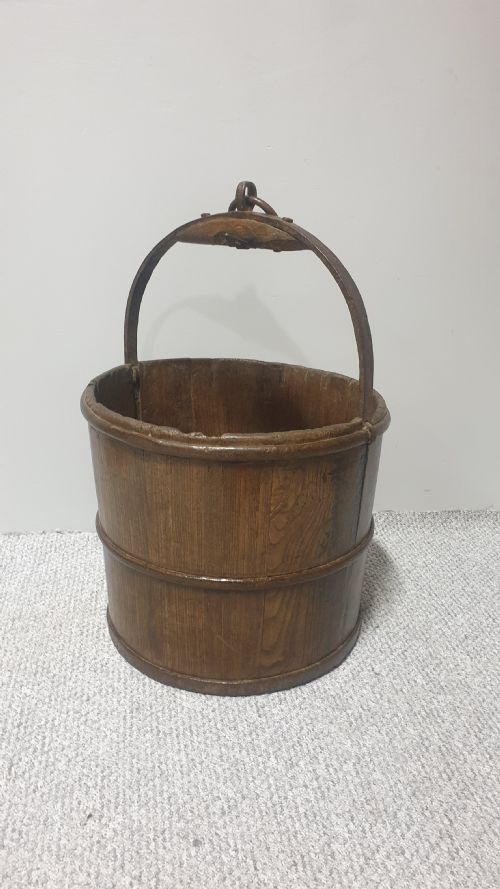


Oak Wood Bucket
An oak wood bucket is a sturdy vessel built for fireside storage and daily utility, offering robust charm and tactile heritage.
Oak Wood Bucket
An oak wood bucket is primarily a vessel for domestic hearthside storage, appearing in forms such as coal bins, log baskets, and peat buckets. These sturdy containers served practical functions by the fireside and around the home.
The pieces on this page span several distinct eras, originating from periods including the Georgian and Victorian epochs, alongside pieces dating to the nineteenth and early twentieth centuries. Forms range from coopered fire buckets to lidded waste bins and jardinieres.
Makers and artisans utilised durable woods to construct these objects, often incorporating metal bands of brass or iron to reinforce the wooden staves. Examples display influences ranging from English traditional to rustic country and Dutch styles.
How they were made
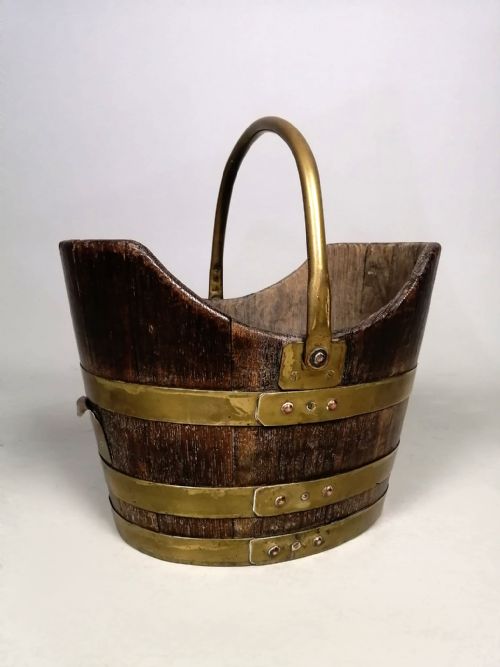
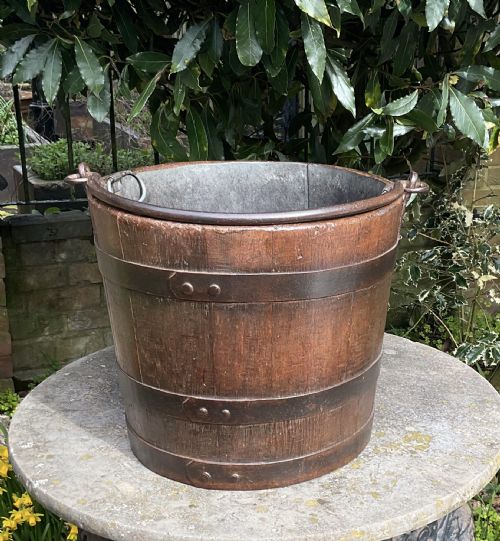
Construction relies heavily on traditional coopering techniques, where individual oak staves are shaped and fitted together to form a rounded body. Metal bands in brass or iron are then secured tightly around the timber to hold the staves in place.
Many examples incorporate additional hardware such as metal swing handles, side mounts, and internal liners in zinc or copper. Secondary timbers like fruitwood, mahogany, or elm occasionally appear alongside the primary oak construction.
Oak Wood Bucket Retail Price Guide 2026
Typical asking prices for oak wood bucket among the pieces listed under this phrase on Sellingantiques today, from the lower quarter to the upper quarter. They describe what is for sale here now, not the wider market.
Listings feature materials such as oak, brass, iron, zinc, mahogany, copper, and elm across various nineteenth and twentieth-century items.
What varies in quality
The quality of an oak wood bucket is largely determined by the precision of the coopering and the thickness of the timber used for the staves. Tightly fitted joints and solid construction distinguish sturdier vessels from more utilitarian items.
Materials play a significant role in distinction, particularly the quality of the mounting hardware, whether the bands are forged in iron or polished brass. The presence of original liners and harmonious proportions also elevates the character of the piece.
The Oak Wood Bucket Glossary
- Coopered
- Constructed from curved wooden staves bound together by metal hoops, much like a traditional barrel. This method provides immense structural strength for holding fuel or liquids.
- Purdonium
- A specialised household box or scuttle designed for storing coal near the fireplace. These often feature hinged lids and drop-down fronts.
- Jardiniere
- An ornamental pot or stand designed to hold growing plants or flowers. In wood, these vessels often incorporate waterproof liners.
- Treen
- Small handmade wooden domestic objects fashioned by turning or carving. These items display the natural grain and texture of the wood.
- Stave
- One of the narrow vertical strips of oak that form the curved sides of a bucket or tub. The correct tapering of each stave ensures a watertight or solid cylinder.
Oak Wood Bucket: Frequently Asked Questions
What were oak wood buckets used for?
These vessels served mainly practical roles near the hearth, holding coal, logs, or peat for the fire. Some variations were also utilised as well buckets, waste bins, or plant holders.
Over time, their sturdy construction allowed them to transition from heavy domestic labour to decorative interior storage. Their robust nature made them indispensable in older households.
How do I identify a Georgian bucket?
Georgian pieces often display refined proportions, darker patination, and careful attention to brass banding or mountings. They frequently date from the eighteenth century into the early nineteenth century.
Examining the construction methods and the wear on the timber helps distinguish these earlier examples from later Victorian reproductions or twentieth-century items.
Are these buckets waterproof?
While coopered oak vessels were originally designed to hold materials like water or coal, older examples may have dried timbers. Many pieces include metal liners to protect the wood from moisture.
If you intend to use a bucket as a planter or for holding water, checking the condition of the internal liner and the tightness of the staves is essential.
How do I care for antique oak?
Maintaining antique oak involves keeping the wood away from extreme temperature fluctuations and direct heat sources. Applying a suitable wax occasionally helps nourish the grain.
Avoiding excessive moisture on the bare timber preserves the natural patina and prevents the wooden staves from warping or splitting.