



Oak Wall Hooks
Oak wall hooks provide sturdy and practical hanging space, bringing functional antique timber into hallways, boot rooms and kitchens.
Oak Wall Hooks
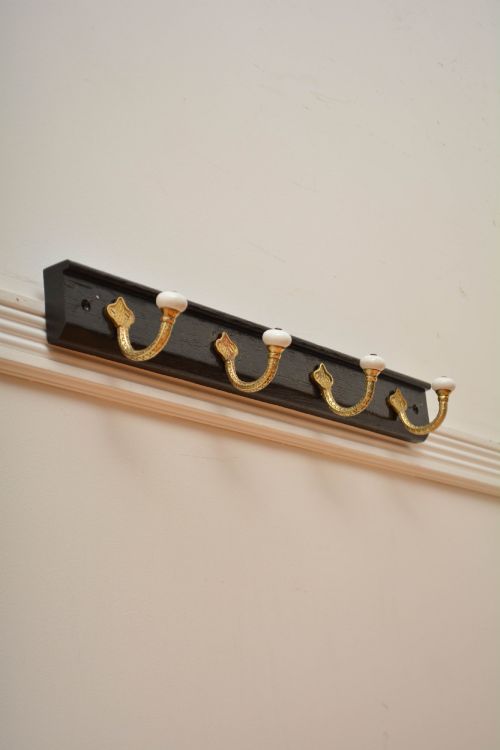
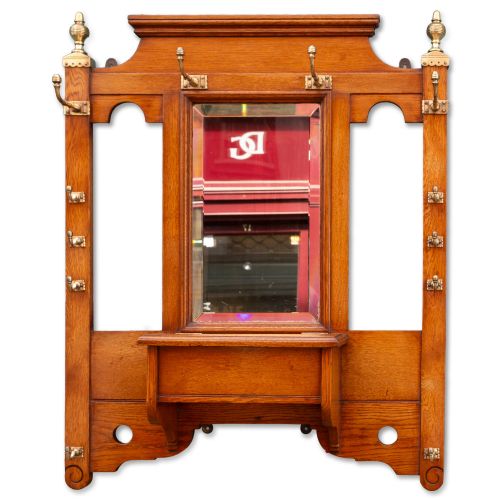
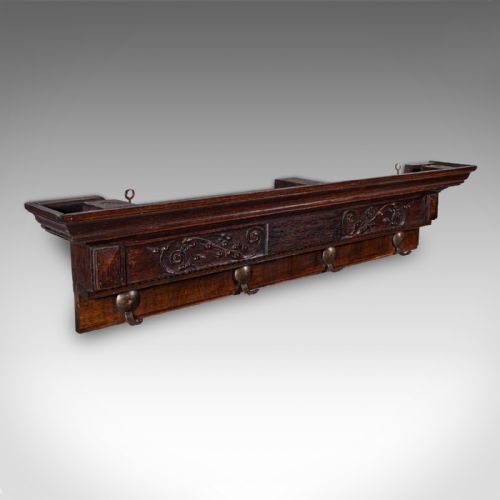
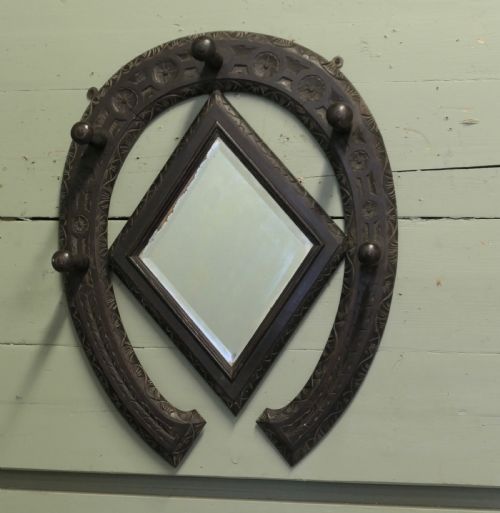
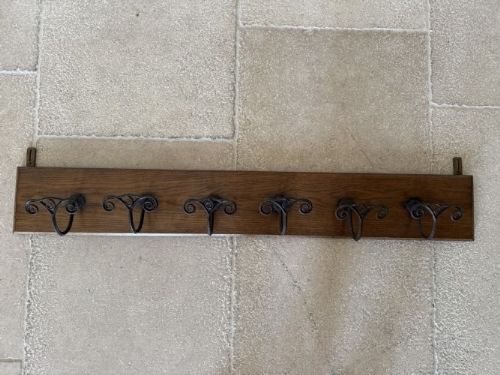
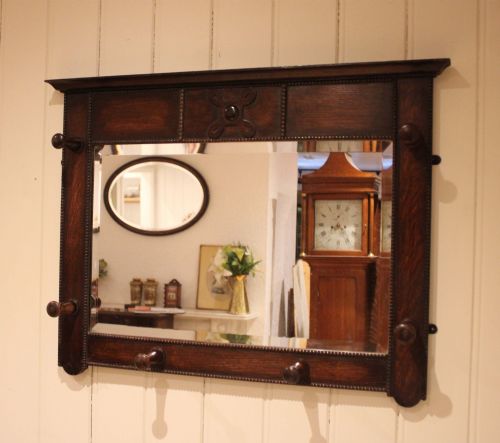
When you search for oak wall hooks, you find a practical range of timber hanging furniture spanning the eighteenth, nineteenth and early twentieth centuries. These pieces appear as simple mounted boards set with brass or iron hooks, combined wall mirrors, and functional shelf units designed for hallways and reception rooms.
The most common examples you meet on this page are nineteenth-century and Edwardian variations, often featuring brass fittings mounted to solid oak boards or ebonised timber. Alongside straightforward coat racks, the selection includes specialised pieces such as key boards, hatstands and taxidermy mounts.
What varies in quality
Quality in these pieces rests upon the thickness and figuring of the oak board, the integrity of the timber joints, and the originality of the mounted hooks. Superior examples display substantial timber with rich patination, while lesser items utilise thinner wood or replaced fittings.
Oak Wall Hooks Retail Price Guide 2026
Typical asking prices for oak wall hooks among the pieces listed under this phrase on Sellingantiques today, from the lower quarter to the upper quarter. They describe what is for sale here now, not the wider market.
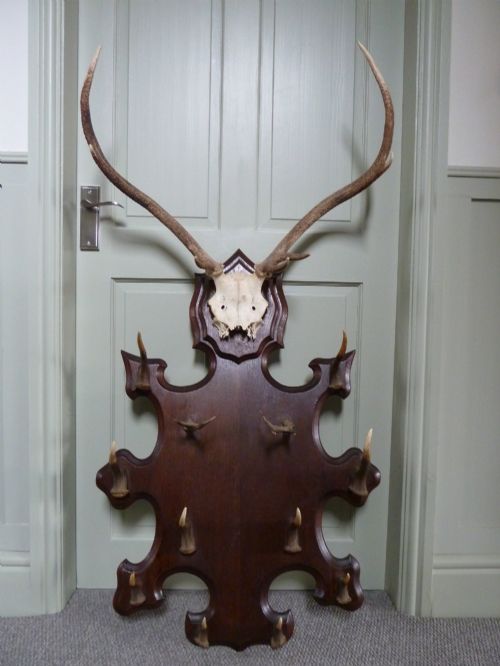
Several Victorian pieces abandon plain timber entirely in favour of mounted stags' heads, ready to glare reproachfully at your winter coat.
The Oak Wall Hooks Glossary
- Ebonised oak
- Timber treated with a dark stain or chemical process to imitate ebony wood. This finish was particularly popular during the Victorian period for formal hall furnishings.
- Taxidermy mount
- A piece incorporating animal parts, such as stag horns or hooves, mounted onto a wooden backplate. These were frequently used in country houses for hanging coats and riding crops.
- Coat rack
- A horizontal timber board fitted with multiple hooks for hanging garments. They range from simple domestic boards to substantial hotel and institutional key or cloakroom boards.
- Wrought iron
- Iron that has been heated and hammered into shape by a blacksmith rather than cast in a mould. This material is commonly found on utilitarian or Gothic Revival wall hooks.
Oak Wall Hooks: Frequently Asked Questions
How do I mount an old oak wall rack?
Most antique racks feature pre-drilled fixing holes or original mounting brackets attached to the rear wooden board. You should use appropriate wall anchors and screws suited to the weight of the solid oak and your specific wall type.
Ensure the fixings align securely with wall studs or use heavy-dutyrawlplugs to support the load of hanging coats and heavy garments safely.
Are these hooks strong enough for daily use?
Solid oak boards combined with brass or wrought iron hooks are inherently durable and built for everyday domestic utility. Eighteenth-century and Victorian items were originally engineered to hold heavy woollen coats and riding wear.
While robust, you should check that the original screws securing the hooks into the timber remain tight before loading the rack with heavy winter garments.
How do I date a wooden coat rack?
Dating relies on examining the timber preparation, the style of the hardware, and construction methods visible on the reverse of the board. Hand-planed surfaces and forged iron hook attachments generally indicate earlier eighteenth or nineteenth-century origins.
Later Edwardian and 1920s versions often feature machine-sawn timber, stamped brass components, and integrated mirror plates or small display shelves.
Can I use these in a bathroom?
Several pieces listed in this category were originally designed as bathroom shaving mirrors or small wall cabinets with integrated hanging space. Oak handles moisture reasonably well if treated with care, though steam can affect antique finishes.
Ensure the room has adequate ventilation to protect both the timber grain and any metal fixtures from prolonged dampness.