





Oak Travel Trunk
An oak travel trunk is a heavy-duty storage chest built for transit, combining sturdy timber with reinforced metal hardware to survive long journeys.
Oak Travel Trunk
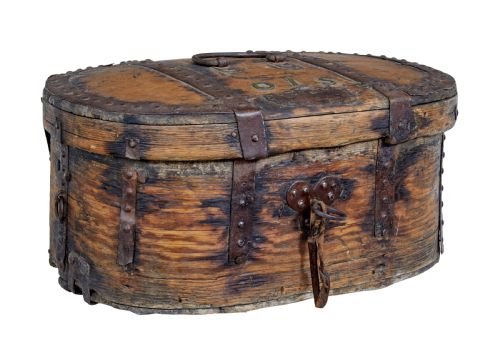
When searching for an oak travel trunk, buyers encounter substantial storage pieces designed for motion, ranging from early eighteenth-century Scandinavian boxes to nineteenth-century campaign chests and steamers. These sturdy containers served various transit needs, from military deployment and silver storage to general coaching and shipping requirements.
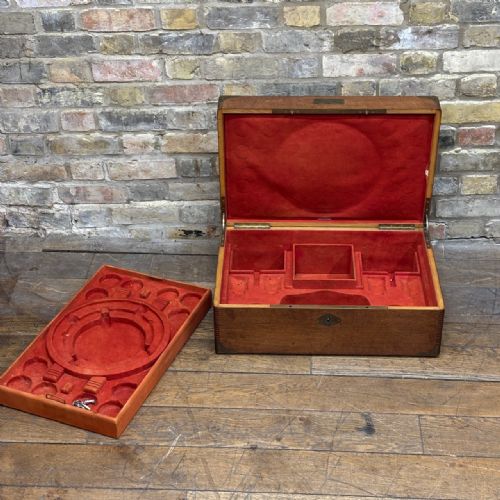
The most common examples on this page date from the nineteenth century, including Victorian campaign pieces and brass-bound trunks. Forms span simple iron-banded storage chests, dome-top boxes, and fitted interiors designed for specific gear like silverware or firearms.
Origins vary from English workshops to Scandinavian makers, utilising regional construction methods suited to travel. Buyers find pieces shaped by distinct eras, from Georgian coaching days through to the early twentieth-century steamer era.
How they were made
Construction relies heavily on solid oak timbers, chosen for their durability and strength during transit. Makers reinforced these wooden bodies with heavy brass mounts, iron banding, and steel bindings to protect corners and edges from the knocks of travel.
Additional materials such as leather, canvas, and paint frequently appear on the exterior for weatherproofing, while interiors often feature textile linings, fitted compartments, or painted finishes. Fastenings typically incorporate brass locks, iron handles, and steel hardware designed to secure contents firmly on the move.
Oak Travel Trunk Retail Price Guide 2026
Typical asking prices for oak travel trunk among the pieces listed under this phrase on Sellingantiques today, from the lower quarter to the upper quarter. They describe what is for sale here now, not the wider market.
Listings feature oak travel trunks spanning from the 18th century through the 1920s, incorporating brass, iron, canvas, and leather.
What varies in quality
The standard of a trunk depends on the integrity of its framing and the quality of its hardware. Superior pieces display precisely fitted brass corners, dovetailed oak joints, and robust iron or steel banding that remains flush and secure.
Original inscriptions, working locks with keys, and intact interior fittings elevate a piece's historical integrity. Simpler boxes or those with heavily replaced hardware sit lower on the scale, reflecting utility over bespoke craftsmanship.
Elkington·H D Dean
The Oak Travel Trunk Glossary
- Campaign chest
- A portable set of drawers or a trunk designed to split into sections for easy transport by military officers on campaign.
- Steamer trunk
- A lower-profile travel trunk introduced for ease of storage in the cabins of ocean liners during the early twentieth century.
- Coaching trunk
- A sturdy chest built to be strapped to the roof or boot of a horse-drawn stagecoach during the Georgian and Regency periods.
- Iron banded
- A construction method where straps of iron wrap around the wooden body of a trunk to reinforce it against heavy impacts.
- Brass mounted
- Featuring decorative and protective corners, handles, and escutcheons made of solid brass rather than plated base metals.
Oak Travel Trunk: Frequently Asked Questions
What is an oak travel trunk?
An oak travel trunk is a robust storage container built from solid oak and reinforced with metal bands or brass mounts for moving belongings across long distances.
These pieces were constructed during the eighteenth and nineteenth centuries for military officers, travellers, and household shipping needs.
How were these trunks used?
Trunks served to transport clothing, silverware, weapons, and personal possessions securely on coaches, ships, and military campaigns.
Many featured specialised interior fittings or compartments designed to keep specific items organised and protected during rough transit.
How do I date an oak travel trunk?
Dating relies on examining the construction methods, hardware styles, and materials, such as early iron banding on eighteenth-century boxes compared to later Victorian brass mounts.
Inscriptions, lock mechanisms, and the presence of canvas or leather coverings also point toward specific periods like the Regency or Edwardian eras.
How do I live with a travel trunk?
These trunks function well as coffee tables, end-of-bed storage chests, or statement pieces in a hallway while keeping blankets and bulky items out of sight.
Their sturdy oak construction and metal hardware allow them to handle daily domestic use without losing their historical character.