
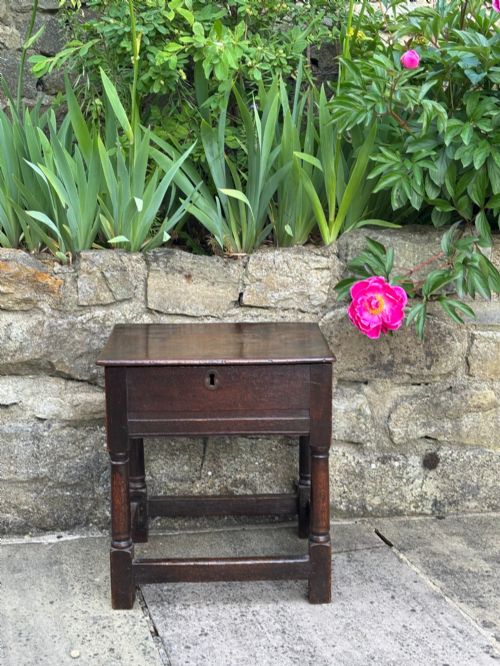
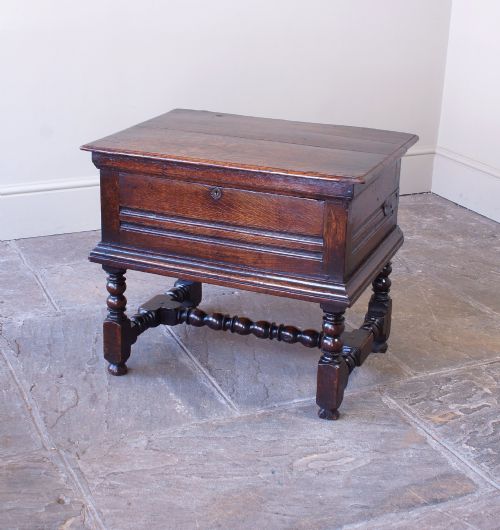


Oak Storage Stool
An oak storage stool combines sturdy seating with concealed compartment space, spanning periods from the seventeenth century to the nineteen thirties.
Oak Storage Stool
An oak storage stool is a practical seating form designed with internal space beneath a lift up seat or lid, appearing in various historic styles across this selection. Buyers searching for an oak storage stool encounter forms ranging from early seventeenth century box stools and close stools to Victorian piano stools and Art Deco drum shaped dressing pieces.
The material focus centres firmly on solid oak timber, frequently augmented by iron or brass hardware and topped with upholstery fabric. While the core function remains storing items out of sight while offering a seat, the specific silhouette shifts from rustic early box designs to later Victorian duet stools and nineteen twenties slipper boxes.
Construction and materials
Makers constructed these pieces primarily from solid oak, utilising traditional joinery and panel techniques suited to heavy domestic use. Metal elements such as brass and iron appear in hinges, handles, and structural fastenings that secure the storage compartments.
Listings feature oak storage stools spanning from the seventeenth century through to the nineteen thirties, encompassing box stools, piano stools, and library steps.
Judging quality in historic seating
Quality rests upon the integrity of the timber framing and the preservation of original mechanisms for the lift up lids and compartment interiors. Early seventeenth century box stools derive their standing from the authenticity of their construction and minimal alterations to the oak panels.
Later Victorian and nineteen twenties piano or dressing stools depend on the tightness of their joinery and the condition of their upholstered fabric seats. Finer examples display crisp hand carving and robust internal storage boxes that withstand regular daily use.
The Oak Storage Stool Glossary
- Box stool
- A primitive seating form featuring a hollow compartment beneath a hinged wooden lid. This type provides both a seat and concealed storage.
- Close stool
- A historic chamber stool containing an enclosed space for a commode pot. These pieces date predominantly to the eighteenth century and earlier.
- Duet stool
- An extended piano stool designed to accommodate two players side by side. They frequently include lift up seat storage for sheet music.
- Slipper box
- A specialised low storage box or stool used for footwear. Examples in the records date to the early twentieth century.
- Jacobean style
- A heavy, formal decorative style from the seventeenth century characterised by geometric mouldings and dark oak. It heavily influences later revival pieces.
Oak Storage Stool: Frequently Asked Questions
How do I use an oak storage stool today?
These pieces serve well in hallways for shoes, in living rooms for blankets, or beside desks and pianos for small items. Their dual purpose provides both a sturdy seat and hidden storage.
Place them where floor space is limited to maximise functionality without cluttering the room.
What is the difference between a box stool and a close stool?
A box stool is a general purpose seat with a hollow interior for storing household goods. A close stool historically housed a commode pot for sanitary use.
Both share a similar hinged lid structure, but their internal configurations reflect distinct historical domestic purposes.
How can I tell a seventeenth century piece from a Victorian revival?
Early seventeenth century pieces display hand cut joinery, peg construction, and heavy patina accumulated over centuries of use. Victorian revival items often utilise machinery marks and distinct nineteenth century hardware styles.
Examining the underside and interior boards usually reveals the true age of the timber.
Are piano stools comfortable for daily seating?
Piano stools and dressing stools often feature upholstered fabric tops designed for extended sitting periods. Their height is typically adjusted for specific desk or instrument use.
Check the firmness of the internal padding if you plan to use them as primary seats in a living space.