

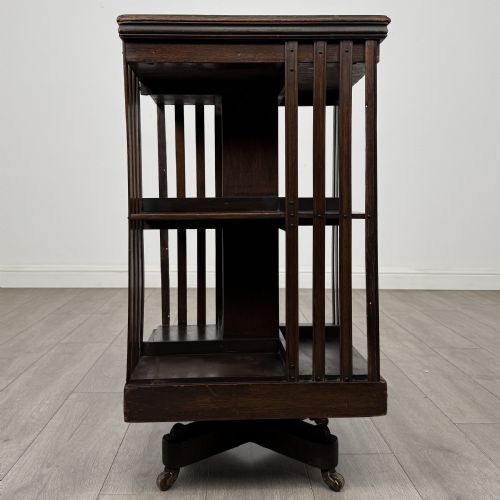
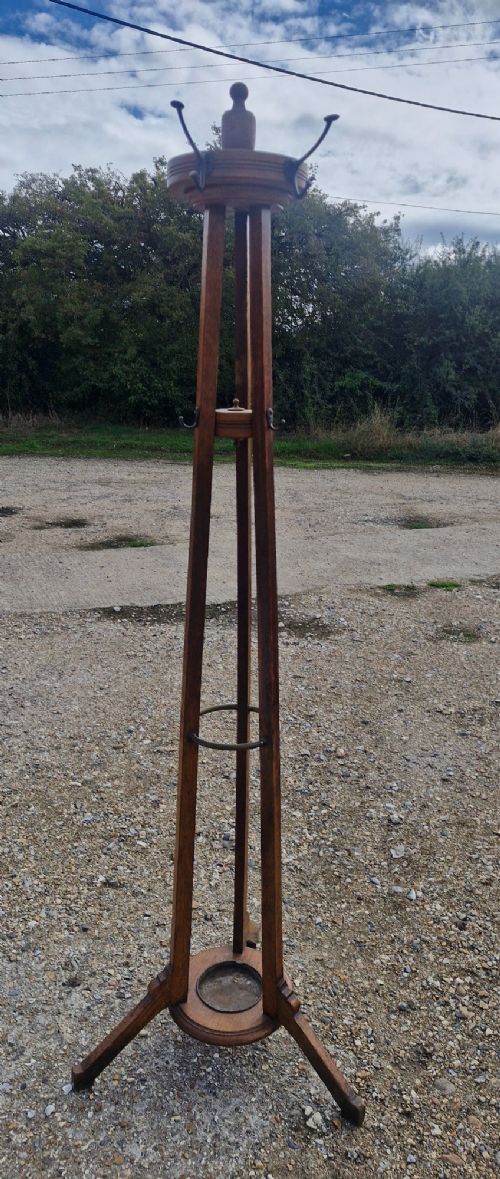

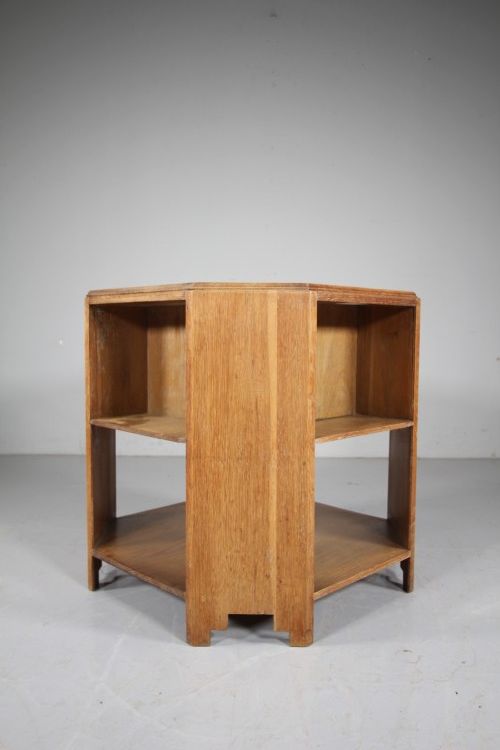
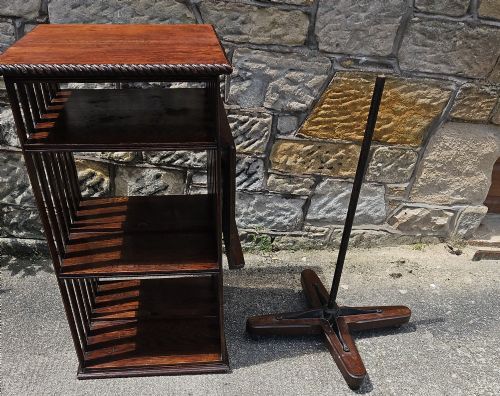



Oak Revolving Stand
An oak revolving stand brings practical rotation to literature, dining, and hallway storage across Edwardian and Victorian interiors.
Oak Revolving Stand
An oak revolving stand is a rotating furnishing designed to hold books, dining dishes, hats, coats, or game cues within domestic spaces. These pieces span the nineteenth and twentieth centuries, originating in periods from Victorian workshops through to Edwardian and later decades.
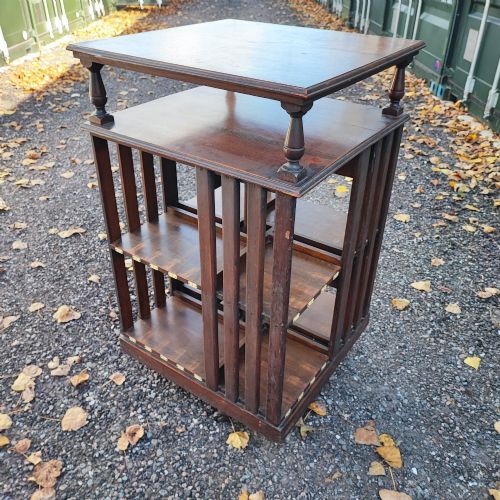
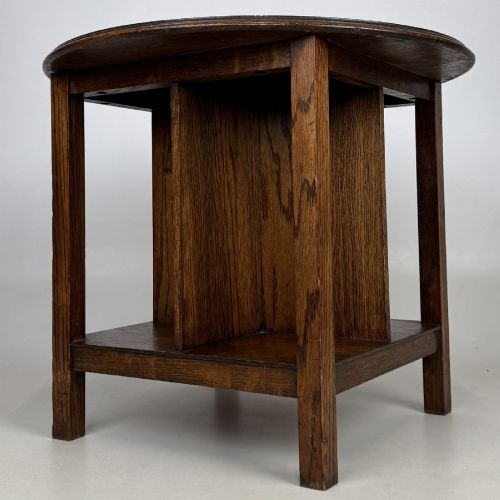
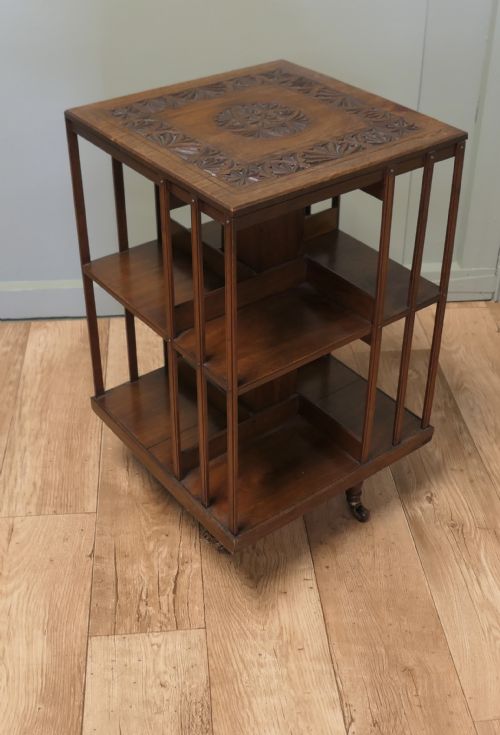
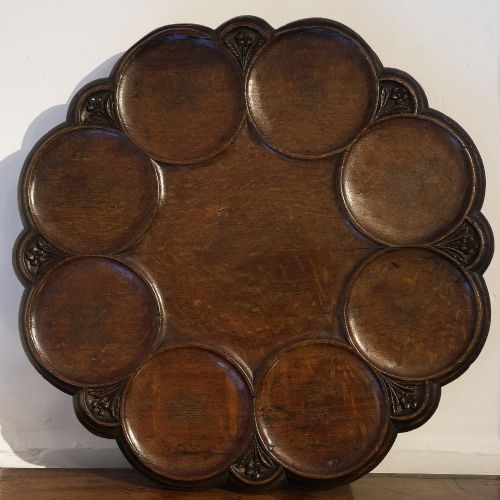
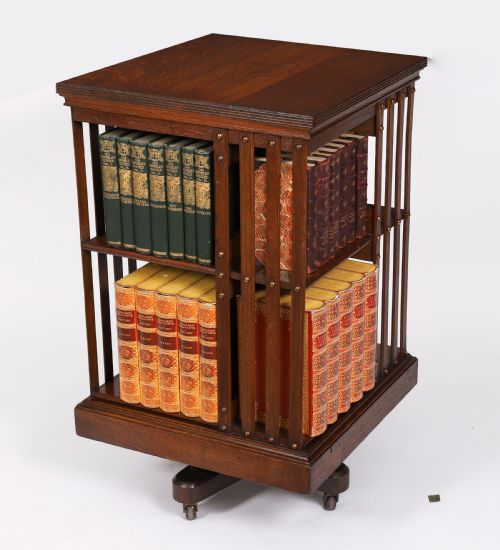
The version most commonly met on this page is the revolving bookcase, standing on the floor or resting upon a table top. Alongside these book carriers, listings feature lazy susans, hat and coat stands, snooker cue holders, and magazine racks.
Makers utilised timber frames combined with internal turning mechanisms to allow smooth rotation of the upper tiers. The structural form adapts to the specific utility required, whether holding volumes in a library or serving food at a table.
How they were made
Makers constructed these stands primarily using solid oak or mahogany, frequently incorporating brass mechanisms, cast iron, and felt linings. The timber was turned, joined, and polished to produce durable frames capable of supporting heavy loads of books or dining items.
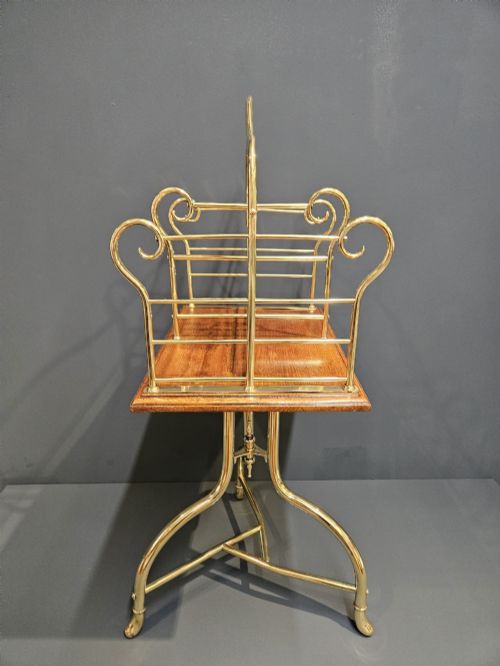
Internal ball bearing assemblies or pin pivots enabled the smooth turning action central to each piece. Metal fixtures in brass and iron provided structural reinforcement and decorative detail, particularly on magazine racks and hat stands.
Oak Revolving Stand Retail Price Guide 2026
Typical asking prices for oak revolving stand among the pieces listed under this phrase on Sellingantiques today, from the lower quarter to the upper quarter. They describe what is for sale here now, not the wider market.
Several stands double as multi-tasking hallway furniture, combining coat hooks with revolving storage for hats, sticks, umbrellas, and newspapers.
What varies in quality
The standard of an oak revolving stand rests upon the robustness of its turning mechanism and the choice of timber. Pieces featuring solid oak construction and smooth, silent rotation demonstrate superior manufacture compared to lighter, rigid designs.
Detailing in the brass hardware, carved elements, and applied styles such as Arts and Crafts or Art Nouveau distinguish standard workshop output from finer examples. The integrity of the revolving pivot dictates the functional longevity of the piece.
Heals·William Tonks & Sons
The Oak Revolving Stand Glossary
- Lazy Susan
- A revolving tray placed on a table to assist in serving food. This rotating accessory allows diners to share dishes easily across the centre of a surface.
- Pollard oak
- Timber taken from trees that have been pollarded, displaying a clustered, decorative grain pattern. Cabinet makers used this wood for its distinctive appearance on prominent panels.
- Tazza
- A shallow cup or disc mounted on a pedestal, used for serving or display. In revolving stands, this form appears on rotating dining pieces.
- Arts and Crafts
- A design movement prioritising traditional craftsmanship and simple forms over mass production. Pieces from this style often display honest construction and minimal ornamentation.
- Cue stand
- A vertical rack designed to hold snooker or billiards cues. Revolving versions allow players to select their equipment easily from a central turning column.
Oak Revolving Stand: Frequently Asked Questions
How do I care for an oak revolving stand?
Maintain the timber by applying beeswax periodically to nourish the grain and prevent drying. Avoid placing the stand near direct heat sources or damp areas.
Keep the internal turning mechanism clean and lightly lubricated if needed to ensure smooth rotation. Dust the carved surfaces and shelves regularly with a soft cloth.
Where were these stands used in the home?
Bookcases and reading stands typically sat beside armchairs in studies, libraries, or living rooms for easy access to volumes. Hall stands occupied entranceways to hold coats, hats, and walking sticks.
Lazy susans placed food on dining tables, while cue stands stood in games rooms and billiard halls. Magazine racks found places in parlours and drawing rooms.
How do I identify an Edwardian revolving bookcase?
Edwardian models frequently display lighter oak tones and simpler linear details compared to heavily carved Victorian pieces. They often incorporate slatted sides and brass hardware typical of the early twentieth century.
Examine the construction methods and internal pivot design to confirm the era of manufacture. Many retain proportions suited for table tops or compact floor spaces.
Do all revolving stands use ball bearings?
Early nineteenth-century examples often rely on wooden pivot pins or simple metal rings rather than modern ball bearing assemblies. The turning action feels different depending on the period and the complexity of the internal mechanism.
Later Victorian and Edwardian pieces frequently introduced improved metal swivel systems to increase stability and ease of rotation under heavy book loads.