



Oak Revolving Bookstand
An oak revolving bookstand brings desktop utility and handsome timber to a study, offering a clever way to keep reference volumes close at hand.
Oak Revolving Bookstand
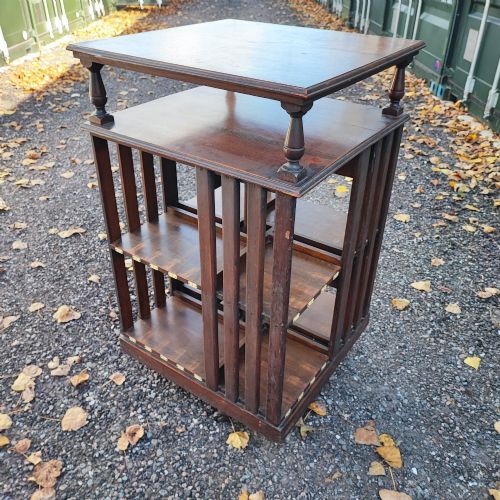
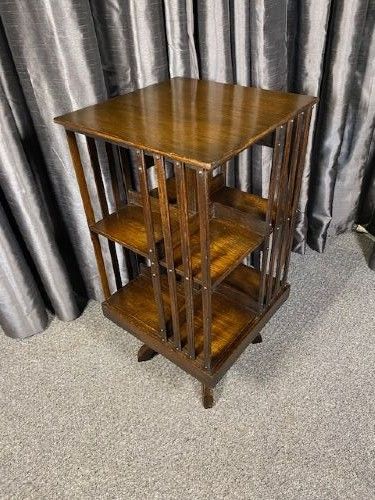
When you search for an oak revolving bookstand, you are looking at clever timber furniture designed to turn on a central axis, making a collection of volumes instantly accessible from a single seat. The examples seen on this page span the Victorian and Edwardian eras, alongside pieces from 1900, 1910, and 1930, capturing a period when functional study furniture was built to last.
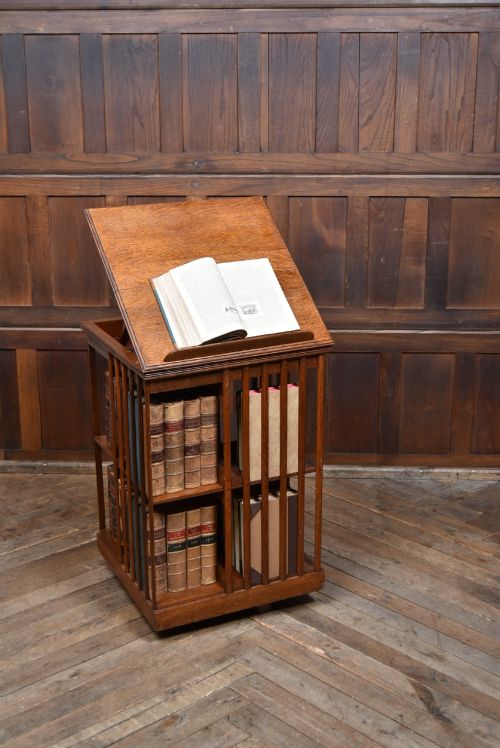
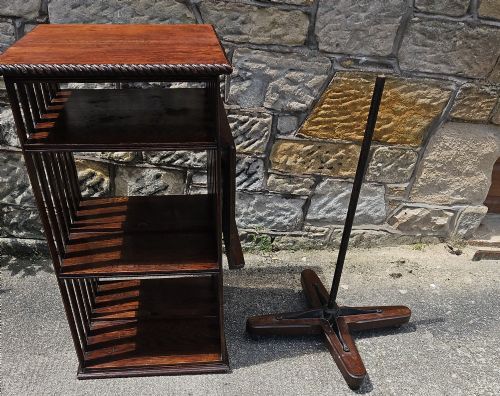
The version you are most likely to meet on this page is an Edwardian oak revolving bookcase, often standing on a low base or built as a tall four-tier structure. These pieces range from small table top models associated with the Arts and Crafts style to larger floor-standing formats, occasionally incorporating reading stands or circular tiers.
While the dominant material recorded in these listings is oak, variations occur, including Edwardian pieces fashioned from mahogany alongside smaller items paired with cast iron, iron, brass, or ceramic elements. The common thread across all these pieces is the revolving mechanism, which allows a stacked set of books to spin smoothly within arm's reach.
How they were made
The construction of these pieces relies primarily on solid oak, shaped and joined to bear the weight of heavy volumes across multiple tiers. Workshops employed traditional cabinet-making techniques to house the rotating mechanism securely beneath the bookcase structure.
Metal components such as iron, cast iron, and brass frequently form the internal turning mechanism or support fittings, ensuring the rotation remains smooth and durable. Selected pieces also incorporate ceramic details, adding subtle contrast to the timber frames.
Oak Revolving Bookstand Retail Price Guide 2026
Typical asking prices for oak revolving bookstand among the pieces listed under this phrase on Sellingantiques today, from the lower quarter to the upper quarter. They describe what is for sale here now, not the wider market.
A revolving bookcase is essentially a quiet mechanical helper that saves you from getting up to fetch a dictionary.
What varies in quality
The distinction between a standard piece and a finer example rests on the choice of timber and the precision of the joinery. Solid oak constructions with well-figured grain sit at a higher level than simpler utility pieces.
The smoothness of the revolving mechanism and the stability of the tiers dictate the overall execution. Details such as reading stands, Arts and Crafts styling, or taller four-tier configurations distinguish more ambitious workshops from basic production.
The Oak Revolving Bookstand Glossary
- Edwardian
- A period spanning the reign of King Edward VII, noted in these listings for refined oak and mahogany furniture with lighter proportions than Victorian equivalents.
- Victorian
- The era covering the nineteenth century, represented here by pieces from 1880 that typically feature denser timber and more robust proportions.
- Arts and Crafts
- A design movement celebrating honest construction and simple materials, visible in the smaller table top oak revolving bookcases recorded on this page.
- Tier
- A single horizontal level or shelf within the bookcase structure, allowing books to be stored separately across stacked revolving sections.
- Reading stand
- An adjustable book rest fitted to the top of the revolving bookcase, designed to hold an open volume at a comfortable angle for the reader.
Oak Revolving Bookstand: Frequently Asked Questions
How do I date a revolving bookcase?
Dating relies on stylistic clues and construction methods visible in the timber and hardware. Pieces from the Victorian era generally show heavier proportions, whereas Edwardian examples often display lighter framing and simpler decorative lines.
Makers working around 1900 to 1910 balanced traditional joinery with practical space-saving designs. Later items from the 1930s introduce simpler circular formats reflecting changing domestic interiors.
Were these made for desks or floors?
Both formats exist within the listings, serving different spaces in a home or library. Smaller versions are built as table top models suited for a desk or side table.
Larger variations stand directly on the floor, ranging from compact multi-tier units to tall structures designed to hold substantial libraries within easy reach of an armchair.
How does the rotating mechanism work?
The mechanism relies on a concealed pivot and bearing system housed between the base and the revolving body of the bookcase. Iron, cast iron, and brass components are typically utilised inside to reduce friction.
This hidden engineering allows even a fully loaded stack of heavy books to spin smoothly with a gentle push from the user.
How do I care for antique oak furniture?
Maintaining oak timber involves keeping the surface clean with a soft, dry cloth and avoiding direct exposure to strong sunlight or rapid temperature changes. Occasional waxing helps nourish the grain and protects the finish.
Ensuring the revolving mechanism remains free of dust and lightly lubricated if necessary will keep the piece turning smoothly for years to come.