



Oak Reading Table
An oak reading table is a timber stand designed to hold books or papers at an adjustable angle, and collectors prize them for their practical utility and solid construction.
Oak Reading Table
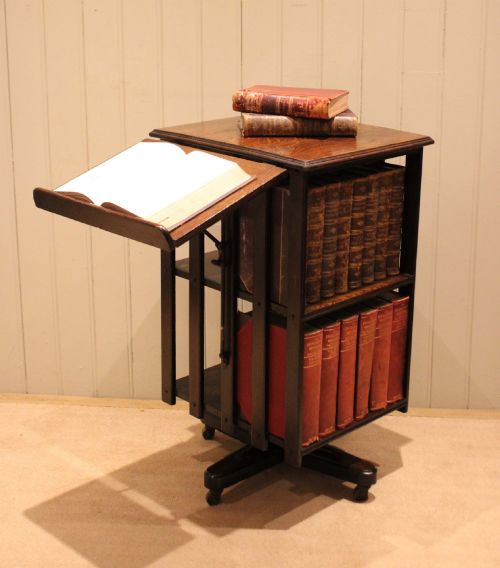
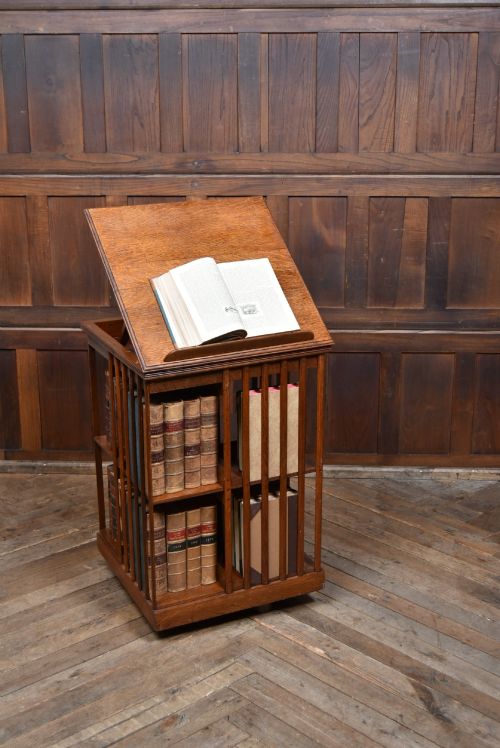
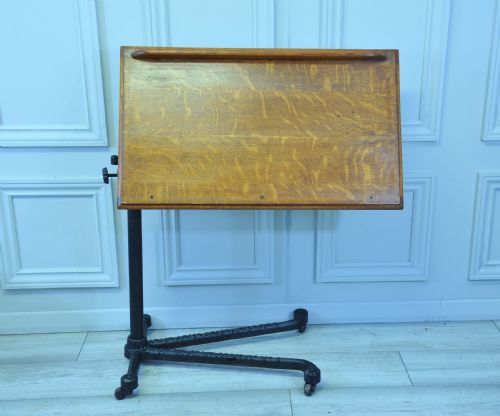
An oak reading table serves as a functional stand for books, sheet music, or papers, frequently incorporating adjustable reading slopes or folding mechanisms. When you search for an oak reading table, you encounter diverse forms ranging from portable lecterns and bed tables to heavy library desks and occasional tables.
The pieces on this page span several periods, including Victorian, Edwardian, and the early twentieth century, alongside styles such as Arts and Crafts, Gothic Revival, and Neo-Jacobean. Many examples combine the timber surface with brass fittings, cast iron frames, or leather inserts to support scholarly or domestic tasks.
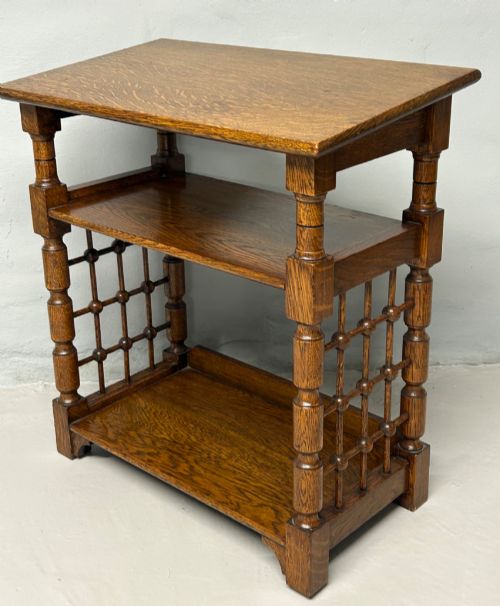
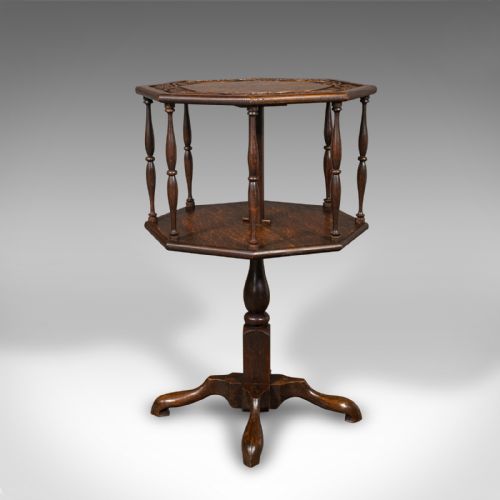
Makers such as Liberty and Co and Carters of London appear in the record, showing that both retail houses and specialist manufacturers produced these versatile stands. Buyers are most likely to meet solid timber examples that double as bookcases, magazine racks, or side tables.
Materials and construction methods
Makers relied principally on solid oak, selected for its durability and strong grain, often pairing the timber with brass ratchets, hinges, and screw mechanisms to enable the adjustable slopes. Cast iron and wrought iron also feature heavily in the support frames of portable and bed-bound models, providing the necessary weight and stability for mechanical movement.
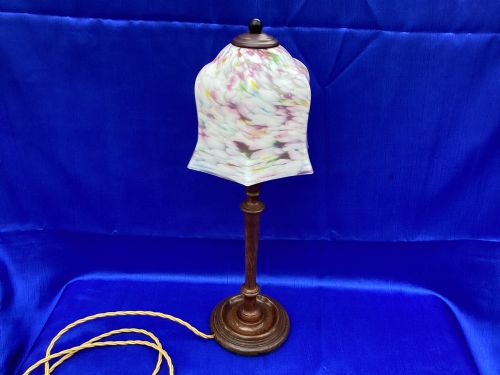
Secondary materials like leather inserts, glass, and fabric flex appear on specific desk and lamp variations, while carving and structural joinery define the Arts and Crafts and Gothic Revival pieces. Workshops utilised these combined materials to build functional items that could withstand regular adjustment and daily use.
Some Victorian reading tables doubled as bed or chair furniture, letting Victorians peruse the morning paper without leaving the comfort of their upholstery.
Assessing quality and craftsmanship
The standard of an oak reading table rests on the precision of its adjustable mechanisms and the integrity of the timber frame. Pieces featuring smooth-working brass ratchets and solid oak construction represent a higher grade of manufacture than simpler domestic variants.
Design ambition further distinguishes the range, from straightforward utilitarian stands to elaborately carved Gothic Revival pieces or branded examples by known makers. The presence of integrated storage, such as built-in bookshelves or magazine racks, elevates the utility and overall refinement of the piece.
Liberty and Co·Carters Of London
The Oak Reading Table Glossary
- Adjustable reading slope
- A hinged desk or book rest that can be angled to various positions for comfortable reading or writing. This feature is central to the function of most library and bed stands.
- Neo-Jacobean
- A nineteenth-century revival style that emulates seventeenth-century English furniture through heavy proportions, dark timber, and geometric carving. It frequently appears on formal desks and library tables.
- Metamorphic furniture
- Pieces designed to transform from one form of furniture into another, such as a table converting into a reading stand or chair. These multifunctional items required sophisticated hinges and pivots.
- Lectern
- A freestanding or portable stand with a slanted top designed to hold a book or speech for a standing reader. They are often built in oak with adjustable heights.
- Arts and Crafts
- A design movement valuing traditional handcraftsmanship, visible construction, and simple forms over mass-produced ornamentation. Pieces in this style emphasise the natural grain of the oak.
Oak Reading Table: Frequently Asked Questions
What is an oak reading table used for?
These tables were designed to hold books, manuscripts, or sheet music at a comfortable viewing angle. Users adjusted the wooden slope to suit reading in libraries, studies, or bedrooms.
Over time, many of these pieces also functioned as general side tables, occasional furniture, or compact bookcases in domestic settings.
How do I adjust the reading slope?
Most reading tables use a brass ratchet or a notched wooden bracket fixed beneath the book rest. Lifting the shelf allows the support arm to drop into a chosen slot for the desired angle.
Care should be taken with antique brass mechanisms to ensure smooth movement without forcing the pivots.
Are these tables portable?
Certain variations, such as bed tables and portable lecterns, were specifically built to be moved around the home or placed across chairs. Other forms, including heavy library desks and revolving bookcases, are much heavier and intended for stationary placement.
Cast iron components on specific models added stability while keeping the footprint compact.
How can I tell the period of a reading table?
Dating relies on stylistic clues such as Gothic Revival carving, Arts and Crafts simplicity, or Edwardian proportions. The presence of original brass hardware and construction methods also helps indicate the decade of manufacture.
Victorian and Edwardian examples often exhibit distinct turned legs and specific jointing techniques.