
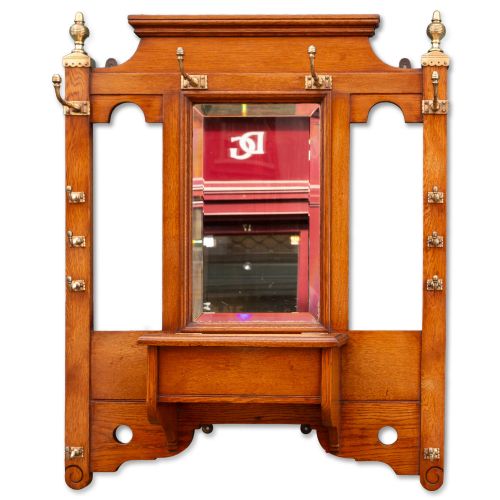

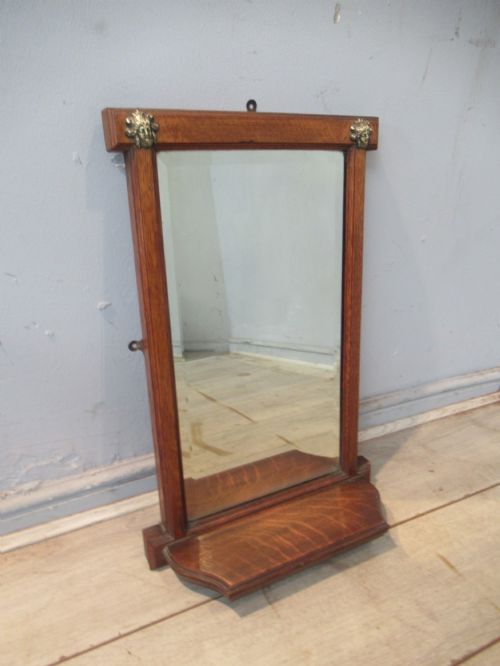


Oak Mirror Shelf
An oak mirror shelf brings together a practical glass plate and a handy ledge for everyday belongings, combining utility with warmth.
Oak Mirror Shelf
When you search for an oak mirror shelf, you are looking at practical hallway and cloakroom furniture designed to hold keys, coats or shaving gear while offering a reflective surface. The pieces listed here span the nineteenth century, the Victorian and Edwardian periods, and the 1910 and 1920 decades.
You are most likely to meet wall-mounted hall mirrors, overmantel mirrors, and compact coat racks fitted with small ledges. These items often double as key cabinets or bathroom shaving mirrors.
The styles range from late Victorian plain framing to Moorish Revival pieces and French oak interpretations. Each object uses its wooden ledge to anchor the mirror visually to the wall.
How they were made
These items are constructed primarily from solid oak and golden oak, sometimes enhanced with brass hooks, hinges, or decorative mounts. The timber provides a sturdy structure capable of supporting shelves and coat pegs.
Glass forms the central mirror plate, occasionally accompanied by detailed inlays such as mother of pearl. Joinery methods of the period ensure the wooden frames hold the weight of both the glass and the protruding shelf securely.
The selection includes pieces spanning the nineteenth century, the Victorian and Edwardian eras, and the 1910 and 1920 decades.
What varies in quality
The distinction between standard examples and finer pieces lies in the crispness of the timber grain, the richness of the oak colour, and the integration of decorative elements like brass fittings or mother of pearl. Simpler hall mirrors rely on clean proportions, whereas elaborate styles incorporate Moorish Revival details or attribution to known makers.
Quality also shows in the depth and utility of the attached shelf, where clever design turns a simple frame into a multi-functional hall cabinet or cloakroom fixture.
Liberty & Co
The Oak Mirror Shelf Glossary
- Overmantel mirror
- A large mirror designed to hang above a fireplace mantelpiece, frequently incorporating a small display shelf.
- Moorish Revival
- An architectural and decorative style popular in the late nineteenth century, characterised by horseshoe arches and intricate geometric patterns.
- Cloakroom mirror
- A smaller wall-hanging glass often fitted with a shelf and coat hooks for use in entryways.
- Hall mirror
- A piece placed near the entrance of a home, typically combining a looking glass with storage for keys and hats.
- Golden oak
- A warm, honey-toned timber finish favoured in furniture production during the late Victorian and Edwardian eras.
Oak Mirror Shelf: Frequently Asked Questions
Where should I hang an oak mirror shelf?
These pieces suit entrance halls, cloakrooms, or bathrooms where a combination of a mirror and a small storage ledge is useful. They provide a convenient spot for keys or daily items right by the door.
Ensure the wall fixings match the weight of the solid timber and glass structure to support the shelf securely.
How do I identify a Victorian piece?
Victorian examples often display darker wood tones, heavier mouldings, or more ornate framing compared to later Edwardian designs. The construction usually employs traditional joinery methods appropriate for the nineteenth century.
Look for the characteristic depth of the timber frame and any accompanying brass hardware typical of the period.
Did these always have coat hooks?
Not all of them include hooks, as many were designed strictly as hall mirrors with a shelf or as overmantel mirrors for reception rooms. Others specifically incorporated brass coat racks for cloakroom use.
The presence of pegs or key cabinets depends on whether the item was intended for hats and coats or simply for smaller personal items.
What is Moorish Revival style?
Moorish Revival draws on Islamic architecture, featuring intricate woodwork, lattice patterns, and exotic decorative flourishes. In mirrors from the late nineteenth century, this style appears in fretwork frames and shaped crestings.
Such pieces stand apart from plain oak frames through their ornamental complexity and theatrical presence.