





Oak Milking Stool
An oak milking stool is a rustic country seat built for utility, offering buyers a tactile connection to domestic vernacular life.
Identifying an oak milking stool
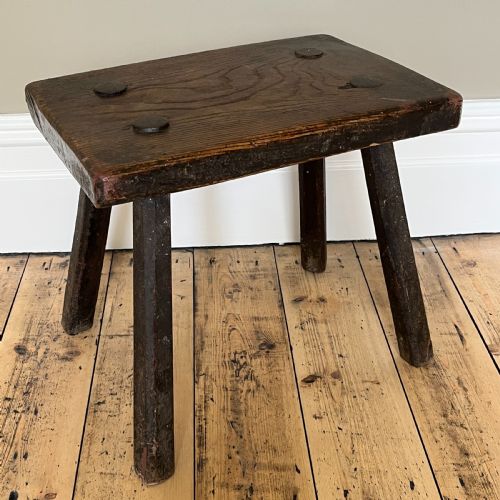
An oak milking stool is a low country seat designed for domestic and agricultural chores. The inventory shows pieces spanning the eighteenth century, the Georgian era, the Victorian period, and nineteen-twenty.
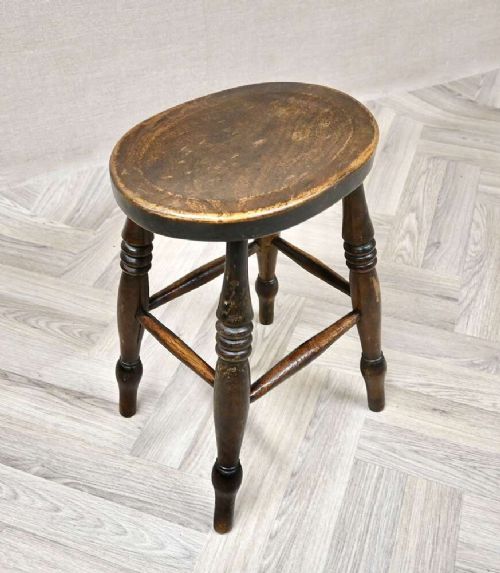
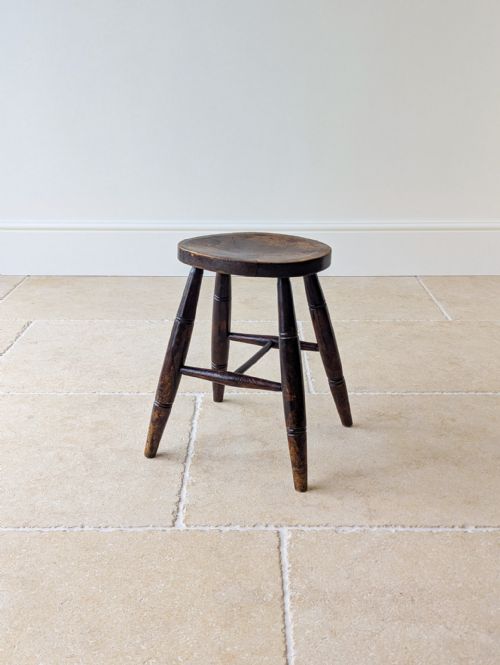
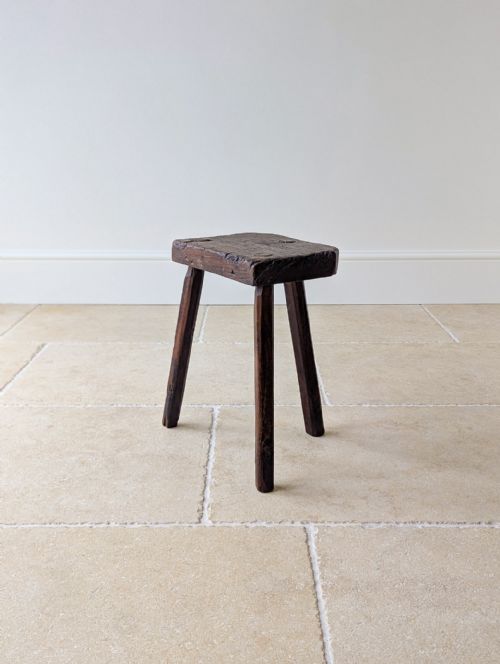
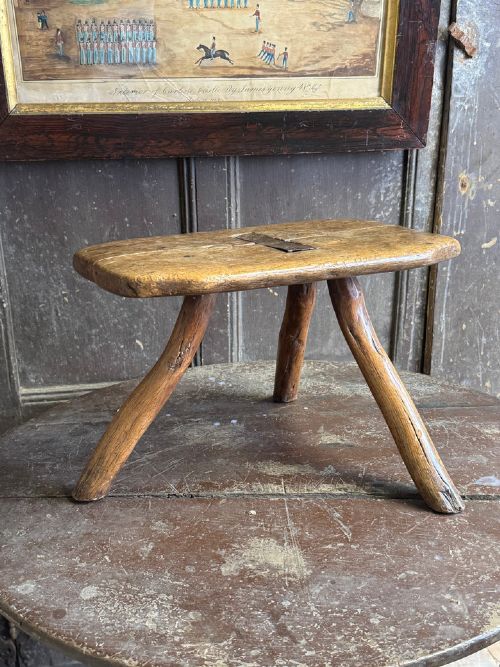
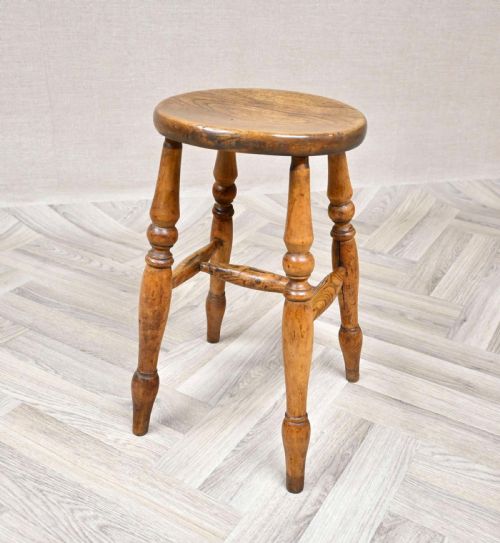
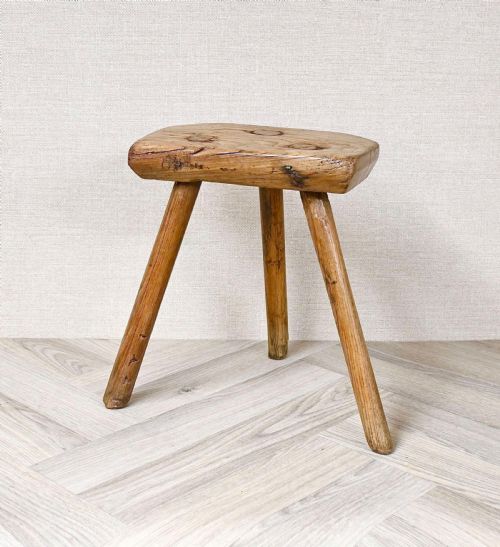
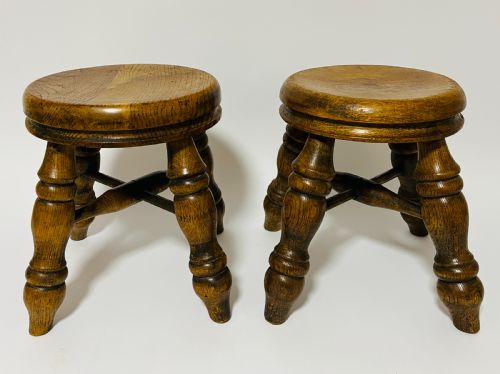
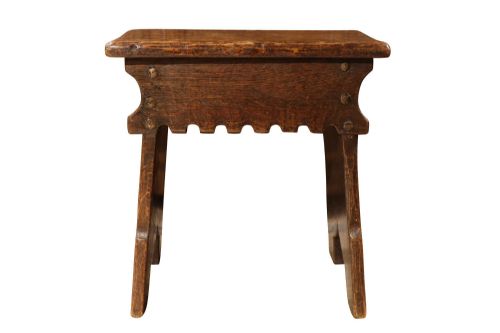
Forms include circular tops, rectangular tops, low country seats, and four-leg country seats. Welsh origins and lace makers' variations also appear in the historical archive alongside standard regional styles.
These items embody rustic country, Victorian country, and Georgian country aesthetics. Buyers encounter simple three-leg and four-leg designs shaped by utilitarian necessity rather than polite salon taste.
Materials and construction
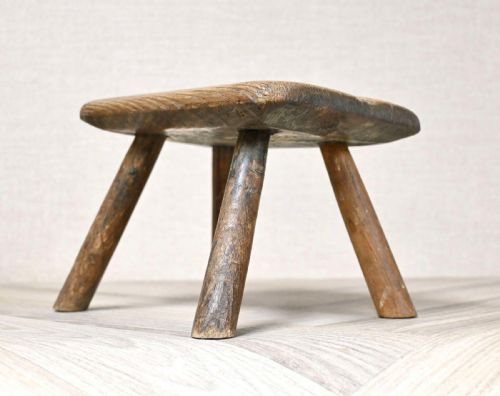
Makers built these stools primarily from solid oak, frequently combined with elm and ash. Blacksmith repairs and hedgerow splayed legs demonstrate how local materials dictated structural solutions.
Construction relies on straightforward joinery suited to country workshops. Circular and rectangular tops receive three or four turned or tapered legs driven directly into the seat timber.
Retail Price Guide 2026
Typical UK retail prices for oak milking stool, calculated from the Sellingantiques database of over a million retail prices indexed since 2003. This retail price guide relies exclusively on Sellingantiques data; no external sources or auction records are used, so the figures do not describe the wider market.
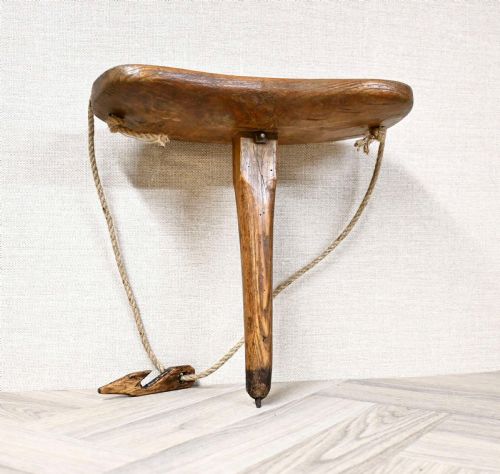
A lace makers' milking stool proves that even country seating occasionally moonlighted in cottage industries.
Measures of quality
Quality rests in the honesty of the materials and the character of the wear. Early examples with rich patination, visible grain, and untouched surface history sit at the upper end of the range.
Repairs tell part of the story when executed by period hands, such as early blacksmith brackets or wedges. Untouched domestic tool marks carry more weight than heavily restored or later surfaces.
The Oak Milking Stool Glossary
- Vernacular
- Everyday objects made by local craftsmen for practical use rather than following high architectural styles. These items reflect regional traditions and available materials.
- Splayed legs
- Legs angled outwards from the centre for greater stability on uneven floors. This technique is common in rustic seating.
- Patina
- The surface sheen and colour developed through decades of handling, cleaning, and light. It indicates age and consistent domestic use.
- Ash
- A tough, flexible timber often utilised for legs and stretchers in country furniture. It resists splitting under stress.
Frequently Asked Questions
What is an oak milking stool?
An oak milking stool is a low, simple seat made for farm work and household chores. Makers shaped them from sturdy local timbers to withstand heavy daily use.
Surviving examples show various regional designs, ranging from simple three-legged forms to four-legged dairy and lace-making seats.
How old are these stools?
The pieces span from the eighteenth century through the Georgian and Victorian eras up to nineteen-twenty. Earlier examples often display vernacular traits like hedgerow splayed legs.
Dates are estimated from timber characteristics, construction methods, and signs of long use.
Where were they made?
Country workshops and local joiners produced these stools across Britain. Specific examples originate in Wales and various rural English counties.
Makers utilised whatever strong local woods were available, including oak, elm, and ash.
How should I live with one?
These stools function well as low side tables, plant stands, or minimalist display pieces. Their compact size allows them to fit easily into modern rooms.
Keep them away from direct heat sources to protect the historic timber and surface patina.