
Oak Library Shelving Unit
An oak library shelving unit organises volumes with sturdy dignity, bringing functional architecture and warm timber tones into domestic rooms.
Oak Library Shelving Unit
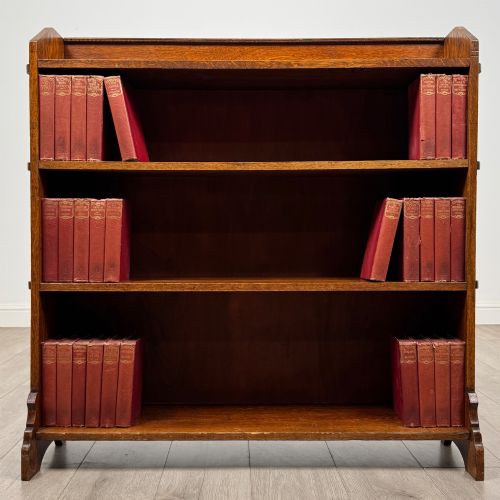
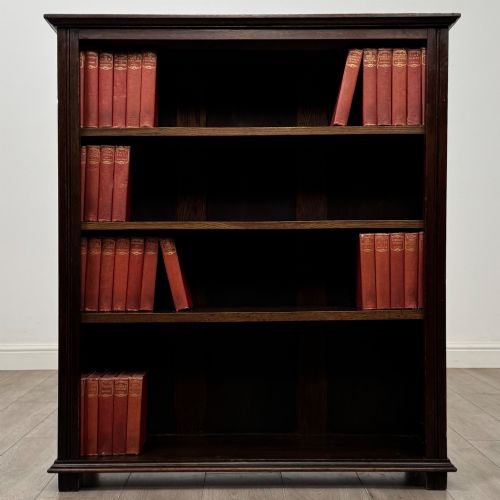
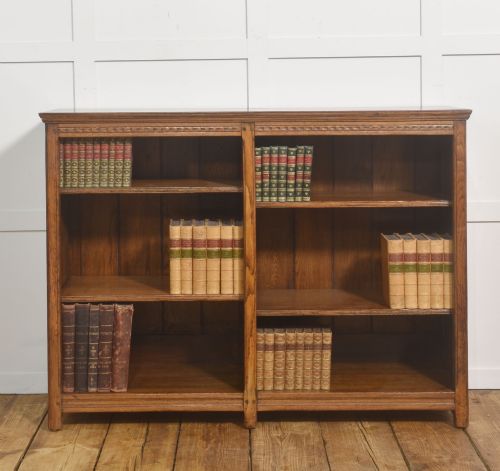
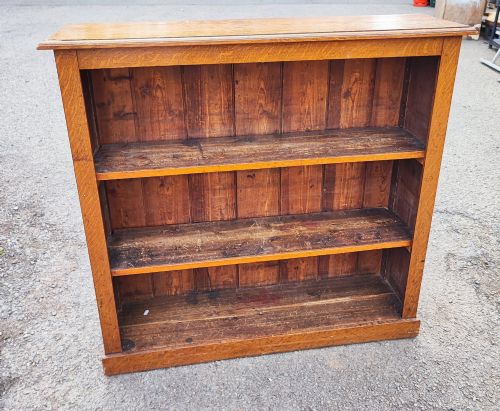
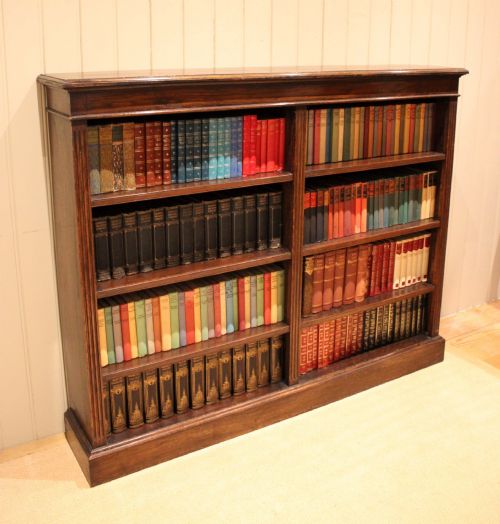
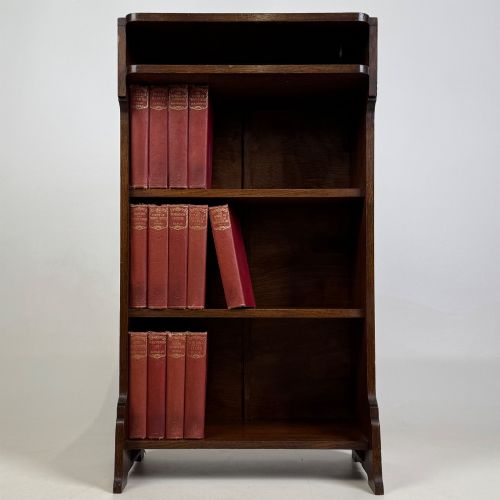
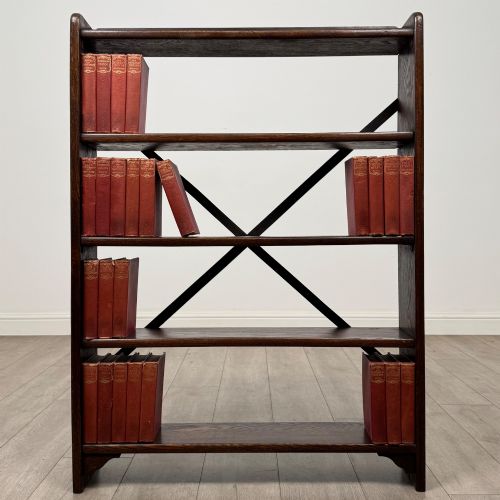
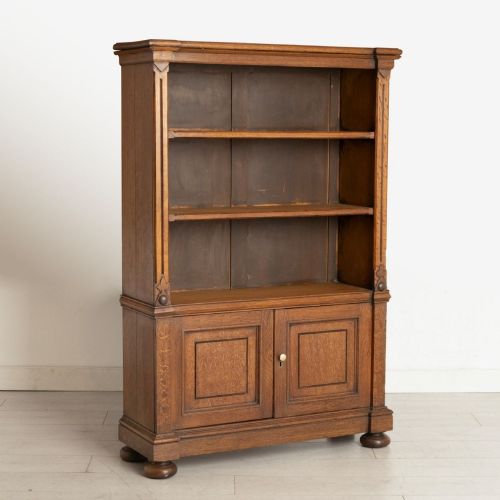
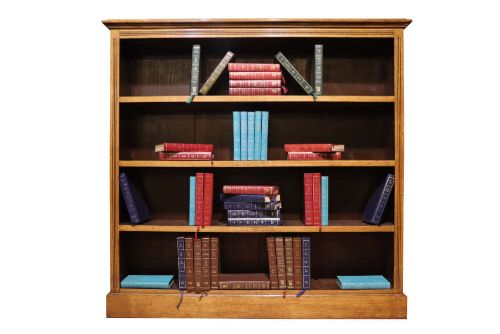
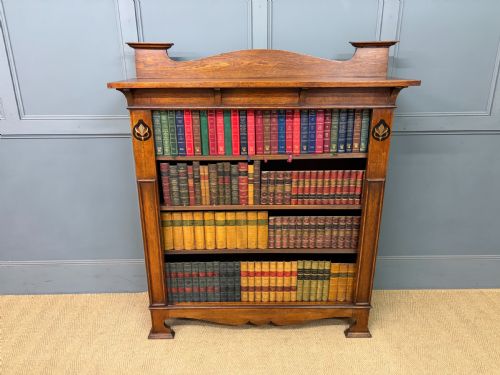
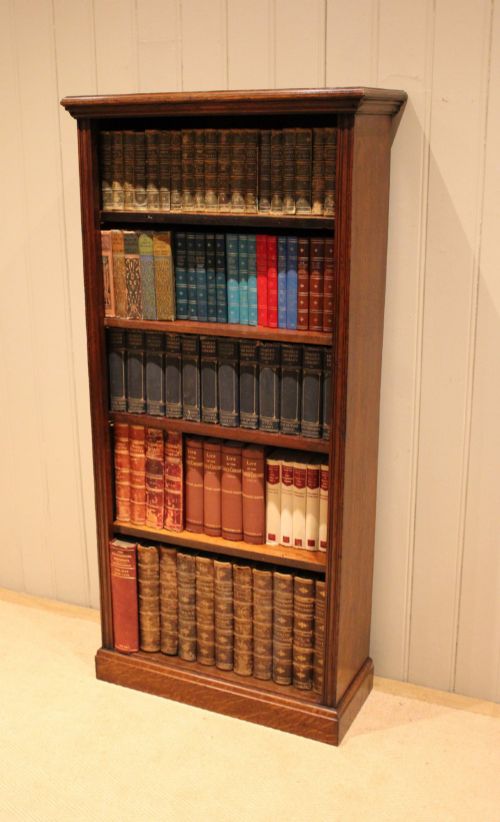
An oak library shelving unit provides open storage for books, drawing on nineteenth-century and early twentieth-century forms to house heavy volumes. These pieces appear most frequently as tall or dwarf open bookcases shaped by Victorian, Edwardian, and Arts & Crafts makers.
Buyers encounter variations ranging from simple functional shelving to elaborate architectural cabinets with carved decoration. Pieces span several decades including the Edwardian era, the Victorian period, and the interwar years.
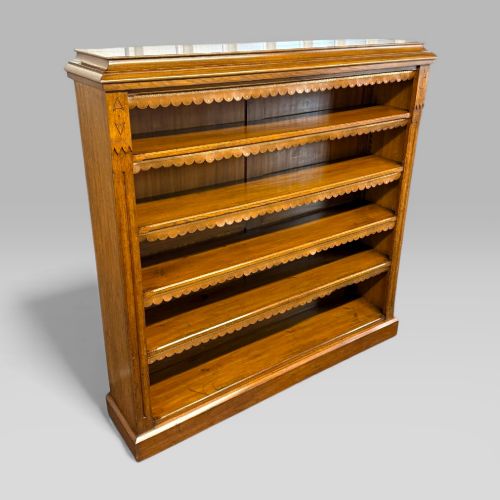
The domestic interior gains both storage capacity and structural presence from these large or small oak furniture items. Many examples incorporate adjustable shelves to accommodate varying book sizes.
Materials and construction
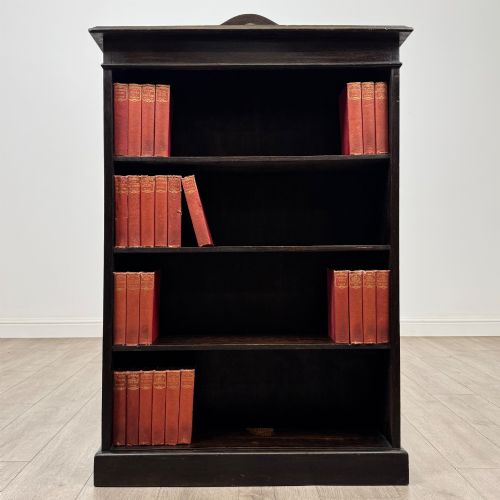
Carpenters constructed these units primarily in solid oak, occasionally utilising ebonised finishes, walnut, marquetry, or wood inlay to accent the primary timber. Metal components such as brass and iron appear in structural brackets or functional fittings.
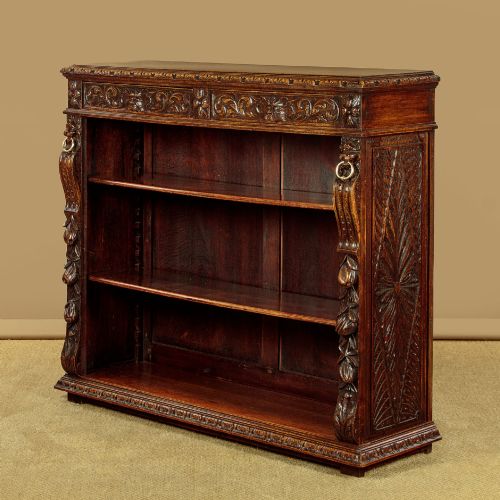
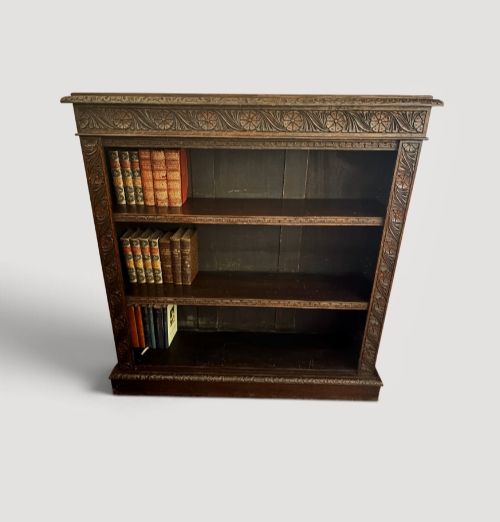
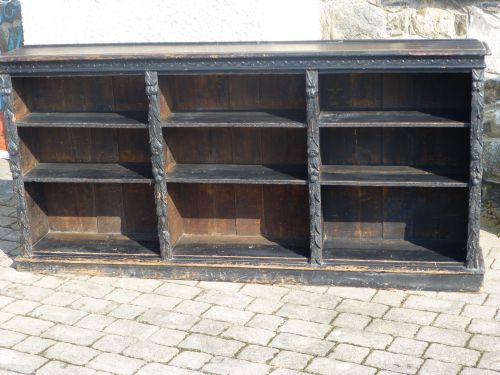
Joinery techniques focus on sturdy open frameworks designed to support substantial weight without sagging. Carved ornamentation, Gothic revival motifs, and architectural mouldings define the decorative surface work on period examples.
A grinning green man peers out from the carved woodwork on select Victorian dwarf bookcases.
Distinctions in standard
The refinement of the timber selection and the depth of carved detail distinguish standard utility pieces from high-status country house examples. Golden oak figures and rich grain patterns elevate the visual impact of superior pieces.
The sophistication of the joinery and the presence of integrated architectural elements, such as breakfront profiles or inlaid marquetry, separate basic shelving from master-built library furniture.
The Oak Library Shelving Unit Glossary
- Breakfront
- A piece of furniture where the central section projects forward from the flanking sides. This configuration creates architectural depth in large library units.
- Dwarf bookcase
- A low shelving unit designed to sit beneath window height or leave wall space clear above. These compact pieces offer accessible storage in smaller rooms.
- Adjustable shelves
- Shelvings supported by moveable brackets or pegs that allow vertical spacing to change. This mechanism accommodates books of different heights.
- Gothic Revival
- A decorative style inspired by medieval architecture featuring pointed arches and heavy ornamentation. Victorian makers applied these motifs to library furniture.
- Aesthetic Movement
- A late nineteenth-century design approach emphasising visual beauty and craftsmanship over orthodox historical revival. Pieces from this movement often display refined surfaces.
Oak Library Shelving Unit: Frequently Asked Questions
How do I adjust the shelves?
Many period units utilise wooden rack strips or metal pins inserted into pre-drilled interior walls. Lift the shelf slightly to disengage it from the support mechanism and reposition it at the desired height.
Ensure both sides rest evenly on the supports before placing books back onto the timber board.
Are these units suitable for heavy books?
Solid oak construction provides natural rigidity and strength that easily supports rows of dense volumes. Adjustable shelves distribute weight effectively across the internal framework.
Inspect the shelf thickness and support brackets to confirm they match the load requirements of large folios.
How do I identify a Victorian piece?
Victorian items often display deep carved ornamentation, architectural pediments, or Gothic revival motifs. The timber tends to show darker patination or rich golden oak tones developed over time.
Construction hallmarks include heavier proportions and traditional jointing methods typical of nineteenth-century workshops.
What is an ebonised finish?
Ebonising involves treating timber to imitate the dark, dense appearance of ebony wood. Makers during the nineteenth century used this technique to create striking contrast on carved details.
This dark surface treatment adds a formal, dramatic character to dwarf bookcases and open shelving units.