
Oak Legged Stool
An oak legged stool brings solid provincial character and honest utility into a room, spanning centuries of vernacular craftsmanship.
Oak Legged Stool
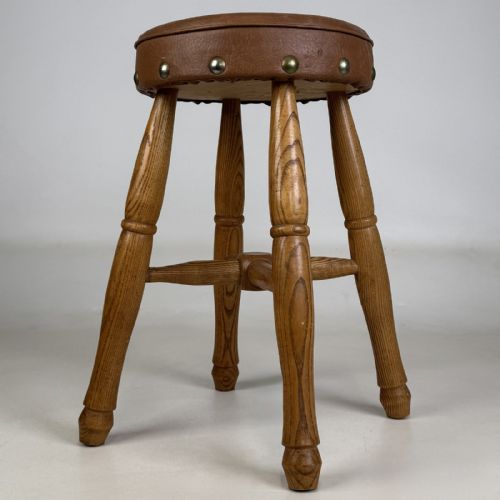
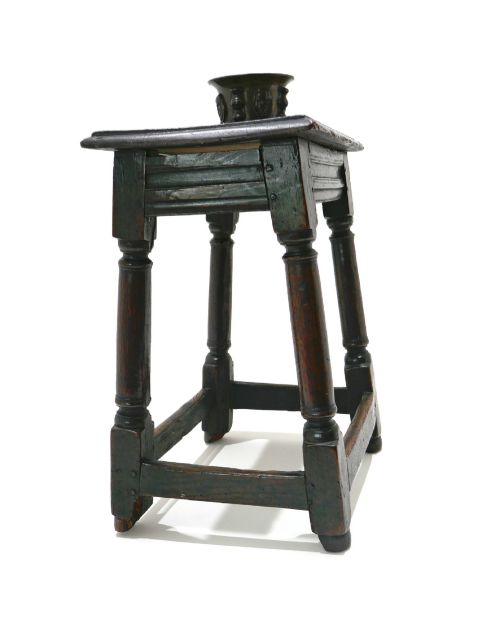
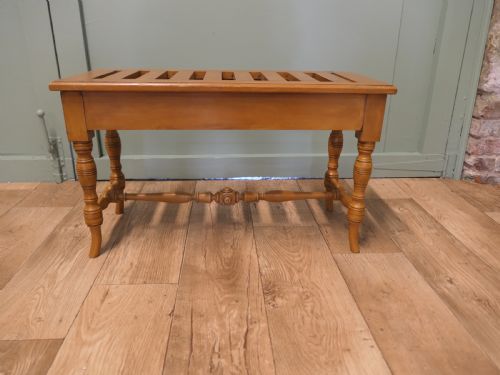
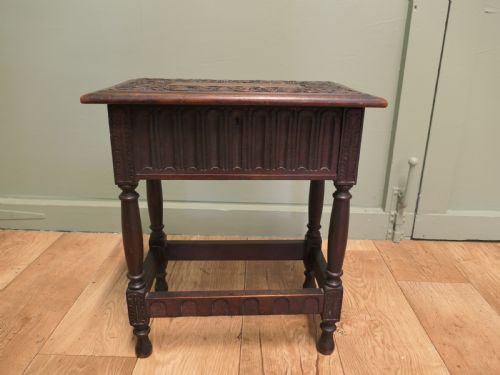
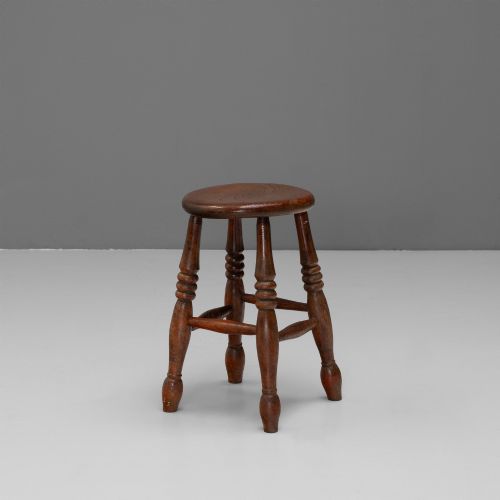
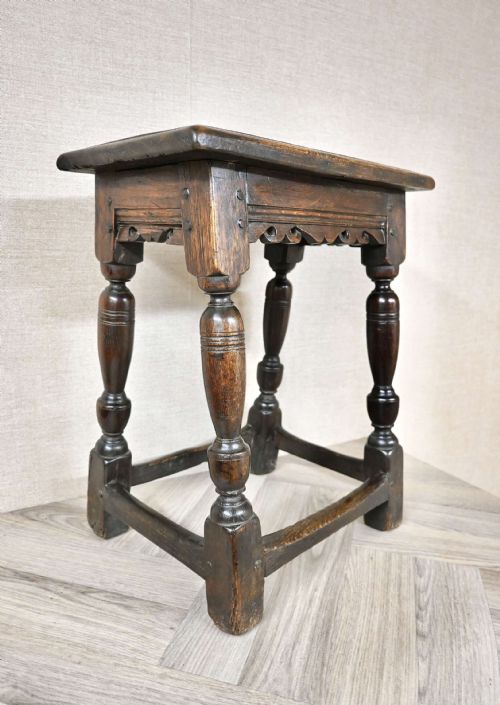
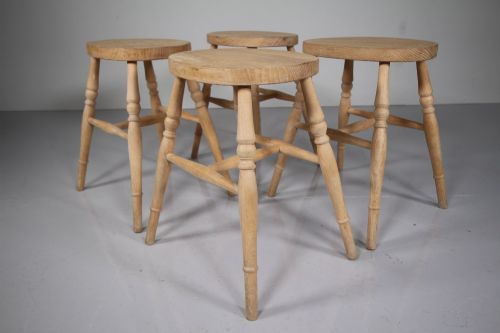
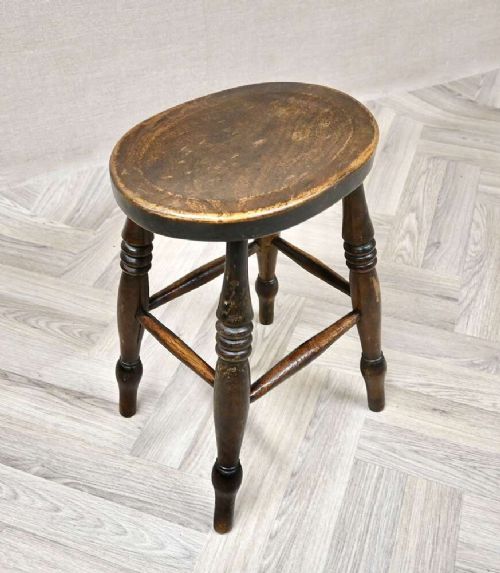
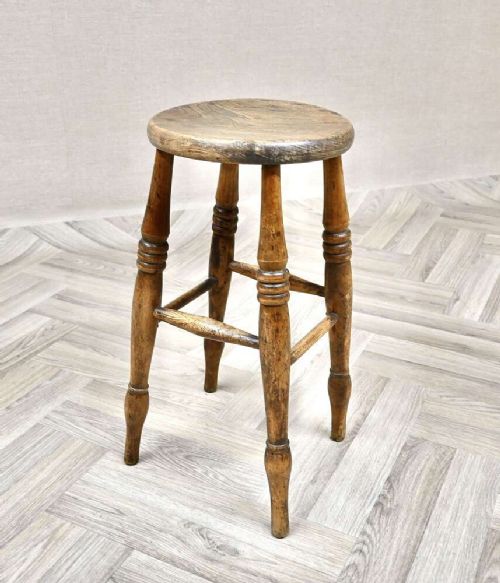
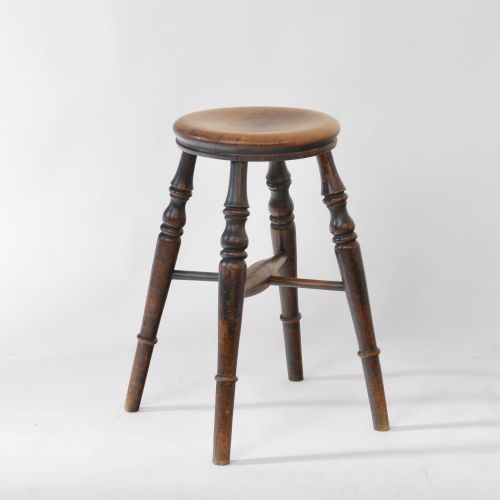
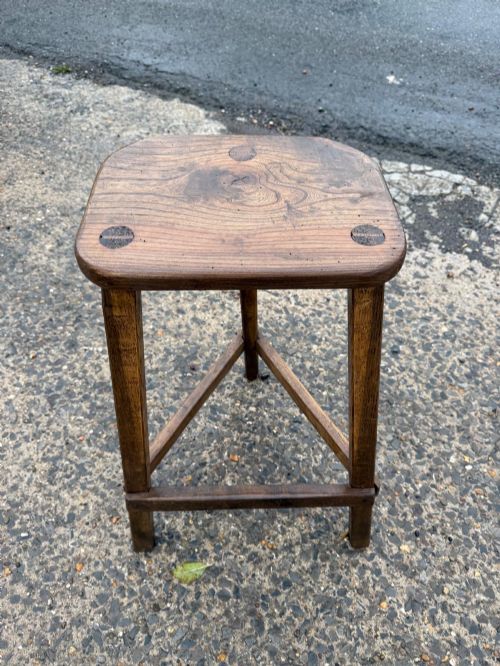
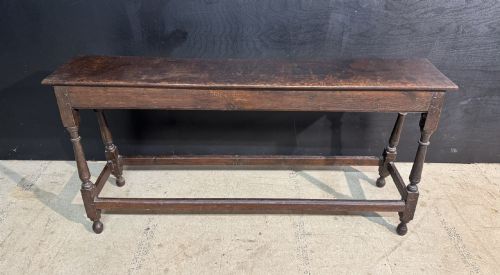
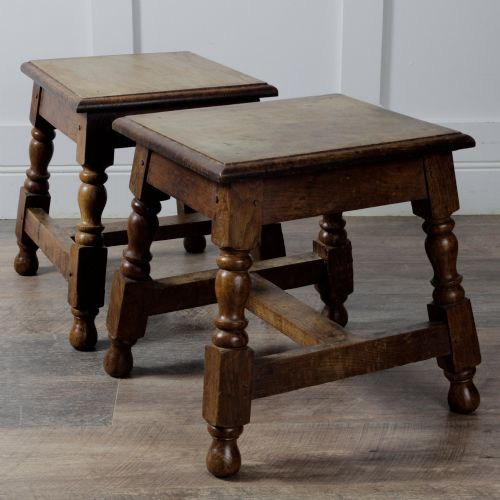
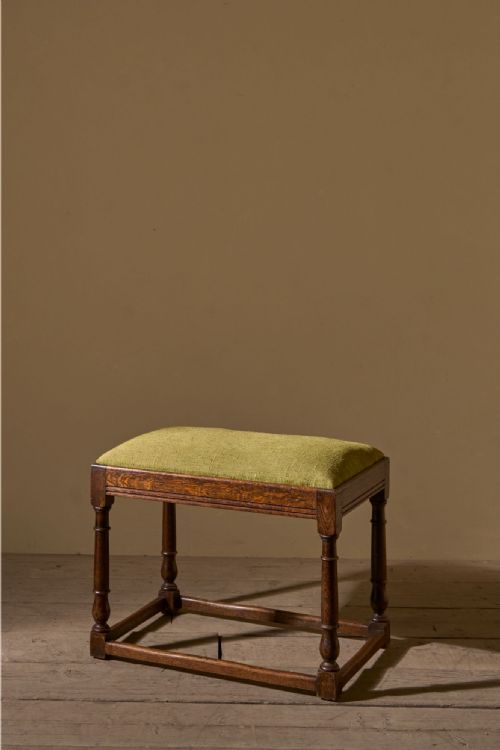
An oak legged stool takes many forms across the centuries, ranging from seventeenth-century joint stools and eighteenth-century vernacular seating to nineteenth-century tavern, milking, and workshop pieces. Buyers searching this phrase meet everything from rigid formal joint stools to low rustic footstools and tall workshop seats.
The materials reflect practical domestic and trade use, pairing sturdy timbers with occasional iron, brass, fabric, or leather. Origins stretch from English country workshops to provincial provincial town settings, capturing both everyday utility and revivalist interpretations.
Materials and Technique
Makers relied primarily on oak, elm, ash, and sycamore, selecting timber for strength and local availability. These woods were shaped into splayed hedgerow legs, turned uprights, and solid plank or dished seats.
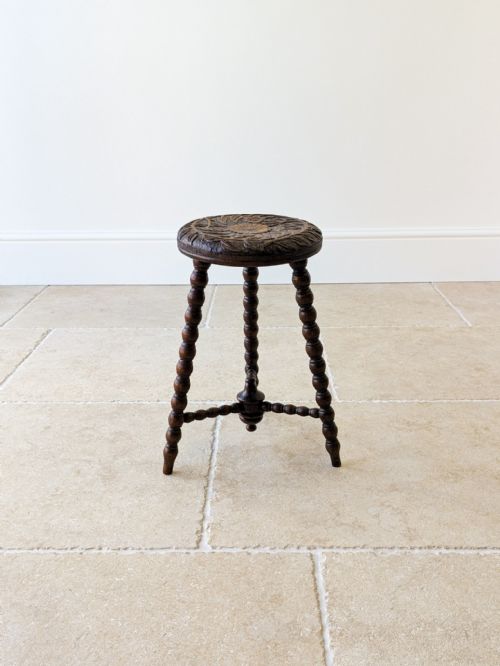
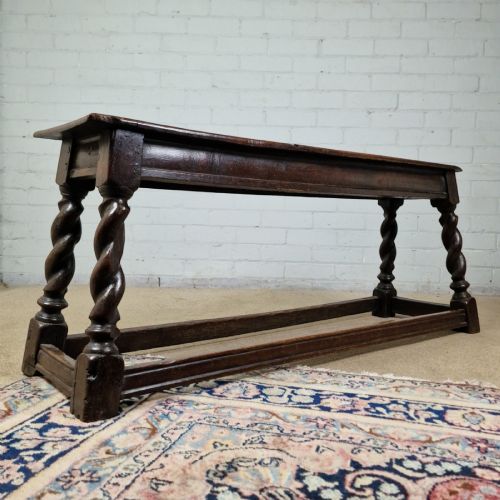
Joinery methods included pegged mortise and tenon joints seen in joint stools, alongside robust blacksmith repairs, turned barley-sugar framing, and simple pegged construction designed to withstand daily strain.
Among the sturdy timber seats hides a solitary one-legged milking stool, designed for dairy workers who clearly valued mobility above all else.
Quality and Character
Quality rests in the integrity of the timber, the honesty of the construction, and the depth of surface patination built through generations of handling. Pieces retaining original pegged joints and uncompromised structural form stand apart from later revivals or heavily restored examples.
Proportion and utility also dictate worth, where authentic vernacular proportion meets purposeful wear, distinguishing utilitarian workshops and provincial homes from later decorative imitations.
The Oak Legged Stool Glossary
- Joint stool
- A low wooden stool constructed with pegged mortise and tenon joints rather than turned or glued assembly. These sturdy pieces often doubled as small side tables or serving stands.
- Milking stool
- A simple three-legged or one-legged seat used by agricultural workers for milking livestock. The splayed leg arrangement provided stability on uneven floors.
- Barley-sugar twist
- A spiral turning technique applied to wooden legs or stretchers, popular during the seventeenth century and later revival periods.
- Vernacular
- Everyday utilitarian furniture made by local regional craftsmen using accessible materials, prioritising function over high-style court design.
- Splayed legs
- Legs angled outwards from the underside of the seat to create a wider, more stable base.
Oak Legged Stool: Frequently Asked Questions
How do I spot an original seventeenth century joint stool?
Original pieces show traditional pegged joinery, heavy timber weight, and deep natural patination acquired through centuries of domestic use.
Examine the underside and joints for tool marks and timber shrinkage that match genuine age rather than nineteenth-century revival work.
What is a vernacular oak stool?
A vernacular piece is an everyday item made by local regional makers without adherence to formal metropolitan design styles.
These objects often feature simple hedgerow timbers like elm or oak, built strictly for practical tasks around the farm or tavern.
How were these stools used historically?
They served multiple domestic and trade functions, acting as seating around dining boards, perches for milking, or stands for heavy tavern mugs.
Their portable, robust construction meant they moved easily around the hearth, workshop, or rustic interior.
Are three legged stools stable?
Three-legged and one-legged stools naturally find balance on uneven flagstone or earth floors, making them practical for agricultural and workshop settings.
This splayed tripod configuration prevents rocking in spaces where level flooring could not be guaranteed.