
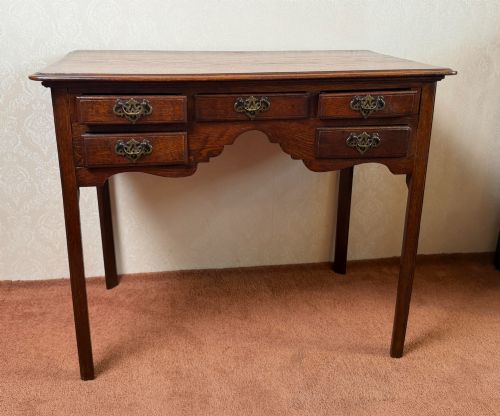
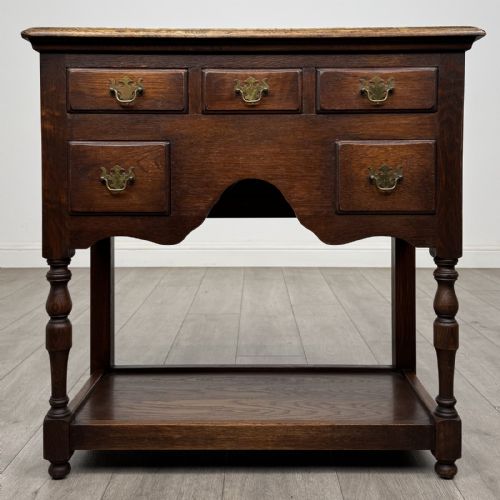
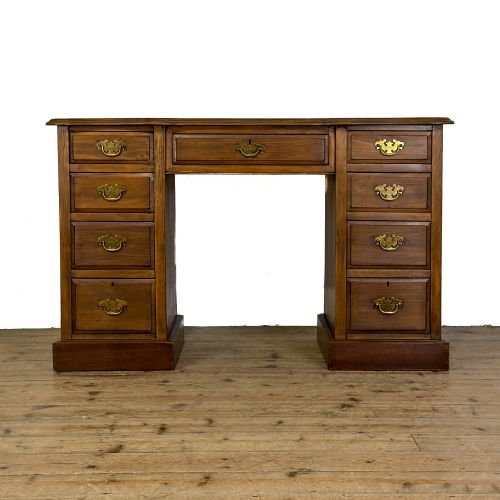
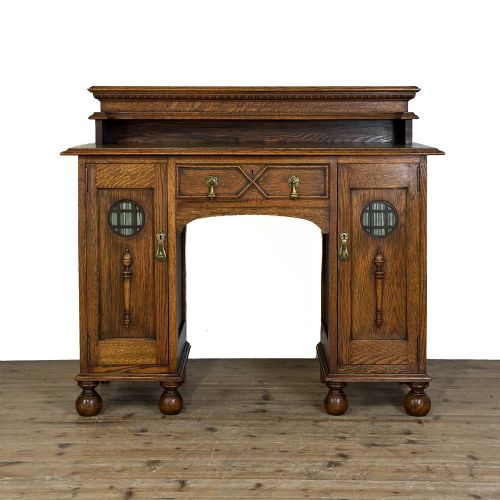
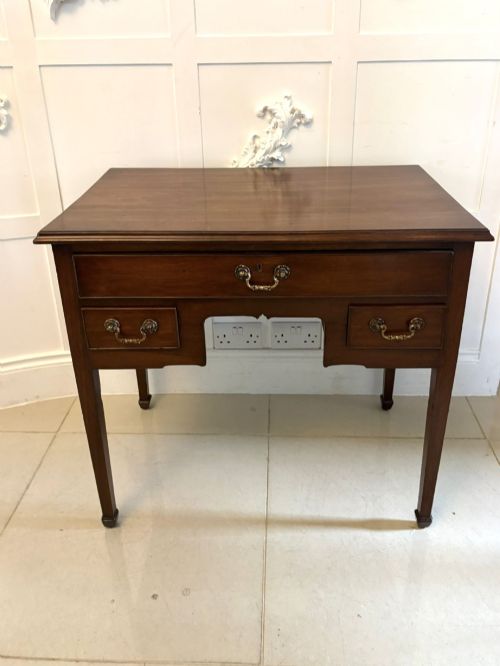
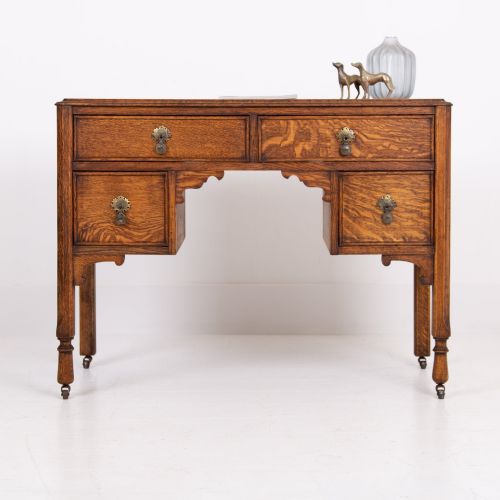
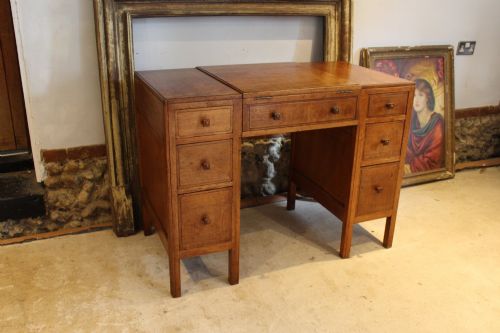
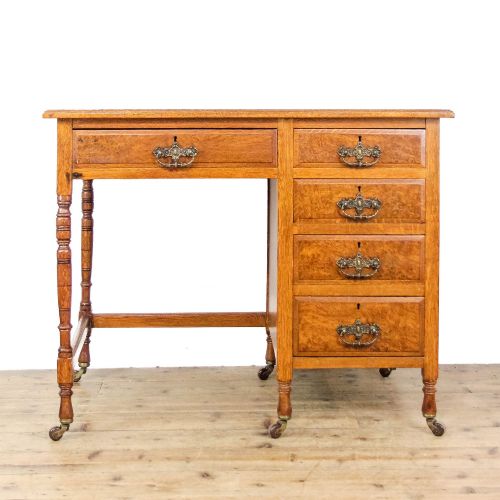
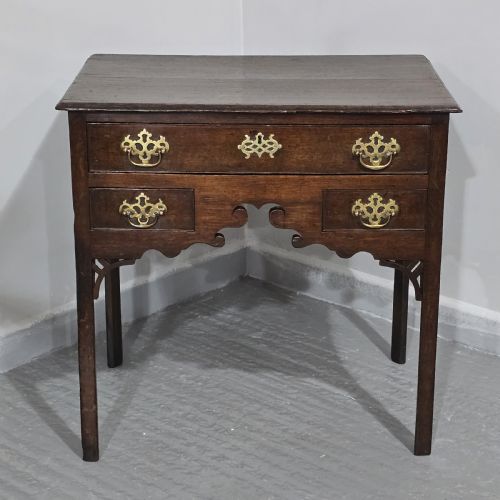


Oak Kneehole Dressing Table
An oak kneehole dressing table offers compact storage and a recessed centre for seating, combining period character with practical daily use.
Oak Kneehole Dressing Table
An oak kneehole dressing table brings together timber furniture designed for personal grooming and writing, often appearing as lowboys, desks or pedestals. These pieces span from the seventeenth century through the Georgian era and into the Edwardian period, reflecting shifting domestic habits.
The version most commonly met on this page is the eighteenth century lowboy or side table, alongside later Edwardian and twentieth century iterations. Such forms range from country made examples to refined Georgian pieces featuring multiple drawers and a central recess.
Materials and construction
Makers utilised solid oak alongside walnut, cherry wood and mahogany, often pairing timber with brass hardware and glass elements. Secondary woods supported structural frames while primary surfaces displayed the distinct grain of oak.
Joinery methods varied from traditional pegged framing in seventeenth century pieces to dovetailed drawer construction in Georgian examples. Surfaces received carved details, stencilled decoration or tooled leather inserts depending on the period.
Object forms on this page include lowboys, side tables, pedestal desks and dressing chests with fitted drawers.
Measures of quality
The caliber of an oak kneehole dressing table rests on the selection of timber and the crispness of any carved or applied decoration. Superior examples retain original brass handles, keys and surface patination accumulated over centuries.
Proportion and structural integrity distinguish provincial country made pieces from high style urban workshops. The retention of original stencilled decoration or fitted leather writing surfaces elevates certain pieces above standard utilitarian forms.
Heal & Sons·Shapland and Petter·Maple & Co
The Oak Kneehole Dressing Table Glossary
- Kneehole
- A recessed space beneath the central drawer of a desk or dressing table designed to accommodate the user's legs. This configuration allows for a seated position while working or grooming.
- Lowboy
- A small dressing table or side table featuring one or more rows of drawers beneath a flat top. These pieces typically stand on four tall legs.
- Dovetail
- A joint used in drawer construction formed by interlocking wedge shaped fingers. This technique provides strong tensile resistance.
- Patina
- The surface sheen and coloration developed by timber through age, handling and polishing. It serves as an indicator of authenticity.
- Pedestal
- A structural support containing banks of small drawers flanking the central kneehole recess. They add substantial storage capacity to the furniture.
Oak Kneehole Dressing Table: Frequently Asked Questions
What is a kneehole dressing table?
A kneehole dressing table is a compact desk or dressing surface featuring a central recessed space flanked by drawers. This design allows a person to sit comfortably close to the drawers.
Such furniture dates from the seventeenth century onwards, serving multiple domestic functions for writing, grooming and storing small personal items.
How do I date an oak dressing table?
Dating relies on examining construction methods, hardware types, timber choices and overall stylistic details. Seventeenth century pieces often display heavy framing and pegged joints, while Georgian examples show refined dovetailing and specific brass handles.
Later Edwardian versions frequently incorporate machine sawn timber elements alongside revival styles like Arts and Crafts.
Were these tables used for writing or grooming?
These tables served dual purposes depending on the domestic space and the owner's requirements. Lower tables with single drawer rows functioned as dressing tables or side tables, while pedestal versions acted as writing desks.
The addition of tooled leather inserts in later models points towards writing use, while simpler lowboys accommodated mirrors for grooming.
How do I care for antique oak furniture?
Antique oak benefits from stable room environments away from direct heat sources and strong sunlight. Regular dusting with a dry cloth prevents particle buildup on the timber surface.
Occasional application of appropriate wax polish helps maintain the moisture balance and protects the historic patina without forming a heavy buildup.