

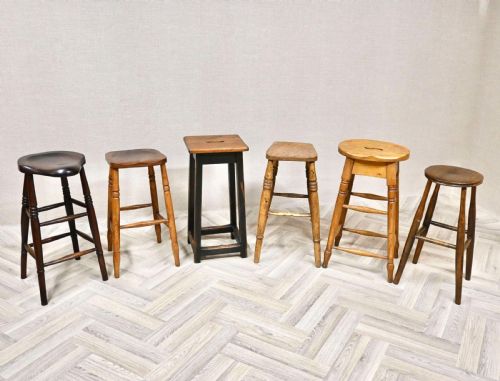
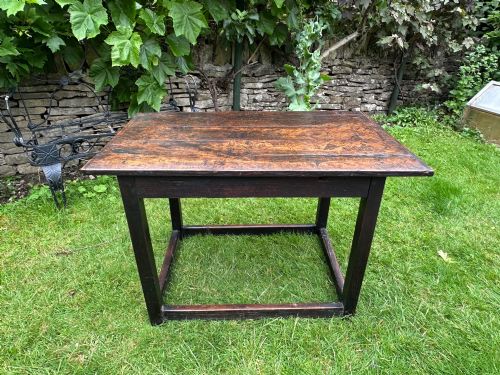


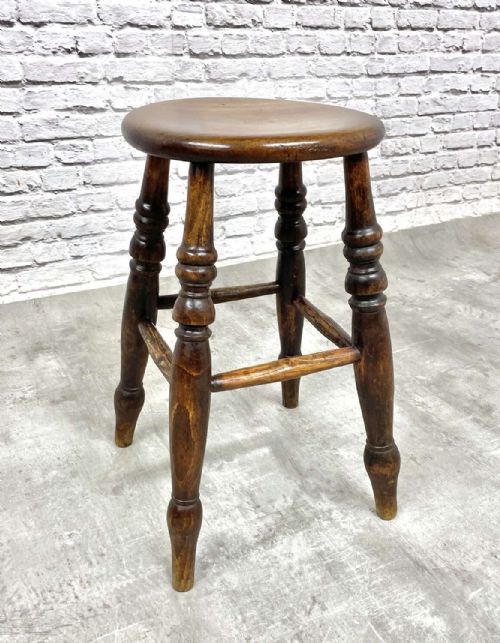

Oak Kitchen Stools
Oak kitchen stools bring honest vernacular charm to a modern room, offering sturdy seating built from honest timber.
Oak Kitchen Stools
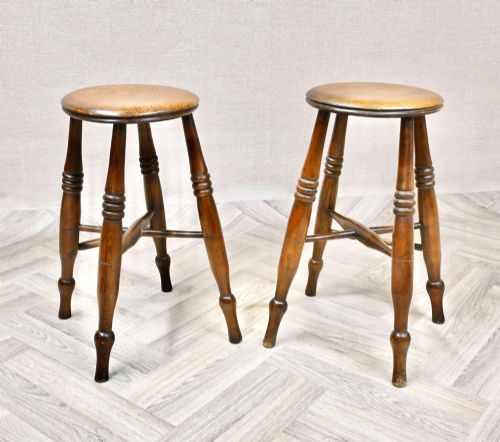
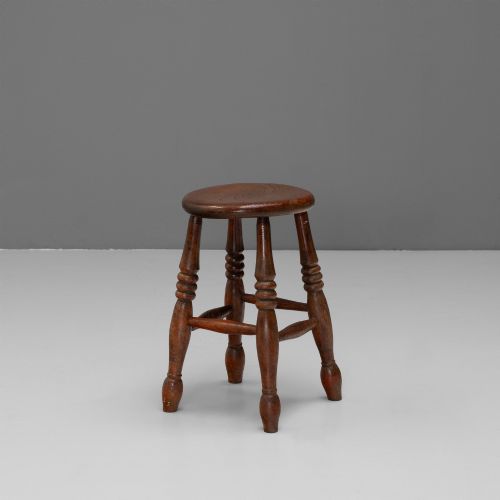
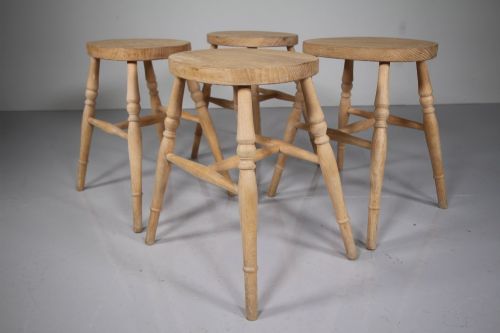
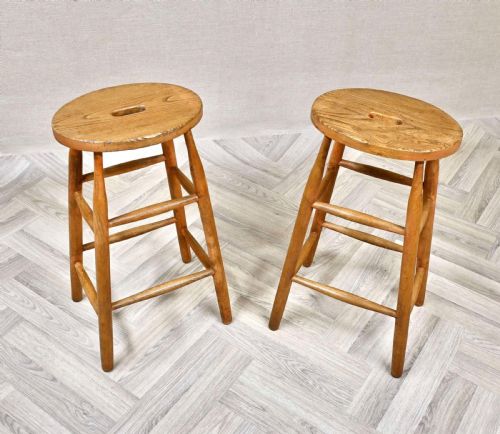
Oak kitchen stools span centuries of utilitarian woodworking, drawing on styles from English country to Victorian industrial workshops. When searching for oak kitchen stools, buyers encounter tall bar stools, low farmhouse seats, and dining designs shaped for daily domestic use.
The pieces listed on this page range from nineteenth century workshop seating to Edwardian dining sets and earlier plank constructions. They originate from domestic farmhouses, mills, and vernacular traditions where durability dictated form.
How they were made
Maker-joiners utilised solid oak alongside contrasting timbers such as elm and beech to withstand heavy daily wear. Seats frequently combine thick oak or elm planks with turned legs secured by wedges and stretchers.
Construction methods rely on traditional joinery, occasionally accented with utilitarian brass studded details or reinforced with iron and hardwood components for stability.
Oak Kitchen Stools Retail Price Guide 2026
Typical asking prices for oak kitchen stools among the pieces listed under this phrase on Sellingantiques today, from the lower quarter to the upper quarter. They describe what is for sale here now, not the wider market.
Mill workers and Victorian artisans sat on these very seats long before kitchen islands existed, proving that good posture was once a byproduct of a sturdy workshop.
What varies in quality
Quality rests in the integrity of the timber selection and the retention of honest surface patination accumulated through generations of use. Grain density and the weight of the solid oak or elm sections distinguish robust vernacular pieces from lighter later iterations.
The subtlety of turned leg profiles and the tightness of historical joints separate master-carpenters' workshop output from utilitarian general purpose seating.
The Oak Kitchen Stools Glossary
- Plank top
- A solid wooden seat constructed from thick boards joined or single-cut. It forms the primary surface on many traditional stools and tables.
- Windsor
- A traditional chair or stool construction method featuring legs and spindles fitted directly into a thick sculpted wooden seat. This design offers notable structural strength.
- Vernacular
- Everyday objects made by local tradespeople to serve a direct practical purpose rather than following high-style academic design. These pieces reflect regional materials and needs.
- Stretcher
- A horizontal wooden brace connecting the legs of a stool to provide structural rigidity. They often double as footrests on taller bar designs.
- Patina
- The surface sheen and coloration developed by wood and metal over decades of handling, cleaning, and exposure to light. It serves as an indicator of age.
Oak Kitchen Stools: Frequently Asked Questions
Are these tall stools sturdy enough for daily kitchen use?
These historical stools were built for demanding environments such as mills, farms, and workshops, meaning their structural framing is exceptionally robust.
Most feature pegged joints and sturdy stretchers that easily handle modern domestic seating demands.
How do I tell an eighteenth century stool from a nineteenth century one?
Earlier pieces typically display wider plank construction, hand- adzed surfaces, and simpler, heavier timber framing without factory-turned uniformity.
Nineteenth century examples often incorporate more refined lathe work and standardised joinery techniques developed during the industrial period.
Can I mix different styles of antique stools around a modern kitchen island?
Mixing vernacular forms creates an eclectic, layered interior that highlights individual craftsmanship and age.
Matching heights matters more than uniformity of style when pairing disparate stools with a fixed counter.
How should I clean and maintain an antique wooden seat?
Dust the timber regularly with a dry cloth and occasionally apply a quality beeswax to nourish the dry grain.
Avoid harsh chemical cleaners that strip the historic surface patination and dry out the oak.