
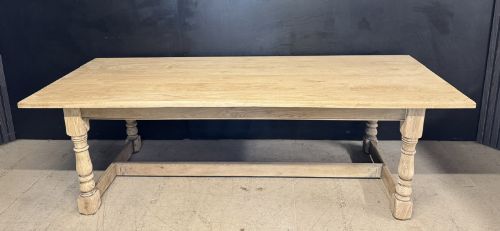
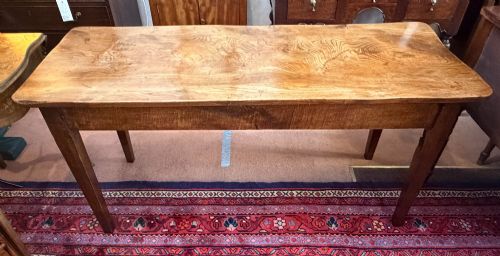
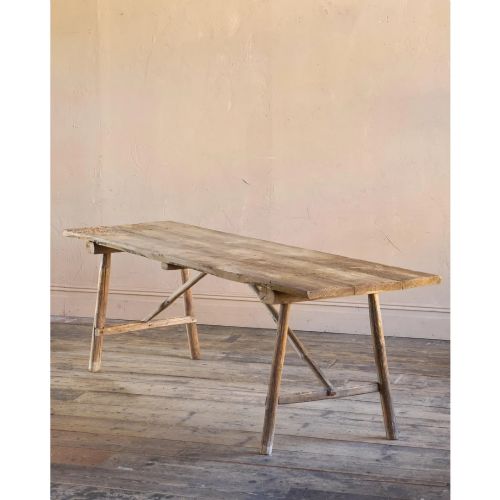
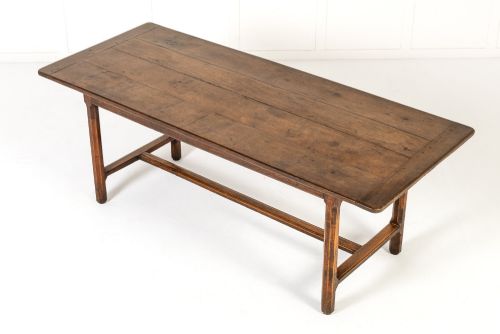


Oak Harvest Dining Table
An oak harvest dining table anchors a room with sturdy warmth and centuries of domestic history.
Oak Harvest Dining Table
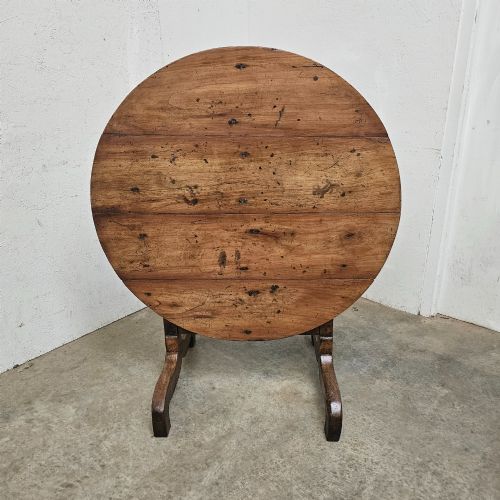
When you search for an oak harvest dining table, you encounter substantial dining furniture designed for communal gatherings and daily utility. These pieces primarily span the seventeenth, eighteenth, and nineteenth centuries, originating from English country houses and French provincial settings. The forms include long refectory designs, gateleg tables, and tilt-top formats built for practical longevity.
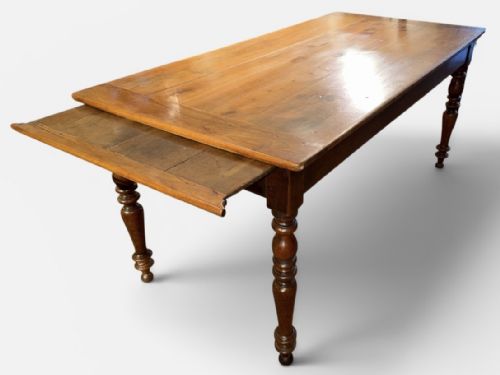
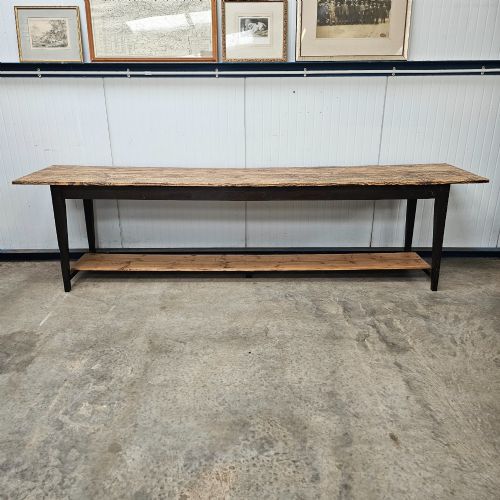
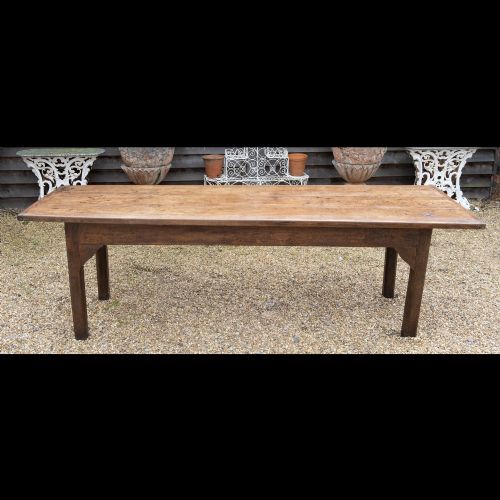
On this page, the pieces most frequently seen are nineteenth-century and eighteenth-century farmhouse tables alongside seventeenth-century refectory examples. These heavy timber tables often feature stretcher bases and generous lengths to accommodate large numbers of diners. French and English stylistic influences dominate the selection, showing straightforward joinery intended for hard use.
How they were made
The construction relies heavily on solid oak, paired with secondary timbers like fruitwood, pine, elm, and softwood for internal or structural elements. Joinery involves traditional pegging and mortise and tenon joints to secure the heavy tops to sturdy underframes. Iron and brass components occasionally appear as structural brackets, hinges, or operational mechanisms on folding variants.
Makers shaped these boards using hand tools, leaving surface textures that show the history of the timber. Frames frequently incorporate H-stretchers or double tiers for stability under heavy loads. Weathered timber surfaces develop through decades of use rather than artificial distressing.
Some folding vendange tables were designed to be packed onto carts for grape harvests in French vineyards.
What varies in quality
Quality in these tables rests on the integrity of the timber and the honesty of the construction. Superior examples utilise thick, quarter-sawn oak boards for the top, which resist warping better than plain-sawn alternatives. The connection between the legs and the apron determines the rigidity of the entire piece.
The distinction between ordinary and exceptional items lies in the proportion and the retention of original structural timber. Tables that maintain their initial stretcher systems and uncompromised leg height command greater regard. Altered dimensions or heavily planed surfaces reduce the historical coherence of the piece.
The Oak Harvest Dining Table Glossary
- Refectory table
- A long, narrow dining table originally built for monastic dining halls and later adapted for domestic use. These pieces often feature stretcher rails running low between the legs for added stability.
- Stretcher
- A horizontal wooden bar connecting the legs of a table to prevent them from spreading under weight. H-stretchers form a shape resembling the letter H beneath the centre of the table.
- Quarter-sawn
- A method of cutting logs radially from the growth rings to produce boards with enhanced stability and decorative grain patterns. This cut minimises shrinkage and warping in wide table tops.
- Mortise and tenon
- A traditional joint where a projecting tongue fits snugly into a corresponding cavity to lock two pieces of wood together at a right angle. This technique provides immense tensile strength without relying on metal fasteners.
Oak Harvest Dining Table: Frequently Asked Questions
Will an oak harvest table fit my dining room?
Measure your available floor space carefully, ensuring you leave at least ninety centimetres of clearance around all sides for chairs and movement. Many of these tables span significant lengths, so check doorway clearances and stairwells before delivery.
Consider the placement of stretcher rails underneath, as these can occasionally restrict legroom for diners seated along the sides. Matching the scale of the table to the proportions of your room prevents the heavy timber from overwhelming the space.
How can I tell an eighteenth-century table from a nineteenth-century one?
Examine the underside of the top and the joinery methods used to attach the boards to the frame. Eighteenth-century examples often display hand-sawn markings and pegged joinery consistent with period workshop practices.
Nineteenth-century interpretations frequently incorporate standardised fixings or machine-sawn elements while mimicking earlier styles. Look closely at the wear patterns and patina, which develop distinct characteristics over different spans of time.
Can I use an antique harvest table daily?
These tables were originally built for heavy daily use in farmhouses and monastic refectories, making them inherently robust. Their solid construction handles normal family meals and gatherings with ease.
Embrace the existing dents, scratches, and stains as part of the ongoing history of the timber rather than flaws. Simple precautions like using table pads during messy activities will preserve the surface for future generations.