

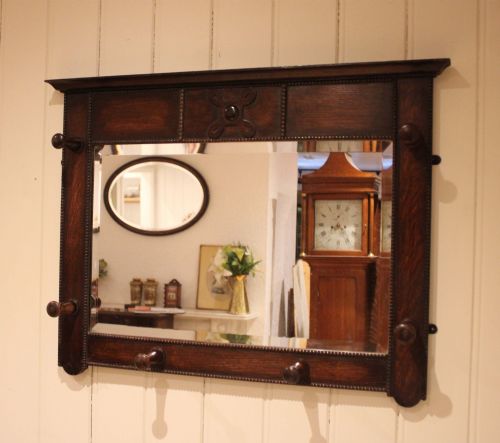


Oak Hallway Coat Hooks
These oak hallway coat hooks bring practical utility and sturdy timber grain to an entrance, offering a dependable place for hats, coats and daily paraphernalia.
Oak Hallway Coat Hooks
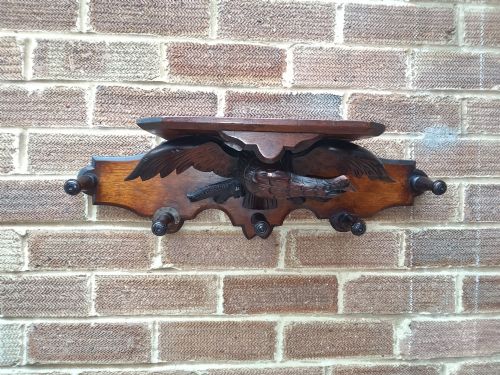
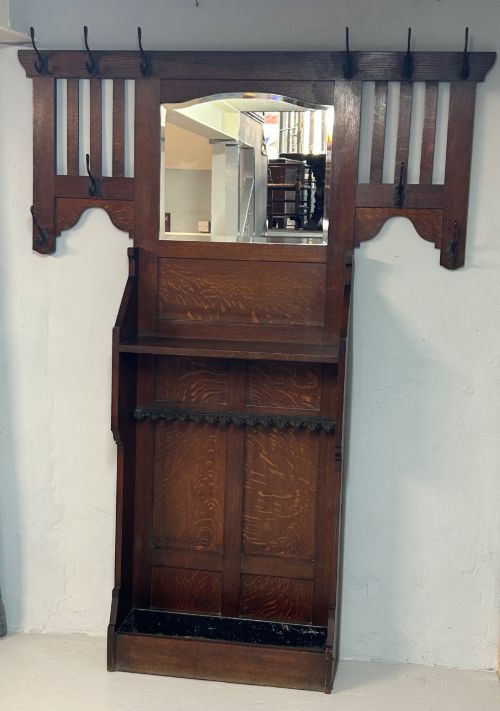
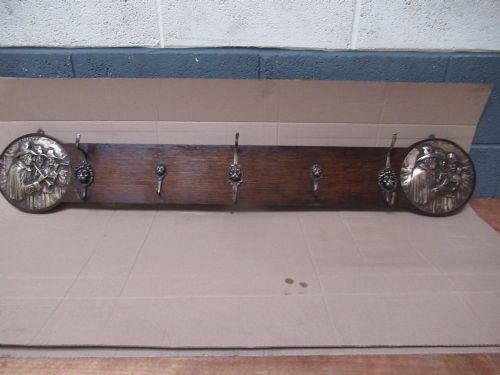
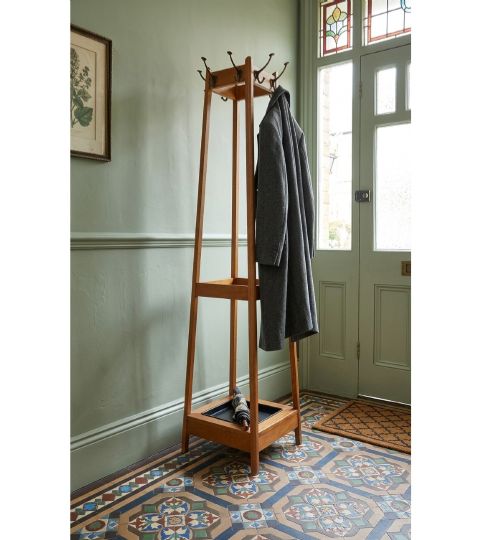
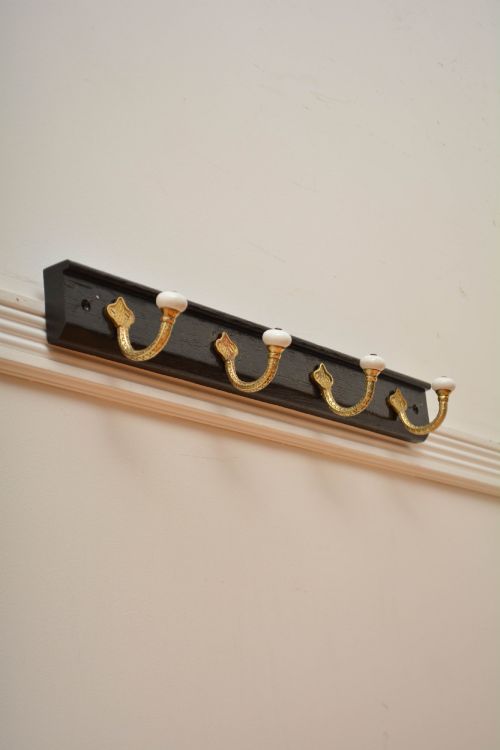
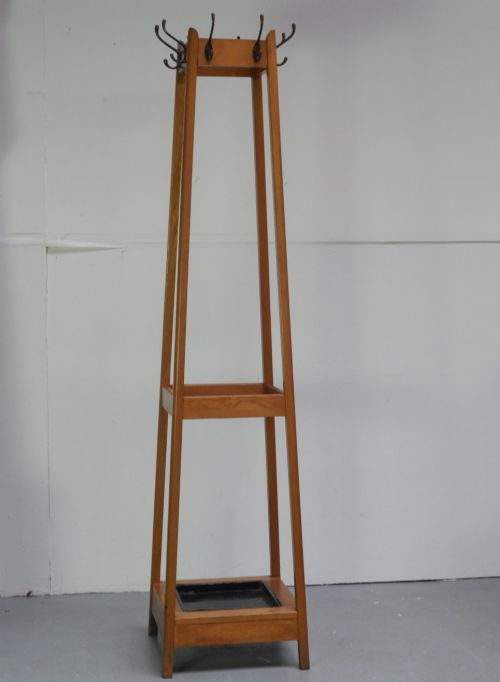
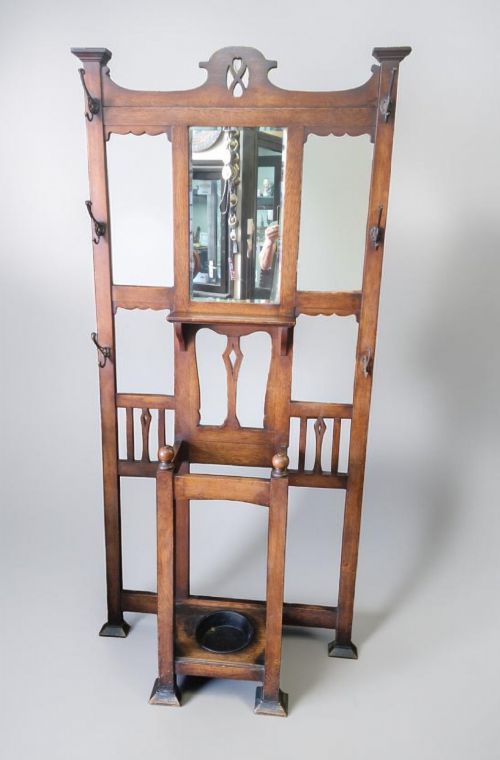
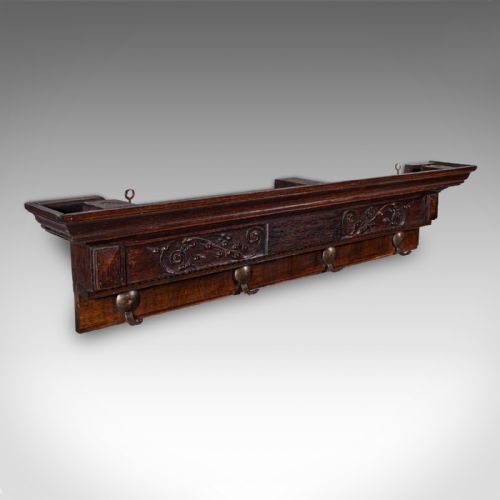
When you search for oak hallway coat hooks, you encounter wall-mounted racks, mirror combinations and large freestanding stands designed for an entrance. The selections range from compact cloakroom racks with four hooks to substantial furniture pieces incorporating umbrella storage and barometers.
You are most likely to meet wall-mounted racks and hall stands originating from the Victorian, Edwardian and 1920 periods. These utilitarian items combine solid oak backboards with robust metal hooks for everyday domestic use.
How they were made
Makers utilised solid oak and ebonised oak for the primary backboards and framework, providing a durable foundation capable of bearing heavy winter garments. Timber surfaces were planed, shaped and sometimes treated to highlight the natural grain.
Metal fixtures such as brass and cast iron formed the functional hooks, often secured firmly to the wood. Additional decorative elements included ceramic inserts on hooks, bevelled wall mirrors and inset glass components.
Oak Hallway Coat Hooks Retail Price Guide 2026
Typical asking prices for oak hallway coat hooks among the pieces listed under this phrase on Sellingantiques today, from the lower quarter to the upper quarter. They describe what is for sale here now, not the wider market.
Some oak hat and coat stands thoughtfully included barometers so you could check the weather before picking your umbrella.
What varies in quality
The distinction between standard utility items and finer examples rests on the integration of decorative styles such as Arts and Crafts hand-detailing or Art Nouveau curves. Better pieces display thoughtful joinery and harmonious proportions rather than purely utilitarian assembly.
Material selection also dictates the hierarchy, where solid ebonised oak or heavy cast brass mounts elevate a simple cloakroom rack into a more refined hallway feature. The presence of ancillary functions like integrated mirrors or barometers changes the character of the piece.
The Oak Hallway Coat Hooks Glossary
- Coat rack
- A horizontal board fitted with multiple hooks for hanging garments. These are typically mounted directly to entrance walls.
- Hall stand
- A larger freestanding or wall-fixed piece of furniture combining coat hooks, a mirror and sometimes umbrella wells. They served as central fixtures in period entranceways.
- Ebonised oak
- Oak timber treated with a chemical or stain to resemble dense ebony. This dark finish was popular in Victorian and later decorative furnishings.
- Arts and Crafts
- A design movement prioritising traditional craftsmanship and simple forms. Pieces from this style often feature honest construction and subtle decorative motifs.
Oak Hallway Coat Hooks: Frequently Asked Questions
How were oak hallway coat hooks used?
They provided a designated space in the entranceway for household members and visitors to hang outdoor garments, hats and umbrellas upon entering the home.
Larger variants often incorporated mirrors for last-minute appearance checks and trays or wells to contain wet walking gear.
What periods do these pieces date from?
The available pieces span several eras, stretching from the 18th century through the Victorian and Edwardian periods up to the 1920s.
Earlier examples tend to be simpler hook racks, while Victorian and Edwardian pieces frequently introduce mirrors, umbrella stands and stylistic influences like Arts and Crafts.
Are wall-mounted racks or freestanding stands more common?
Both forms appear regularly, with wall-mounted coat racks and comprehensive hall stands forming the core of the selection.
Wall-mounted versions suit narrower spaces, whereas freestanding hall stands require adequate floor space in an entrance hall.
What materials accompany the oak timber?
Brass and cast iron are the primary metals used for the functional hooks attached to the timber backboards.
Additional materials include ceramic inserts on specific hooks, inset glass components and glass mirrors fitted into the backboards of larger stands.