

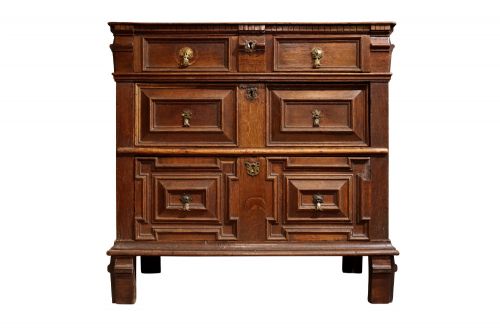


Oak Geometric Drawer Front
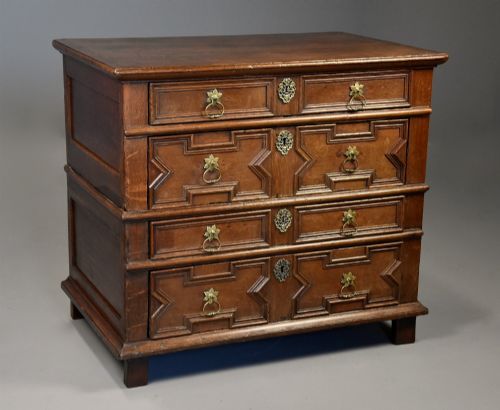
An oak geometric drawer front brings tactile depth to a room, showcasing applied mouldings on seventeenth-century chests, servers, and bureaux.
Oak Geometric Drawer Front
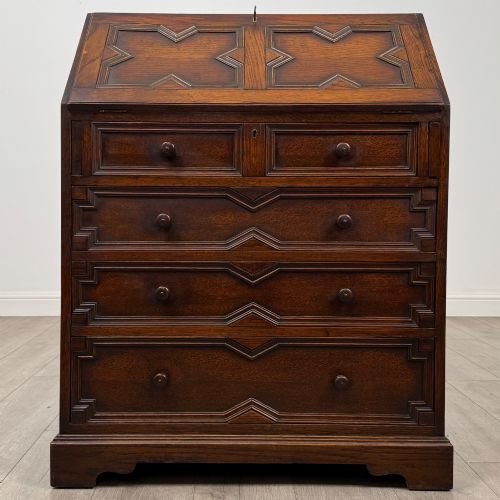
When searching for an oak geometric drawer front, a buyer encounters case furniture built with protruding applied mouldings arranged in repeating panel designs. These elements define pieces originating primarily in the seventeenth century, alongside later revivals from the Edwardian era and nineteen-twenty.
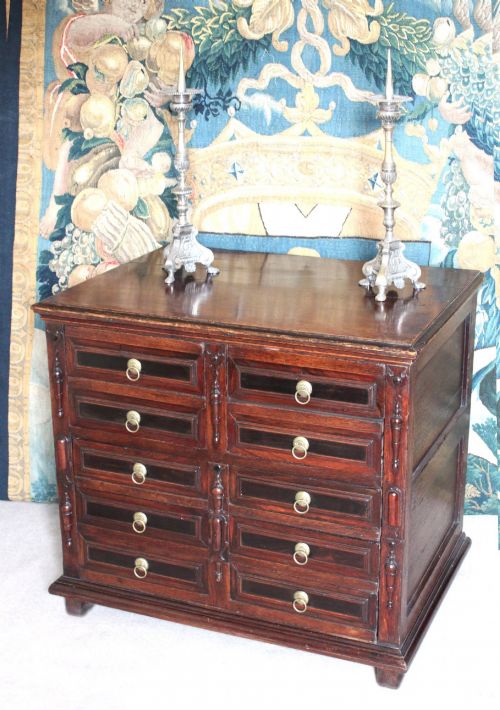
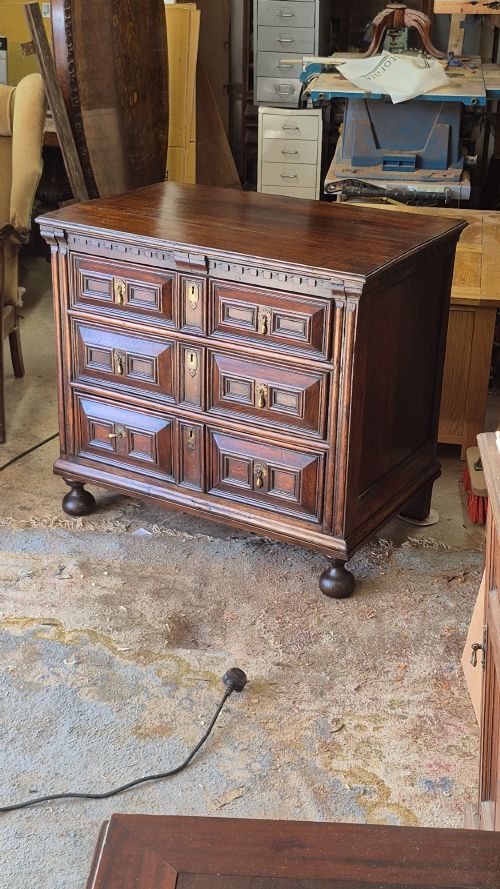
The dominant forms on this page are chests of drawers, alongside servers, low dressers, and writing bureaux. Seventeenth-century examples share floor space with Jacobean style writing desks and William and Mary block-front pieces.
Most entries belong to the seventeenth century, spanning Charles II, Stuart, and Early Georgian periods, supplemented by revival pieces. Buyers select these items for their architectural timber work and authentic period surface patination.
Materials and construction methods
Carpenters constructed these items predominantly from solid oak, sometimes combining it with fruitwood and snakewood decoration. Wood inlay also appears on selected drawer fronts to create contrasting visual textures within the geometric patterns.
Makers shaped individual timber lengths into mitred mouldings, securing them onto the drawer faces to form recessed panels and raised geometric shapes. Brass drop handles and escutcheons frequently complement the dark timber surfaces.
Oak Geometric Drawer Front Retail Price Guide 2026
Typical asking prices for oak geometric drawer front among the pieces listed under this phrase on Sellingantiques today, from the lower quarter to the upper quarter. They describe what is for sale here now, not the wider market.
Current listings feature oak combined with brass, snakewood, fruitwood, and wood inlay across seventeenth-century and revival periods.
Distinctions in quality and finish
Quality rests in the precision of the mitred joints forming the geometric mouldings and the preservation of the original drawer timbers. Faded patination on genuine seventeenth-century oak surfaces elevates a piece above uniform or heavily restored finishes.
The choice of secondary woods, such as fruitwood or snakewood contrasting against the primary oak, indicates ambition in the original workshop. Period hardware integration and structural integrity across the chest frame further separate standard examples from finer survivals.
The Oak Geometric Drawer Front Glossary
- Geometric moulding
- Applied strips of wood arranged in repeating patterns on drawer fronts, creating raised architectural panels. This technique defines the visual character of seventeenth-century case furniture.
- Block front
- A drawer face divided into three vertical sections, where the central section recedes and the outer sections project forward. This treatment appears on William and Mary period chests.
- Patina
- The surface sheen and colour acquired by oak over centuries of handling, exposure, and wax polishing. A fine patina indicates genuine age and minimal harsh stripping.
- Escutcheon
- A decorative brass plate surrounding a keyhole on a drawer or door. It protects the surrounding timber from wear and adds metallic contrast.
- Bureau
- A desk featuring a sloping hinged writing flap that opens to reveal internal small drawers and pigeonholes. These often incorporate geometric moulding on the drawers below.
Oak Geometric Drawer Front: Frequently Asked Questions
What periods do these pieces date from?
The selection includes authentic seventeenth-century items from the Charles II and Stuart eras, alongside Early Georgian examples. Edwardian and nineteen-twenty pieces represent later Jacobean style revivals.
Buyers find both original antique construction and twentieth-century interpretations sharing the geometric drawer front aesthetic.
How do I identify a genuine seventeenth-century piece?
Examine the timber construction methods, drawer linings, and the depth of the surface patination. Seventeenth-century examples display hand-cut joinery and signs of age across the oak and decorative fruitwood elements.
Revival pieces from later periods typically show more uniform machine-finished timber surfaces and different internal construction details.
Where were these pieces used in a home?
Original owners placed these chests of drawers and low servers in primary rooms and chambers for storing textiles and valuables. Bureaux functioned as dedicated writing spaces for correspondence and household accounts.
Today, buyers integrate them into living spaces and hallways as functional storage surfaces with strong architectural presence.
What decorative woods besides oak are used?
Makers incorporated snakewood and fruitwood alongside standard oak to create contrasting tones within the geometric patterns. Wood inlay also appears on selected drawer fronts to enhance the visual complexity.
These contrasting materials highlight the applied mouldings and provide distinct colour variation across the front elevation.